 Skip to content
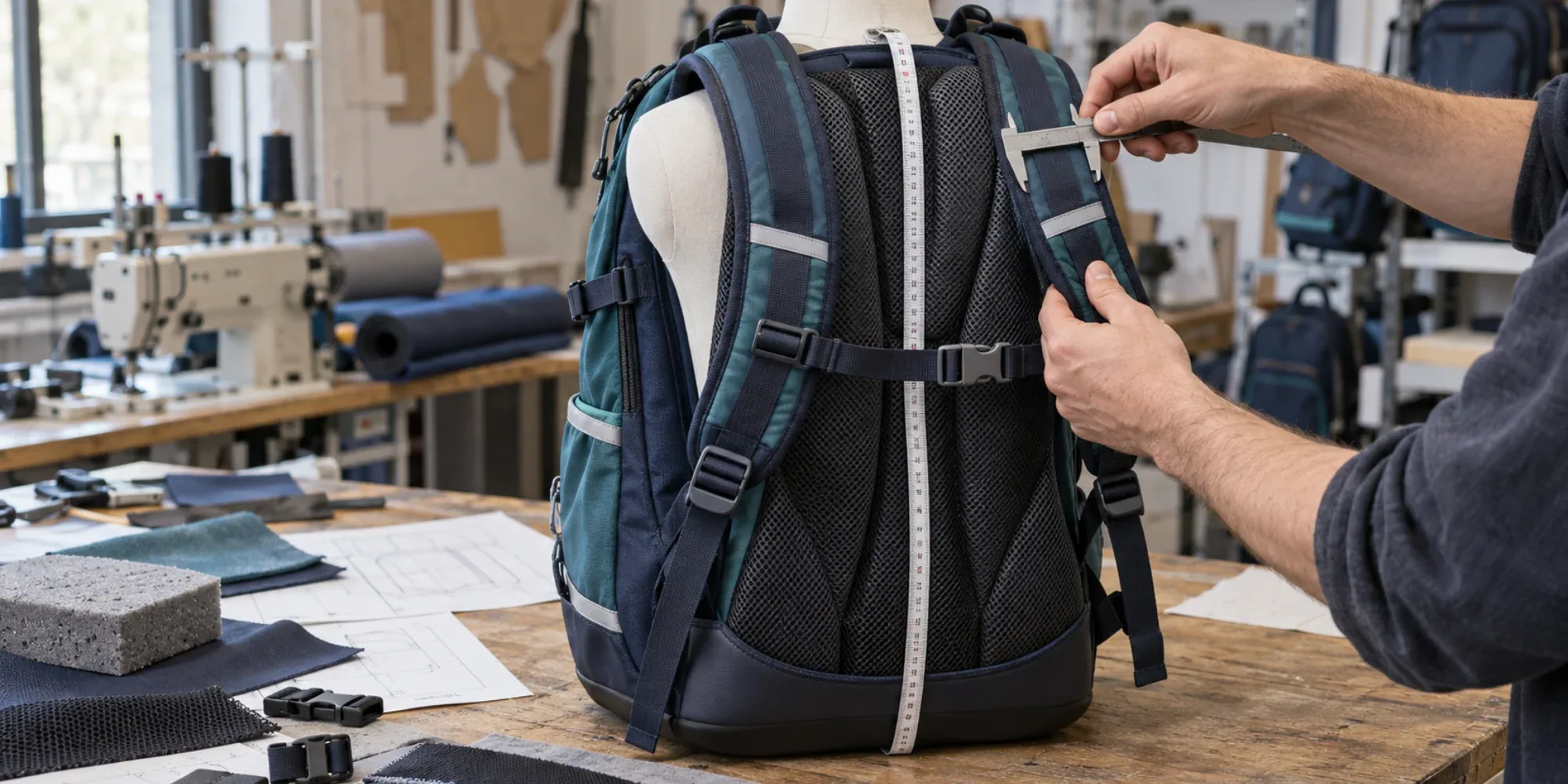
To successfully manufacture school backpacks for the German market, product developers must create tech packs that explicitly define adjustable ergonomic systems, high visibility materials, and strict material compliance. Unlike generic backpacks, German school bags require height adjustable back panels, load lifter straps, rigid aluminum or fiberglass internal stays, and wide padded hip belts to transfer weight to the pelvis. Your tech pack must specify foam densities for these touchpoints, dimension tolerances for the adjustment mechanisms, and exact surface area percentages for retroreflective and fluorescent materials. Furthermore, the bill of materials must mandate materials that comply with EU chemical regulations and clearly document any required third party sustainability certifications.
German Market Baseline for School Backpack Ergonomics
The German market for school backpacks operates under distinct ergonomic expectations that separate it from standard global soft goods manufacturing. For product developers and sourcing managers, addressing this market means abandoning conventional static foam construction in favor of dynamic load-bearing systems. German consumers prioritize spinal health because students routinely carry substantial weights, meaning school bags are evaluated more like technical daypacks or trekking gear than traditional bookbags. This fundamental shift requires manufacturers to implement rigid structural components and precise adjustability mechanisms that must be explicitly detailed in the tech pack.
When preparing a tech pack for a standard backpack, a developer might only specify basic foam thickness and simple stitch patterns. However, designing for the German school sector requires specifying an active ergonomic system designed to transfer the payload from the shoulders down to the pelvic region. To achieve this, the tech pack must incorporate an internal framework, often utilizing pre-curved aluminum rails or flexible fiberglass stays, working in conjunction with a rigid, anatomically molded back panel. This internal framework prevents the backpack from sagging under heavy loads and maintains the rigidity necessary for the ergonomic features to function correctly over multiple school years. For company-specific information, see GFBags.
Another baseline requirement is continuous torso adjustability. Because children experience rapid growth spurts, German ergonomic expectations dictate that a premium school backpack must adapt to different back lengths to maintain proper anatomical alignment. A static padded back panel cannot meet this requirement. Instead, the tech pack must clearly define a dynamic sliding or step-adjust harness system. This involves detailing the central track mechanism, the locking components, and the physical tolerances for movement along the vertical axis. If the track mechanism is specified too loosely, the shoulder harness will slip downward during active daily use. If it is too tight, parents will struggle to adjust it. Consequently, the product developer must document precise clearance ratios between the adjustment track and the harness sled.
Beyond the central adjustable back panel, the broader load distribution network requires quantifiable attention in the bill of materials. A compliant ergonomic school backpack for this region must include load lifter straps at the top of the shoulder harness, a sliding sternum strap, and a contoured hip belt. The tech pack must dictate the precise placement and reinforcement of these anchoring points. Load lifter straps must be structurally anchored directly to the internal frame rather than merely sewn into the exterior shell fabric to effectively pull the weight closer to the user's center of gravity. Furthermore, the hip belt requires high-density closed-cell foam, specified by its exact compression resistance to ensure it does not crush under load.
Transitioning a standard backpack design into a German-compliant ergonomic bag fundamentally alters the complexity of the manufacturing tech pack. Sourcing teams and product developers are no longer simply communicating aesthetic preferences and basic capacity; they are engineering a precise load-bearing tool. Every aluminum stay, adjustment track tolerance, and foam density rating must be translated into measurable specifications. Without these highly detailed structural definitions, a factory cannot produce a sample that meets the stringent ergonomic expectations of the German consumer base, rendering the final product uncompetitive in this highly specialized market.
Tech Pack Specifications for Torso Adjustability
To ensure a school backpack meets the rigorous ergonomic demands of the German market, product developers must translate the conceptual need for adjustability into precise, factory-ready technical specifications. A standard soft bag tech pack is insufficient because it lacks the dimensional tolerances and material definitions required for structural load-bearing components. Sourcing managers must instead build a comprehensive tech pack that explicitly details the internal framework, the rigid back panel, and the exact mechanics of the torso adjustment system.
The foundation of this ergonomic system relies on the internal frame stays, which transfer the weight of books from the shoulders to the pelvic region. The tech pack must specify the exact material composition of these stays, commonly designating 6061 aluminum or specialized fiberglass composites. Beyond material type, developers must document the precise gauge, width, and length, alongside the required pre-curved anatomical shape. Backpack frame stays are typically formed from standard flat aluminum strips. If a factory substitutes straight, unbent aluminum stays to save tooling costs, the bag will fail to contour to a child's spine, negating the ergonomic design. The documentation must include side-profile technical drawings showing the required curvature and specify acceptable deviation tolerances.
These pre-curved stays must operate in tandem with a rigid internal back panel, typically constructed from a high-density polyethylene board. The manufacturing tech pack needs to call out the exact thickness of this board, which usually ranges from one to two millimeters depending on the target weight of the school backpack. This board provides the baseline rigidity for the adjustment track and prevents sharp objects inside the main compartment from poking the user. Product developers must specify any die-cut patterns applied to the polyethylene board, which are often used to reduce overall pack weight without compromising vertical structural integrity. For company-specific information, see GFBags.
With the structural foundation defined, the tech pack must detail the mechanics of the torso adjustment system. German school backpacks frequently utilize either a stepped ladder-lock webbing system or a continuous sliding rail mechanism. If specifying a stepped ladder system, the tech pack must define the exact distance between each horizontal adjustment loop. A spacing of roughly 20 to 25 millimeters generally provides enough granularity for a child to find a comfortable fit as they grow. Technical drawings must indicate heavy-duty bartack stitching at each anchor point. Because these loops bear a significant portion of the dynamic load as the child moves, inadequate stitch density will cause the shoulder harness to fail.
If the design employs a continuous sliding track instead of webbing loops, clearance tolerances become the most critical metric in the tech pack. The document must define the exact dimensional clearance between the central rigid track and the movable harness sled. A loose clearance ratio will cause the shoulder harness to shift and wobble laterally while the child is walking, leading to uneven load distribution and friction points. Conversely, a clearance that is too tight will cause the sled to bind against the track, frustrating parents attempting to resize the bag. Developers should explicitly state the acceptable millimeter tolerances for these mating components.
Finally, the tech pack must present a clear, annotated exploded view of the entire back panel assembly. This visual sequence instructs the factory on the exact layering order of the external spacer mesh, the contoured foam pads, the adjustment mechanism, the polyethylene board, and the structural frame stays. Providing this breakdown ensures no crucial functional layer is omitted during final factory assembly.
Harness Systems and Load Distribution Parameters
While an internal framework provides the necessary structural foundation for a German market school backpack, that rigidity is ineffective without a meticulously specified harness system. The harness serves as the critical interface between the static load of the backpack and the dynamic movement of the child. For product developers, standard webbing and generic padding are insufficient. The manufacturing tech pack must establish rigorous parameters for load distribution, detailing the geometry, material properties, and structural anchoring of the shoulder straps, hip belts, and sternum straps. The primary objective is transferring cargo weight away from the shoulders down to the pelvic basin.
The design of the shoulder straps is the first major specification in the harness system. Rather than straight straps that chafe the neck or slip off narrow shoulders, the German market expects an anatomically contoured S-curve profile. The pattern files in the tech pack must define the inner and outer radii of this curvature so the factory cuts the panels accurately. Furthermore, the tech pack must mandate load lifter straps. These secondary adjustable straps connect the top of the shoulder harness to the upper section of the internal frame. Tightening these straps pulls the upper mass of the backpack closer to the center of gravity. Sourcing managers must specify exact anchor locations for these lifters to prevent the load from levering backward.
Foam selection within these components requires explicit material definitions rather than subjective descriptions like thick padding. Basic open-cell polyurethane foam compresses completely under the weight of textbooks, negating its cushioning properties and exposing the user to the strap's underlying webbing and heavy seams. The tech pack must mandate high-density closed-cell foams, such as Ethylene-Vinyl Acetate, and specify the required hardness. A premium ergonomic harness typically employs a dual-density foam configuration: a firmer structural foam layer on the exterior to distribute pinpoint pressure, paired with a softer lower-density foam against the body. The bill of materials must also define the exact thickness of the three-dimensional spacer mesh encapsulating these straps, ensuring adequate air circulation and moisture management without interfering with the strap's structural integrity.
To achieve true load transfer to the pelvis, the backpack must feature a heavily engineered padded hip belt, frequently referred to as pelvic fins. A simple webbing strap sewn into the side seams provides zero vertical load support. The tech pack must contain technical drawings demonstrating how the padded hip belt anchors directly to the rigid back panel or internal aluminum stays. This physical connection is mandatory to ensure the weight effectively bypasses the spine. Specifications should define the precise contouring of these padded wings, ensuring they securely wrap the user's iliac crest without causing friction points. Additionally, the developer must document the tensile strength and physical dimensions of the primary center buckle to guarantee secure closure under tension.
Finally, the tech pack must outline the integration of the sternum strap and necessary stitch reinforcements across the entire harness. The sternum strap acts as a critical stabilizer, preventing the S-curved shoulder straps from migrating outward during vigorous movement. Documentation must specify an adjustable anchoring system for this strap, such as a sliding piping track, allowing vertical adjustment as the torso system is resized. Because the harness system bears the complete dynamic force of the bag, the tech pack must explicitly call out heavy-duty bartack stitching at all high-stress junctions. Detailing these construction methods ensures the manufacturer produces a durable, ergonomic product capable of withstanding the rigors of daily school use.
Defining Visibility and Reflective Elements
In the German school backpack market, visibility is treated with the same technical rigor as structural ergonomics. Because students frequently commute by foot or bicycle during dark winter months, backpacks must serve as passive safety devices. This expectation fundamentally changes how a sourcing manager approaches the external design and the bill of materials. Instead of merely selecting appealing color palettes, product developers must engineer the bag's exterior to meet stringent optical performance benchmarks. The tech pack must explicitly define two distinct categories of high-visibility materials: fluorescent fabrics for daytime and twilight visibility, and retroreflective elements for nighttime illumination. Failing to document these requirements precisely often results in a prototype that falls short of baseline market expectations.
To address daytime visibility, German specifications traditionally expect a significant portion of the backpack's visible surface to utilize fluorescent colors, such as neon yellow or bright orange, mandating at least twenty percent of the front and side profiles. In a manufacturing tech pack, this cannot be left to a general color description. The product developer must provide calculated surface area callouts on the two-dimensional pattern diagrams. Sourcing managers should mandate that the bill of materials specifies textiles treated with active fluorescent dyes, rather than standard bright pigments, ensuring the material converts invisible ultraviolet light into visible light. Furthermore, the technical drawings must verify that these panels remain unobstructed by external mesh pockets, compression straps, or overlapping flaps when the bag is loaded.
Nighttime visibility requires the integration of retroreflective materials, which bounce directed light, such as automobile headlights, back toward the source. The prevailing expectation in this market is that at least ten percent of the front and side surfaces consist of retroreflective elements. The tech pack must pinpoint the exact placement and width of reflective tapes, piping, or broad geometric patches. When documenting these components, specify the reflective technology, such as microprismatic vinyl or exposed glass bead fabrics, alongside the required photometric performance coefficients. The manufacturer needs exact stitching instructions for these materials, as improper needle gauges or excessive tension can puncture and degrade reflective films, causing them to crack or peel during regular use.
Visibility requirements must also integrate directly with the backpack's ergonomic harness system. While the front and sides of the bag protect the user from behind and the periphery, the child must also be visible from the front. Tech packs must detail how retroreflective trims and fluorescent accents are applied to the S-curved shoulder straps and the padded hip belt. Because these components are heavily engineered for load distribution, the application of rigid reflective tapes must not interfere with the flexibility of the straps or compress the underlying high-density closed-cell foam. Product developers should specify split or segmented reflective trims on the harness to maintain the strap's intended ergonomic contour against the user's torso.
Finally, the tech pack must establish strict manufacturing tolerances for these high-visibility zones. When a factory scales a backpack design down to a smaller volume, the total surface area decreases. If the pattern maker does not recalculate the dimensions of the reflective and fluorescent panels, the unscaled trims will cover a higher percentage of the smaller bag, potentially interfering with fabric flexibility or driving up material costs. Conversely, scaling a design up without recalculating those elements means the larger bag may fail the mandatory percentage thresholds. Sourcing managers must include explicit instructions requiring the factory to scale visibility elements proportionally across all size variants. By mathematically defining these critical surface areas, developers ensure the manufacturer can accurately validate the high-visibility components during prototyping.
Integrating EU Material Compliance and Sustainability
While the structural and visual components of a German school backpack dictate its physical performance, the underlying materials must navigate stringent European regulatory frameworks. A comprehensive tech pack must define more than just fabric weight and denier; it must explicitly mandate chemical compliance and verifiable sustainability standards. The European Commission provides official publications and statistics regarding EU textile consumption and regulations, establishing the baseline expectations for materials entering the region. Consequently, every textile, foam, and plastic component listed in the Bill of Materials must meet these legal and market requirements before production begins. Failing to specify these compliance benchmarks during the development phase can lead to costly factory delays or customs rejections. European Commission, official website
To ensure a backpack is ready for the German market, sourcing managers must incorporate exact chemical testing parameters directly into the tech pack documentation. School backpacks rely heavily on durable water-repellent coatings, vibrant synthetic dyes for high-visibility panels, and dense closed-cell foams for ergonomic padding. Product developers must require the manufacturer to provide valid laboratory test reports proving these specific materials do not contain restricted substances such as certain phthalates, heavy metals, or hazardous azo dyes. The Bill of Materials should include a dedicated column that lists the required compliance standard for every individual component, from the main polyester shell down to the plastic ladder-lock buckles on the adjustment harness.
Beyond mandatory chemical safety, the German consumer market heavily favors school backpacks that demonstrate verifiable environmental sustainability. Standard virgin polyester is increasingly being replaced by recycled materials derived from post-consumer plastics. However, simply noting a recycled fabric in the tech pack is insufficient for this region. Without a strict paper trail, brands risk accusations of greenwashing and subsequent rejection by major German retailers or savvy parents. Sourcing managers must therefore explicitly mandate recognized third-party recycled content certifications in their material specifications to prove the origin and percentage of the recycled inputs.
When specifying these sustainable materials, developers should designate specific certification bodies to validate the factory supply chain. For instance, SCS Global Services launched the first third-party certification program for recycled content claims in 1989 and acts as a foremost authority for these assessments. Companies rely on them for comprehensive recycled content certification. Additionally, SCS provides a private label certification available to customers of certified manufacturers, allowing brands to re-brand these certified products under their own company name. Integrating these exact certification requirements into the tech pack ensures the factory sources audited materials from the outset rather than attempting to substitute unverified alternatives during mass production. Recycled Content Certification | ISO 14021 & SCS‑103 | SCS
Implementing these rigorous material specifications introduces practical tradeoffs in the manufacturing process. Mandating certified recycled fabrics and comprehensive chemical testing typically increases the raw material cost and limits the pool of eligible component suppliers. Product developers must weigh these increased costs against the rigid expectations of the German market, where uncertified bags struggle to compete regardless of their ergonomic merits. To manage this, the tech pack must clearly delineate these requirements, ensuring the factory understands that material compliance is just as critical as the structural integrity of the load-bearing frames.
Prototyping Tolerances and Quality Control Workflows
After a comprehensive tech pack is delivered to the manufacturer, evaluating the first physical prototype becomes the critical next phase. For the German school backpack market, a visual inspection of the aesthetic design is entirely inadequate. Product developers and sourcing managers must execute a functional audit of the sample, directly comparing its physical performance against the strict tolerances defined in the documentation. Accepting a sample that merely looks correct but fails to function dynamically under a realistic textbook load guarantees failure in a market driven by stringent ergonomic expectations.
The most critical functional check involves the torso adjustment mechanism. Evaluators must test the sliding track or step-adjustment system while the backpack is empty and fully loaded. If the mechanism binds or stutters during adjustment, the factory has likely breached the specified millimeter clearance tolerances, making it too difficult to resize the harness. Conversely, if the harness sled wiggles excessively side-to-side, the dimensional track clearance is too loose. A separate mechanical issue occurs if the harness slips downward when loaded with mock cargo; this vertical slippage indicates a failure of the vertical locking mechanism, such as a weak locking pin, rather than a track clearance issue. Evaluators must measure clearances with calipers, inspect locking hardware, and document deviations from the tech pack.
The internal structural framework also demands physical verification. Evaluators should remove the aluminum or fiberglass stays from the prototype and measure their curvature, width, and gauge against the technical drawings. Factories attempting to streamline production sometimes flatten the pre-curved stays or substitute a lighter gauge metal. This causes the back panel to collapse outward under heavy weight and prevents the pack from contouring to a child's spine. Sourcing managers must physically flex the back panel assembly to ensure the high-density polyethylene board and structural stays provide the intended vertical rigidity without compromising the overall target weight of the bag.
Because German school backpacks transfer weight actively through load lifters and padded hip belts, the structural integrity of the stitching is paramount. Quality control workflows must include mechanical pull testing or aggressive manual stress tests on all heavy-duty bartacks. Evaluators should specifically inspect anchor points where the load lifter straps meet the internal frame and where the hip belt connects to the back panel base. A static hanging test often fails to reveal weaknesses that emerge when a child runs or climbs stairs. Applying dynamic, bouncing loads to the prototype harness helps isolate where stitch density is insufficient or where thread tension pulls through the base fabric.
Ultimately, the approved prototype serves as the baseline for the mass production quality control workflow. It establishes the definitive pass or fail criteria for factory inspectors. Instead of relying on generalized spot checks, the sourcing team should create a standardized inspection checklist derived directly from the tech pack, mandating that statistical sampling focuses heavily on load-bearing hardware and adjustment track tolerances. Maintaining this rigorous workflow ensures the final manufactured backpacks consistently meet the ergonomic standards required in the German market.