 Skip to content

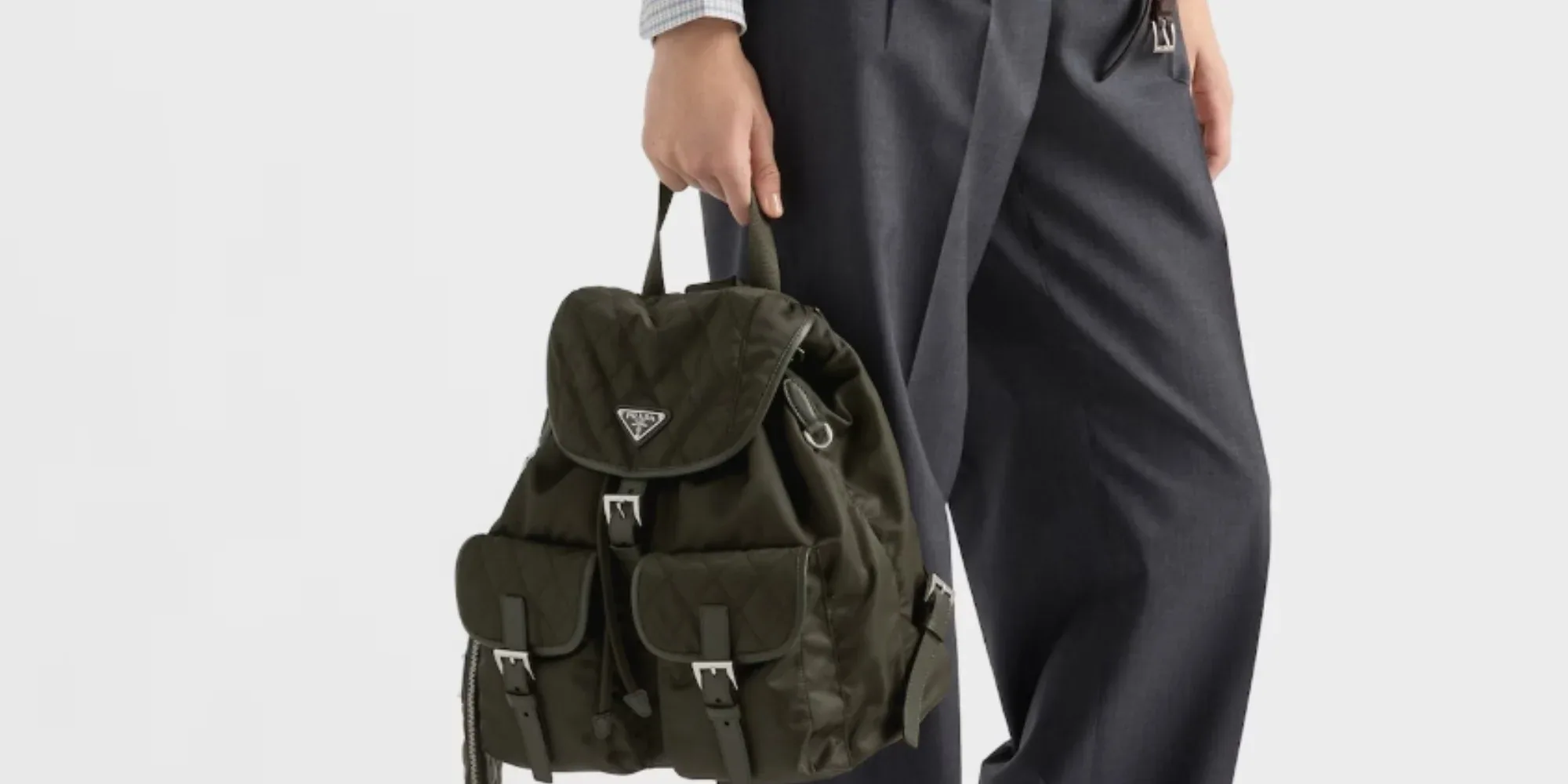
To evaluate an ODM backpack manufacturer for Prada-adjacent quality, your capability checklist must assess their precision sampling process, access to traceable premium materials such as certified recycled nylon and audited leather, and advanced production controls including automated cutting and strict in-line quality assurance.
Defining Prada-Adjacent Quality in Backpack Manufacturing
Sourcing a backpack manufacturer capable of producing luxury, Prada-adjacent quality requires product developers to fundamentally recalibrate their evaluation criteria. The term Prada-adjacent does not refer merely to visual design cues or brand positioning; it describes a strict manufacturing standard characterized by extreme precision, specialized equipment, and elevated material handling protocols. Standard utility backpack production is optimized for speed and volume, where factory floors prioritize output and minor assembly variances are tolerated. In contrast, luxury-tier production shifts the focus toward meticulous execution, requiring an Original Design Manufacturing facility to demonstrate rigorous control over every millimeter of the construction process.
The primary differentiator between standard and luxury bag manufacturing lies in acceptable variance tolerances. In utility bag production, a stitch margin variance of two to three millimeters is often considered acceptable if the structural integrity remains intact. Luxury standards demand sub-millimeter precision. This requires the facility to employ highly skilled operators equipped with specialized mechanical machinery, such as heavy-duty walking-foot or cylinder-bed sewing machines. A capability checklist for a Prada-adjacent partner must assess their manual dexterity and ability to maintain perfect stitch tension across complex three-dimensional assemblies, such as joining dense nylon to stiffened leather trims without puckering.
Elevated material handling is another critical area to evaluate. Luxury fabrics, high-density synthetics, and premium top-grain leathers are highly susceptible to scuffing, oil contamination, and permanent creasing during the assembly process. Evaluating a manufacturer requires inspecting their material storage and handling protocols. A standard factory might stack cut panels in open bins, whereas a luxury-capable facility utilizes padded racks, climate-controlled storage, and strict handling guidelines that prevent environmental contamination before the final assembly stage.
Furthermore, achieving luxury finishing requires specialized material preparation equipment. Sourcing managers must verify the presence and proper maintenance of edge skiving machines, precision cutting setups, and dedicated edge-painting stations. Skiving, which precisely thins the edges of thick materials to prevent bulky seams, is absolutely essential for the refined silhouettes typical of luxury backpacks. Without this preparation step, intersecting seams will appear thick, uneven, and poorly constructed, which immediately degrades the perceived value of the final product.
When initial research begins, sourcing managers often review a factory's stated capacities. While checking a manufacturer's Home page can provide a baseline understanding of their operational scale and minimum order quantities, a true capability audit must verify the specific machinery and tolerance controls on the production floor. The transition from utility to luxury production is not a matter of simply upgrading materials; it requires a systemic commitment to precision at every stage of the manufacturing lifecycle. For company-specific information, see GFBags.
Material Sourcing and Traceability Network Checklist
Sourcing Prada-adjacent materials goes far beyond simply requesting high-density nylon or top-grain leather. Achieving luxury quality requires a documented, highly traceable supply network that eliminates the variables found in open-market purchasing. A manufacturing capability checklist for an ODM partner must evaluate their direct relationships with specialized textile mills and tanneries. Instead of relying on regional wholesalers where batch consistency fluctuates, a luxury-capable factory establishes direct lines to the source, ensuring they can verify the exact origin, chemical composition, and processing standards of every raw material.
- Direct procurement channels with specialized textile mills rather than secondary market distributors.
- Internal quarantine procedures that separate luxury-grade incoming fabrics from standard utility materials.
- Batch tracking systems tying hardware and fabric rolls directly to origin certificates.
Many luxury backpacks incorporate recycled synthetic materials to meet brand sustainability commitments. When evaluating a factory, the checklist must demand verified documentation for these claims. Relying on a supplier's internal guarantee is insufficient for high-end standards and introduces significant compliance risks. Sourcing managers must confirm that the factory procures materials validated by recognized independent entities. For example, SCS Global Services has been conducting comprehensive assessments and certifying recycled content claims since 1989. Their system enables buyers working with certified manufacturers to apply private labels and re-brand compliant goods under their own corporate name, verifying that the recycled nylon meets rigorous industry standards. Recycled Content Certification | ISO 14021 & SCS‑103 | SCS
When a backpack design utilizes premium leather trims or base reinforcements, the checklist must verify how the manufacturer selects its tanneries. Procuring undocumented hides often results in inconsistent tensile strength, poor edge finishing, and ethical sourcing risks. Sourcing managers should verify if the manufacturer partners with suppliers aligning with global standards. Evaluating these partnerships against the criteria of organizations like the Leather Working Group provides a reliable baseline. Established in 2005 as a collaborative initiative among apparel brands and manufacturers, this non-profit organization champions responsibly made leather. It works to verify that hides are processed sustainably to protect both communities and the environment. What we do – Leather Working Group
To execute this traceability audit, sourcing managers should request sample material dossiers from the ODM partner during the initial vetting phase. A capable manufacturer will readily supply technical data sheets, batch tracking codes, and applicable third-party certificates. If a factory hesitates to provide clear documentation or attempts to substitute certified materials with generic equivalents, it strongly indicates a gap in procurement capabilities. Outline material documentation requirements early in the negotiation. When reaching out to a potential manufacturing partner to verify their sourcing network, navigating to their Contact Us page is the appropriate way to request compliance portfolios and submit detailed vendor questionnaires. For company-specific information, see GFBags.
A comprehensive traceability checklist must also address the sourcing of hardware and internal linings. Prada-adjacent backpacks feature custom-plated zippers and metal buckles that must endure years of use without tarnishing. The manufacturer should maintain documented relationships with specialized hardware foundries capable of providing salt-spray test results and plating thickness certifications. If the factory cannot trace the origin of its metal alloys or verify the ecological compliance of the electroplating process, the final product risks falling short of luxury durability expectations. Thoroughly auditing these secondary material networks ensures every component aligns with high-end compliance standards.
Prototyping and Precision Sampling Capabilities
Translating a two-dimensional luxury backpack concept into a tangible prototype requires a highly specialized sampling room. For a manufacturer to meet Prada-adjacent standards, their prototyping facility cannot simply be a side desk on the main production floor. It must operate as a dedicated, self-contained unit staffed by experienced pattern makers and sample stitchers. When auditing a manufacturer, the first checklist item is assessing the separation and autonomy of this sampling department. A dedicated space ensures that the complex development of luxury soft goods is not rushed to accommodate mass production schedules.
The true test of an Original Design Manufacturing partner lies in their ability to integrate technically demanding materials. Luxury backpacks frequently combine high-denier synthetics with structured leather trims and heavy custom hardware. A capable pattern maker understands how these distinct materials drape, stretch, and bear weight under tension. During the capability audit, ask to see examples where the facility successfully joined rigid materials with flexible fabrics without causing structural warping or puckering at the seams. Their pattern makers must demonstrate an understanding of skiving allowances, seam reinforcement techniques, and the precise tolerances required for flush hardware installation. For instance, heavy custom buckles or magnetic closures often require concealed backing plates to prevent the fabric from tearing over time; the sampling team must proactively engineer these hidden structural supports during the prototyping phase.
To systematically evaluate a manufacturer's prototyping capabilities, sourcing managers should verify several specific operational indicators.
- Dedicated pattern engineering staff: Ensure the facility employs full-time pattern makers who specialize in complex soft goods, rather than relying on general assembly supervisors.
- Iterative timeline structure: Confirm the manufacturer has a documented process for multiple sample iterations, allowing for structural adjustments before finalizing the golden sample.
- Material integration expertise: Review past prototypes that feature luxury material combinations, checking for clean binding and flush hardware placement.
- In-house tooling capability: Check if the sampling room has immediate access to appropriate setting dies and presses necessary for safely attaching procured hardware like heavy-duty rivets, metal snaps, and structural grommets.
Prototyping a luxury backpack is rarely accomplished in a single attempt. The manufacturer must support rapid, precise iterations without sacrificing technical rigor. While turnaround speed is a valuable operational metric, the primary goal of this phase is methodical problem-solving. Each iteration should resolve specific structural or aesthetic challenges identified in the previous version, such as adjusting the shoulder strap anchor angles for better ergonomics or modifying a base gusset to prevent the bag from sagging when empty. An advanced sampling team will actively communicate these construction tradeoffs to the product developer, suggesting internal reinforcements, alternative interfacings, or modified pattern cuts rather than blindly executing a flawed technical pack that fails under physical load.
Finally, evaluate how the sampling room translates the finalized prototype into a mass-production roadmap. A Prada-adjacent capability requires the sampling team to generate detailed construction manuals, CAD files for cutting dies, and specific machine calibration settings for the main assembly floor. If the prototyping department operates in isolation and hands off the physical sample without technical documentation, the resulting production run will inevitably suffer from inconsistent quality. The checklist must verify that the sampling phase yields a comprehensive, repeatable manufacturing standard.
Construction Quality and Stitching Precision Standards
When transitioning from the sampling room to the main assembly floor, sourcing managers must verify the manufacturer can execute luxury specifications at scale. The hallmark of Prada-adjacent backpack construction is structural consistency. Standard lines often rely on operators to stretch misaligned panels to fit, whereas luxury assembly demands flawless component preparation. Capability checks begin at the cutting tables. Verify the factory's cutting precision, noting whether they utilize computer numerical control equipment, laser cutting machines, or hydraulic presses with steel rule dies. Proper cutting guarantees the exact, repeatable panel geometry required for luxury construction. Achieving identical geometry down to a fraction of a millimeter is mandatory for assembling complex gussets without fabric distortion.
Once panels reach the sewing stations, evaluate the stitch-per-inch density. Standard utility backpacks typically utilize six to eight stitches per inch to maximize speed. Luxury soft goods often require ten to twelve stitches per inch depending on the fabric. A higher stitch density requires finer needles, tighter thread tension calibration, and slower machine speeds. When auditing the floor, observe operators handling high-density nylon or heavy leather trims. Needle punctures must be clean without pulling the surrounding weave, and the stitch line must run perfectly parallel to the edge, maintaining a consistent margin around sharp corners.
Interior construction provides another definitive test of luxury capability. Sourcing managers must turn a sample backpack inside out and inspect the internal seam finishing. Mass-market manufacturers typically finish internal edges using an overlock stitch, which prevents fraying but leaves exposed thread loops. A Prada-adjacent capability checklist strictly prohibits exposed overlocked seams. However, luxury manufacturers frequently utilize drop linings or turned bag-in-bag constructions where internal seams are completely enclosed between the exterior shell and the lining, rendering bias tape unnecessary. Where internal seams do remain exposed, the factory must demonstrate proficiency in fully binding them with continuous bias tape, utilizing specialized folding attachments to maneuver complex corners without bunching.
- Automated cutting systems or proper die pressing ensuring exact panel consistency.
- High-density sewing machinery calibrated for elevated stitch counts.
- Specialized edge skiving equipment located in an isolated preparation zone.
- Interior construction utilizing drop linings or fully bound edges rather than exposed overlocked seams.
- Climate-controlled edge-painting stations ensuring smooth coats on exposed trims.
Beyond sewing, edge preparation dictates the final silhouette of the backpack. Heavy synthetics and premium leather trims naturally create bulky junctions where multiple layers intersect. Sourcing managers must verify the presence of edge skiving machines housed in an isolated machinery zone, which keeps material dust away from the assembly floor. Skiving precisely shaves away the underside of a material edge before assembly. If a factory bypasses this step, resulting seams will protrude awkwardly and distort the bag's intended shape. Checking these specific construction stations ensures the manufacturer does not cut corners when translating a technical pack into a finished product.
Hardware Integration and Custom Tooling Checks
Beyond premium fabrics, a Prada-adjacent backpack relies heavily on the quality and integration of its hardware. Custom-plated zippers, heavy-duty buckles, and bespoke rivets are defining characteristics of luxury soft goods. Evaluating a manufacturer's hardware capabilities requires auditing both their procurement standards and their physical tooling processes. Sourcing managers must confirm that the factory's hardware suppliers provide consistent electroplating and rigorous environmental resistance testing, ensuring that metal components will not tarnish, peel, or oxidize after exposure to the elements.
- Request documented salt-spray test results to verify anti-corrosion properties on all metal alloys.
- Check for load-bearing certifications on functional hardware, ensuring buckles and anchor rings can withstand heavy use without deforming.
- Assess the availability of custom molds and setting dies specifically engineered for proprietary hardware shapes.
Procuring high-quality hardware is only the first step; applying it without damaging the surrounding premium exterior fabrics is a significant manufacturing challenge. Setting a heavy metal rivet or eyelet into high-density nylon or soft top-grain leather requires exact pressure calibration. If a pneumatic press is set with excessive force, the surrounding fibers will crush, warp, or tear. If the pressure is too low, the hardware will loosen and spin over time. A capability checklist must verify that the factory uses programmable pneumatic setting machines rather than inconsistent manual hand presses, allowing for repeatable, exact pressure tolerances across the entire production run.
Furthermore, the tooling equipment itself must be adapted for luxury finishes. Standard utility factories often use bare steel dies to set hardware, which can easily scratch highly polished or brushed metal surfaces. A manufacturer operating at a luxury standard utilizes specialized non-marring dies, often made from high-impact nylon, polyacetal, or padded materials, to protect the hardware's plating during the setting process. When auditing the assembly floor, inspecting the condition and material of these dies provides immediate insight into the factory's material handling standards.
Finally, evaluate the zipper integration process. Sewing heavy-gauge metal or premium molded-tooth zippers into curved backpack gussets frequently causes puckering or wavy seams in lower-tier manufacturing. A highly capable facility employs specialized zipper-setting feet on their sewing machines and utilizes precise basting or taping techniques before stitching to ensure zippers lay perfectly flat. Assess finished samples specifically for zipper tape tension; the surrounding fabric should remain completely smooth and undistorted, even at complex corner transitions.
In-Line Quality Control and Defect Tolerance
Assessing a manufacturer's capability to deliver Prada-adjacent quality requires a fundamental shift in how quality control is evaluated. Standard utility bag production often relies on end-of-line visual inspections, where a finished batch is randomly sampled to catch obvious defects. However, luxury backpack manufacturing cannot wait until the final stitch to identify a problem. Because luxury construction involves expensive raw materials and complex layering, an early error ruins the entire product. A capable Original Design Manufacturing partner must implement strict in-line quality assurance, creating multiple checkpoints throughout the assembly process to identify and correct variances immediately.
- Panel inspection immediately following the automated cutting phase to check for dimension accuracy and fabric flaws.
- Sub-assembly verification where interior linings and bindings are checked before being joined to the exterior shell.
- Hardware inspection points that test zipper tape tension and buckle alignment prior to final anchoring.
The metric used to define defect tolerance is the Acceptable Quality Limit. In mass-market production, an Acceptable Quality Limit of 2.5 for major defects and 4.0 for minor defects is standard industry practice. For luxury soft goods, these thresholds are entirely insufficient. A Prada-adjacent capability checklist must require the manufacturer to enforce an Acceptable Quality Limit of 1.0 or lower for major defects, with near-zero tolerance for major visual defects like uneven topstitching, scratched hardware, or asymmetrical gussets. Sourcing managers must review historical quality control logs to confirm they operate at these stringent thresholds, rather than just claiming to do so during a facility tour.
Final assembly verification for luxury backpacks also requires specialized environments. The checklist should verify that the factory's final inspection area utilizes high-lumen, color-correct daylight lighting to identify subtle material scuffs or dye lot inconsistencies that standard fluorescent bulbs mask. Inspectors must systematically test every functional element, running zippers multiple times and verifying that the backpack stands symmetrically when empty. While routine functional checks happen on the line, formal physical load testing—such as evaluating the load-bearing tension of shoulder straps—is a destructive process that belongs in a dedicated batch sample quality control lab rather than systematic visual inspection. If final inspection consists merely of trimming loose threads, the facility is not operating at a luxury standard.
Finally, evaluate the manufacturer's defect handling protocols. When a component fails an in-line inspection, a luxury-capable factory implements a documented corrective action plan. They trace the defect back to its exact source, whether that is a miscalibrated skiving machine, a dull cutting blade, or an operator requiring further training. Sourcing managers should request standard operating procedures for rejected units to ensure defective materials are systematically quarantined rather than hastily reworked and reintroduced into the approved production line.
Facility Standards and Ethical Compliance Validation
Assessing a manufacturer's physical facility is a non-negotiable step in the Prada-adjacent capability checklist. The production environment directly impacts the integrity of luxury materials. While a standard utility backpack factory might operate with open loading bays and high airborne dust levels, a luxury-capable Original Design Manufacturing facility must maintain strict environmental controls. Premium top-grain leathers, light-colored high-density synthetics, and polished custom hardware are highly susceptible to environmental contamination. A single drop of machine oil or settled abrasive dust can permanently ruin a panel before it even reaches the sewing station.
To prevent material degradation, sourcing managers must audit the factory's internal climate and cleanliness protocols. A facility operating at a luxury standard establishes dedicated clean zones for material storage and final assembly. During a site visit, product developers should observe how components are staged between operations. Cut panels should never rest directly on the factory floor or in uncovered bins. Instead, the checklist must verify the use of padded transit racks, covered carts, and climate-controlled storage rooms that strictly regulate humidity, preventing sensitive natural materials like leather from absorbing excess moisture prior to construction.
- Regulated temperature and humidity controls within storage areas to strictly preserve the integrity of sensitive natural materials like leather.
- Isolated machinery zones that separate dust-heavy processes, such as skiving and sanding, from the main assembly and edge-painting lines.
- High-lumen, color-correct daylight lighting across the assembly floor to ensure operators can immediately spot dye lot variations and surface imperfections.
- Strict machinery maintenance logs verifying that sewing machines are routinely cleaned of excess oil, fabric lint, and thread dust.
Beyond the physical environment, auditing ethical compliance is critical for luxury goods sourcing. High-end brands operate under intense consumer and regulatory scrutiny; an Original Design Manufacturing partner's labor practices must align with global social compliance standards. Sourcing managers must request independent third-party audit reports that evaluate worker safety, fair compensation, transparent working hours, and the presence of safe grievance mechanisms. Relying solely on a factory's internal code of conduct exposes the buyer to significant reputational risk. A verified, externally audited compliance framework ensures the facility operates responsibly and legally.
Ethical compliance also serves as a strong indicator of manufacturing capability. Prada-adjacent construction requires highly skilled operators capable of executing complex, sub-millimeter precision tasks. Standard utility factories often experience high operator turnover, which makes maintaining a delicate luxury standard nearly impossible. Facilities that invest in ergonomic workstations, comprehensive training programs, and fair labor practices typically retain experienced pattern makers and stitchers. When auditing the facility, sourcing managers should review operator retention rates and training protocols. A stable, well-supported workforce is fundamentally necessary to achieve the consistent precision required for luxury backpack manufacturing.