 Skip to content

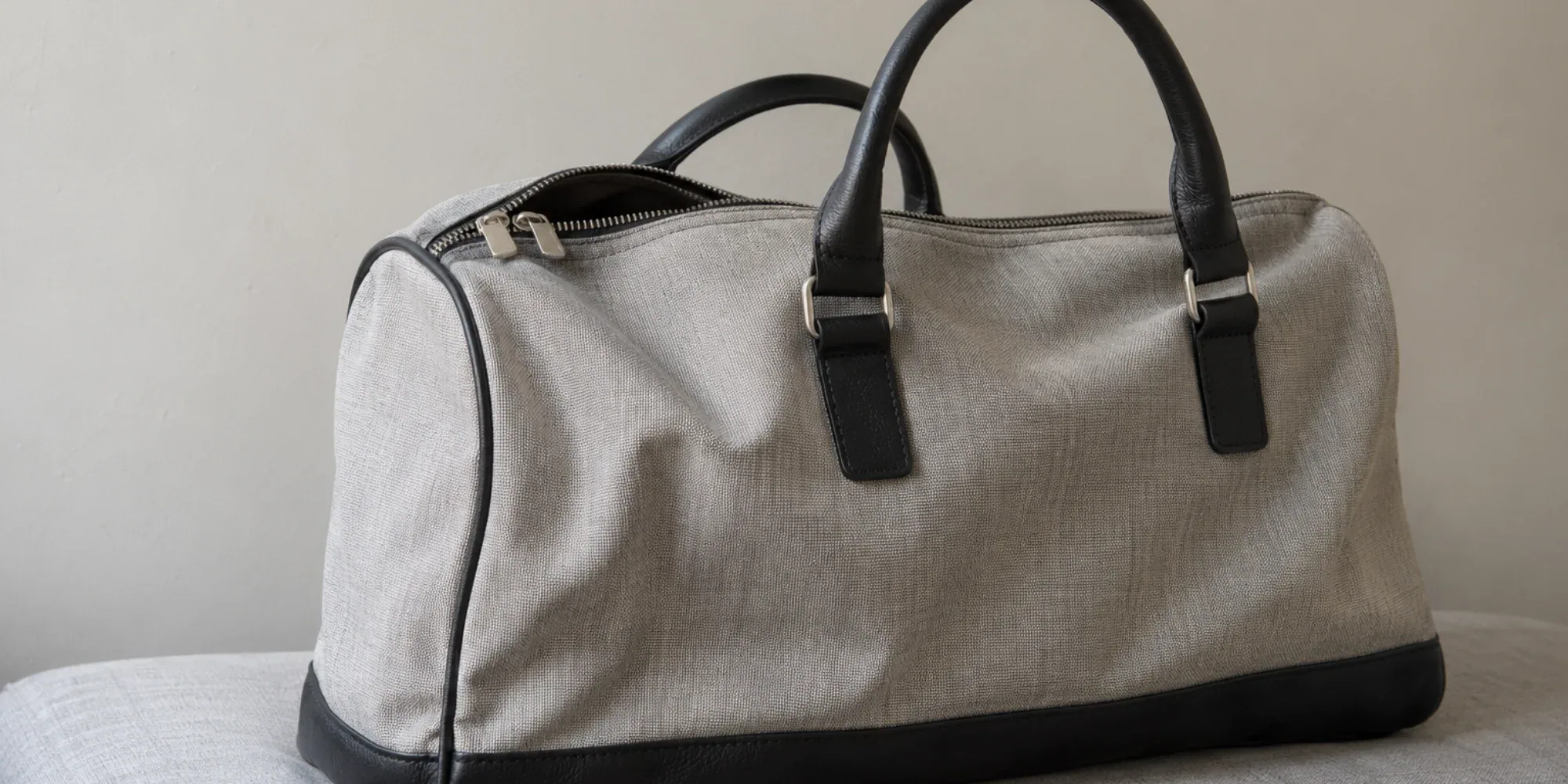
To manufacture travel bags at a Louis Vuitton-adjacent quality level, sourcing managers must verify a manufacturer's capabilities across three core pillars: advanced defect prevention frameworks (such as integrated SQC and FMEA), verified premium material sourcing (including Leather Working Group certification and SCS recycled content tracking), and the specialized machinery required to cleanly handle heavy-duty coated textiles and structural components.
Statistical Quality Control and Defect Prevention Frameworks
Producing Louis Vuitton-adjacent travel bags requires an extraordinarily low tolerance for both cosmetic and structural defects. A manufacturing partner capable of meeting this standard cannot rely solely on end-of-line visual inspections, where workers merely look at finished bags to catch errors. By the time a luxury travel bag reaches final inspection, its structural integrity, material grain alignment, and stitching density are permanently set. If a defect is found here, costly premium materials are wasted. Instead, sourcing managers must audit the manufacturer for systemic defect prevention frameworks. These frameworks ensure that quality is engineered into the production process rather than sorted out at the end. Assessing these proactive systems forms the foundational capability checklist for luxury soft goods sourcing.
A core requirement on this capability checklist is the manufacturer's implementation of an integrated quality control and failure analysis system. Rather than inspecting every single bag with the same generalized criteria, manufacturers must use continuous data to monitor the manufacturing process itself. For example, studies evaluating industrial woven bags demonstrate how an integrated Statistical Quality Control and Failure Mode and Effect Analysis framework can be utilized to systematically identify product defects based on collected production data. Integrated SQC and FMEA Framework for Woven Bag Defect Reduction In Manufacturing Industry | Academia Open
When a factory applies these statistical quality control principles to luxury goods, monitoring variables like stitch tension, adhesive application temperatures, or pattern cutting tolerances, they can detect when a machine or operator is drifting out of specification before a defective bag is actually produced. This proactive data gathering is essential for high-end travel bags, where even a slight deviation in handle alignment compromises the luxury tier classification.
Alongside statistical tracking, the capability checklist must mandate the use of Failure Mode and Effect Analysis to anticipate potential failures before they manifest. As shown in industrial woven bag manufacturing, utilizing this framework allows production teams to systematically analyze potential quality issues and determine prioritized corrective actions based on a Risk Priority Number. Integrated SQC and FMEA Framework for Woven Bag Defect Reduction In Manufacturing Industry | Academia Open
When applying this framework to a heavy-duty travel bag, potential failure modes might include tearing at the handle gussets under heavy loads, zipper track misalignment, or the delamination of structural backing materials. The Risk Priority Number calculates the severity of a specific defect, how frequently that defect might occur during the production run, and how easily the current control mechanisms can detect it before assembly begins.
Sourcing managers should ask prospective manufacturers to provide sample Risk Priority Number calculations from previous travel bag production runs. High-risk issues, such as a drop-handle snapping or hardware separating from the main body, generate a high Risk Priority Number. These high scores demand immediate, engineered solutions, such as reinforcing the attachment point with heavier gauge thread, adding specialized structural backing, or changing the hardware riveting process. Lower-risk issues, such as minor interior lining wrinkling, receive a lower score but are still documented for continuous improvement. By prioritizing corrective actions based on this number, a manufacturer demonstrates that they understand the critical difference between catastrophic structural failures and minor cosmetic variances. This targeted, data-driven approach is what separates a standard original equipment manufacturer from a facility capable of producing Louis Vuitton-adjacent goods.
- Request the supplier's control plans and ask how they map out the critical-to-quality characteristics specifically for complex travel bags.
- Check whether the cutting department uses automated tensioning systems and statistical sampling to prevent fabric distortion before assembly begins.
- Verify that edge-dyeing and bonding stations have environmental controls to maintain adhesive viscosity, with periodic checks documented in run charts.
- Ask for documented corrective action logs that show how past defects were traced back to their root causes and resolved using prioritized engineering changes.
- Confirm that the quality control team does not just measure finished goods but actively pauses production when statistical process data shows a negative trend.
If the manufacturer responds to questions about quality control merely by pointing to a team of final inspectors, they likely lack the preventative architecture required for luxury manufacturing. A true luxury-capable facility will present defect Pareto analyses and process control charts that prove their capability to maintain tight tolerances. However, confirming their defect prevention framework requires interrogating their actual engineering controls. Integrating statistical quality control and systematic failure analysis establishes a rigorous foundation for luxury manufacturing, ensuring premium materials are processed with precision. For company-specific information, see GFBags.
Premium Leather Sourcing and Traceability Standards
Transitioning from statistical defect prevention, the next crucial phase of the capability checklist involves raw material procurement, specifically premium leather. Luxury travel bags heavily rely on high-grade leather, whether utilized for full-body panels or essential structural trims like top handles, corner reinforcements, and base bindings. When attempting to achieve a Louis Vuitton-adjacent quality standard, a manufacturer's ability to consistently procure, verify, and handle luxury hides is a defining indicator of their overall competence. Sourcing managers cannot accept a supplier's subjective assurance that their materials are of the highest grade. Instead, the manufacturer must demonstrate a transparent, fully documented supply chain that traces every batch of hides back to verified tanneries. This strict traceability ensures that the raw material meets the exacting environmental baselines and aesthetic consistencies demanded by the luxury market.
To accurately evaluate this sourcing capability, buyers must benchmark the supplier's procurement network against recognized global standards. The Leather Working Group provides a rigorous, widely adopted framework for this validation. Established in 2005, the Leather Working Group began as a collaborative initiative among leading footwear, apparel, and upholstery brands, alongside key leather manufacturers. Today, it operates as a global non-profit, multi-stakeholder initiative committed to building a world where leather is sourced, produced, and used sustainably. By inspiring and educating industry participants, the organization supports and encourages the use of responsibly made leather, aiming to protect both people and the planet throughout the global supply chain. This certification structure helps buyers verify that a factory is not sourcing from unregulated tanneries that cut corners on chemical management. What we do – Leather Working Group
A facility capable of manufacturing luxury goods must prove that its leather originates from tanneries audited by this initiative. By partnering with these audited facilities, manufacturers guarantee stringent environmental compliance regarding heavy metal usage, effluent treatment, and water consumption. For a product developer, verifying this supply chain is much more than a sustainability checklist exercise; it is a fundamental risk management strategy. A factory that strictly controls its material origins is far less likely to introduce compromised, poorly tanned hides that might bleed dye onto light clothing, crack prematurely under mechanical stress, or emit harsh chemical odors. These defects are unacceptable in the luxury travel bag segment. Evaluating a supplier's ability to maintain these verified, consistent material pipelines is a non-negotiable step on the manufacturing checklist, as the cost of rejecting finished goods due to poor base materials is prohibitive in the luxury sector.
Beyond supply chain verification, the checklist must examine how the factory physically processes premium hides before assembly. High-end leather requires specialized machinery, climate controls, and trained operators. A critical capability is the manufacturer's cutting strategy. Luxury factories use precision protocols to ensure only the prime, tight-grain sections are used for visible panels and load-bearing straps, avoiding stretchier belly sections. Furthermore, a manufacturer must possess highly calibrated skiving and splitting machines to thin the leather precisely where it folds or joins. If left too thick at a seam, the travel bag features bulky, uneven stitching that disqualifies it from the luxury tier. Conversely, if skived too thin, the structural integrity of a load-bearing handle is severely compromised.
Edge finishing represents another specialized capability distinguishing ordinary suppliers from those equipped for luxury-tier production. Louis Vuitton-adjacent bags frequently utilize raw-edge construction that requires meticulous edge painting and burnishing to seal exposed leather fibers. A capable facility will have dedicated, climate-controlled zones for edge painting, because ambient temperature and humidity directly dictate how proprietary paints cure and adhere. Sourcing managers must inspect these stations to verify workers apply multiple, razor-thin coats of paint, sanding carefully between applications. Attempting to bridge gaps with a single thick layer of synthetic rubber is a common shortcut that inevitably leads to cracking, peeling, and a cheapened aesthetic after minimal use.
- Request the supplier's chain-of-custody documentation tracing recent premium leather batches back to their original tanneries to ensure compliance with recognized sustainability frameworks.
- Verify the calibration logs and blade replacement schedules for the facility's splitting and skiving machinery to guarantee consistent material thickness.
- Inspect the leather cutting floor to ensure workers are actively grading hides and avoiding weak flank areas for structural components.
- Evaluate the edge-painting stations for proper climate control and observe whether operators are applying and sanding multiple thin coats.
- Ask for a physical sample demonstrating their raw-edge finish and inspect it for adhesion, smoothness, and flexibility under tension.
Ultimately, merging verified supply chains with highly specialized handling techniques guarantees that the final product aligns perfectly with luxury consumer expectations. A manufacturer treating premium leather as just another textile will invariably fail to capture the required refinement, regardless of how skilled their final assembly operators might be. The sourcing manager must view the rigorous documentation of sustainable tanning practices and the physical inspection of leather processing equipment as equally critical halves of the capability assessment. For company-specific information, navigate to Contact Us. For company-specific information, see GFBags.
Constructing and Handling Coated Structural Fabrics
Luxury travel bags frequently rely on signature coated structural fabrics to achieve their iconic look and exceptional durability. Unlike standard woven textiles, heavy-duty coated canvases require entirely different handling protocols and specialized machinery. Sourcing managers evaluating a factory for a high-end capability checklist must verify that the manufacturer treats these coated fabrics as engineered structural components rather than simple, pliable textiles. If a facility attempts to process heavy coated canvas using standard light-duty equipment, the resulting bag will inevitably suffer from uneven seams, compromised weather resistance, and structural failures at critical stress points.
The unique physical properties of these materials dictate strict manufacturing requirements, beginning with an understanding of their inherent barrier protection and rugged durability. PVC coated fabrics are extremely protective and resilient under severe environmental conditions. Demonstrating their heavy-duty structural integrity and barrier effectiveness, agricultural research has evaluated the efficacy of a PVC coated fabric bag for the on-farm storage of wheat over a period of eight months without requiring chemical fumigation. When materials possessing this level of inherent ruggedness are scaled into luxury consumer goods, they provide excellent structural defense against the elements. Efficacy of PVC coated fabric bag for on-farm storage of wheat (Triticum aestivum) | The Indian Journal of Agricultural Sciences
However, adapting such highly resilient materials for refined consumer products creates significant mechanical resistance during the manufacturing process. The thick, rubberized surface coating adds substantial friction and stiffness to the individual panels. Consequently, standard sewing transport mechanisms will struggle to move the material smoothly across the machine bed. This mechanical struggle leads directly to visible aesthetic flaws, inconsistent stitch lengths, and structural weaknesses that fall well below premium expectations. The capability checklist must therefore thoroughly scrutinize the factory floor for the specialized equipment necessary for handling heavy-duty coatings without marring their finished surfaces.
To successfully construct bags from these demanding materials, the capability checklist must confirm the presence of heavy-duty sewing machinery specifically designed for high-friction materials. The factory floor must be equipped with compound-feed sewing machines, commonly known as walking-foot machines. A standard drop-feed machine relies solely on bottom feed dogs to pull the fabric forward. When used on a high-friction surface, these bottom teeth will inevitably slip, drag, or stretch the rubberized coating of a PVC or polyurethane textile. This dragging creates uneven stitch lengths and puckered seams. A compound-feed machine moves the needle, the presser foot, and the feed dog in unison, ensuring the thick, friction-heavy coated fabric is pulled evenly without surface marring. Evaluating this equipment is non-negotiable.
Beyond machinery, handling protocols for needle selection and stitch density are crucial checklist elements. Because a coated fabric features a continuous surface over a woven base, every needle puncture creates a permanent hole. Operators must use round-point needles that separate the woven backing yarns rather than slicing through them. If a factory incorrectly uses a sharp leather-cutting needle, the blade will sever the structural backing beneath the coating, weakening the bag and causing seams to split apart when the bag is heavily packed. Furthermore, a manufacturer must carefully calibrate stitch density to avoid effectively perforating the canvas.
- Inspect production lines for compound-feed sewing machines capable of evenly transporting high-friction coated materials without puckering.
- Check factory specification sheets to confirm they use round-point needles that safely separate the interwoven structural backing textile.
- Review standard operating procedures for stitch density to ensure critical stress points are not accidentally over-perforated.
- Examine material handling carts to verify rigid coated fabrics are rolled rather than folded, preventing permanent uncorrectable creases from forming prior to assembly.
Finally, finishing the raw edges of luxury coated structural fabrics requires meticulous handling techniques that differ entirely from solid leather processing. Coated canvas is thick and rigid, meaning that simply folding it creates excessive, unsightly bulk at the seams. Sourcing managers must ensure operators never attempt to run these woven-backed fabrics through a skiving machine to thin the edges. Skiving a coated structural fabric severs the interwoven yarns, causing the fabric to unravel and completely destroying the seam structural integrity. Instead, a capable manufacturer restricts precision skiving exclusively to the leather trims, relying on specialized edge binding techniques for the coated material.
Auditing Sustainable and Recycled Content Integration
Modern luxury travel bags are no longer defined solely by traditional leathers and heavy-duty coated canvas. High-end consumers increasingly demand the integration of sustainable materials, such as regenerated nylon bodies or recycled interior linings. However, a brand positioning itself adjacent to Louis Vuitton cannot rely on vague environmental marketing. The capability checklist must evaluate how rigorously a manufacturing partner can source, track, and validate recycled inputs without compromising aesthetic refinement or structural durability. If a factory substitutes a standard fabric with an unverified recycled alternative, the brand risks both product failure and reputational damage. Auditing the supplier's sustainability infrastructure is therefore a critical phase of the sourcing process.
Self-declared sustainability claims from an original equipment manufacturer are insufficient for luxury-tier production. Sourcing managers must demand transparent, verifiable proof of material origins, requiring the manufacturer to participate in established third-party assessment programs rather than relying on internal reporting. When evaluating a prospective facility, the capability checklist should mandate documented proof that the factory maintains a strict chain of custody for all recycled inputs. This means tracking the material from its origin, through the weaving phases, directly to the cutting floor. A manufacturer capable of supporting a luxury brand will have these tracking systems integrated into their standard operating procedures, treating environmental compliance with the same rigor as statistical quality control.
To benchmark a factory's capability in this area, buyers should look for alignment with recognized authorities in environmental auditing. For example, since introducing the initial third-party certification framework for recycled content claims in 1989, SCS Global Services has functioned as a primary authority in this space. Sourcing managers can rely on their comprehensive assessments to verify that the percentage of recycled material advertised is exactly what the travel bag contains. If a manufacturer claims to use recycled textiles but cannot produce a valid certificate from an established body, they lack the administrative capability required for modern luxury manufacturing. The factory must prove their supply chain is continuously assessed by external organizations. Recycled Content Certification | ISO 14021 & SCS‑103 | SCS
The manufacturer's administrative capability directly dictates the luxury brand's marketing options. Sourcing managers must verify whether the factory supports the private label transfer of these sustainability credentials. SCS offers a specialized Private Label certification pathway for recycled content, which is accessible to the clients of certified factories. This option allows the sourcing brand to legally re-brand the approved products under their own corporate name, providing consumer-facing proof of sustainability. If a factory does not hold the proper certifications, or if their processes do not support this transfer, the brand cannot make verified recycled content claims. This operational gap severely limits the travel bag's marketability to environmentally conscious luxury consumers. Recycled Content Certification | ISO 14021 & SCS‑103 | SCS
- Request current, verified certificates from established third-party auditing bodies that cover the specific recycled textiles intended for the travel bag.
- Verify the manufacturer's ability to support private label certification transfers, allowing your brand to accurately market the certified sustainable content.
- Inspect the warehouse storage areas to confirm that recycled raw materials are physically segregated from virgin materials to prevent cross-contamination.
- Review the factory's chain-of-custody documentation for a recent production run to ensure seamless tracking from the material supplier to the finished goods.
Beyond examining certification transfers, a thorough audit requires inspecting how the factory physically handles sustainable materials. Maintaining a certified chain of custody dictates that recycled fabrics and virgin materials cannot be mixed indiscriminately on the production floor. The capability checklist must include a physical inspection of the facility's receiving and staging areas. Capable luxury manufacturers will have clearly designated inventory zones to ensure that a roll of recycled lining is never accidentally swapped with standard material. Assessing this physical segregation provides final confirmation that the manufacturer possesses both the administrative rigor and the operational discipline necessary to seamlessly integrate sustainable materials.
Prototyping, Capability Validation, and Production Partnership
The final step in evaluating a luxury-adjacent travel bag manufacturer is transitioning from theoretical capability checklists to practical validation. Sourcing managers must test the factory claims regarding defect prevention, material handling, and sustainable sourcing through a structured validation phase. This process involves executing rapid prototyping, negotiating aligned minimum order quantities, and conducting pre-production audits. Before any contract is signed, the buyer must verify that the manufacturer can replicate their promised quality standards on the specific travel bag design.
The first physical test of a manufacturer capability is the sampling process. Prototyping should not be an endless cycle of corrections. A luxury-tier manufacturer will possess an in-house development room equipped to turn technical packs into accurate first samples rapidly. Sourcing managers should monitor how the factory handles the sampling phase. Does the manufacturer proactively ask questions about stitch density or hardware placement, or do they blindly follow a flawed specification sheet? A competent partner will push back on design elements that might compromise the bag structural integrity or aesthetic finish, acting as a technical advisor rather than just a fabricator.
When evaluating the prototype travel bag, sourcing managers must look past the general silhouette and scrutinize the micro-details established in earlier capability checks. Inspect the edge painting on raw leather trims to ensure it is thin and flexible, rather than a thick, easily cracked layer of rubber. Check the needle holes along the heavy-duty coated fabrics to confirm they are not over-perforated or tearing at the backing. Validate that the interior lining sits smoothly without wrinkling or pulling when the bag is fully loaded. If the sample requires multiple rounds of significant corrections to reach a basic baseline, the factory likely lacks the systemic control necessary for luxury mass production.
Minimum order quantities are a critical logistical hurdle in luxury bag sourcing. Standard factories might demand massive volume commitments that conflict with the limited-run nature of high-end travel bags. Conversely, a manufacturer offering suspiciously low order quantities might not have direct purchasing relationships with premium tanneries or certified sustainable textile mills. Sourcing managers must negotiate order quantities that align with the minimum viable runs of customized luxury materials, such as custom-dyed recycled linings or audited leathers. A capable partner will help navigate these material minimums, perhaps by suggesting shared base materials across different bag styles within a collection to meet mill requirements without overproducing a single unit.
Once the prototype is approved and order volumes are established, the final validation step is the pre-production audit. This is a practical, on-site assessment that moves beyond reviewing paperwork. Sourcing managers or their designated quality assurance representatives should walk the production floor to confirm the specialized machinery observed during initial visits is actually assigned to their production line. Ensure that the statistical quality control check-sheets are stationed at the relevant assembly points for the travel bag, and that the cutting room has properly segregated any certified recycled materials to maintain the chain of custody.
- Track the number of iterations required during the prototyping phase to gauge the factory pattern-making and technical translation skills.
- Inspect the prototype for specific luxury indicators, including skived leather edges, correctly tensioned coated fabric seams, and flawless hardware attachment.
- Discuss minimum order quantities in relation to the specific premium materials required, ensuring the factory has viable strategies for bespoke luxury textiles.
- Conduct a pre-production walk-through to verify that the specialized machinery and environmental controls are operational and allocated to the upcoming production run.
Validating the prototype, aligning production volumes, and conducting a final operational audit ensures that the manufacturer can execute the rigorous requirements of a luxury travel bag. A facility that passes these physical and logistical tests demonstrates that they are not just capable on paper, but are prepared to function as a reliable production partner. By enforcing these final capability checks, sourcing managers secure a supply chain that consistently delivers products meeting the high expectations of the luxury market.
Sources
- Integrated SQC and FMEA Framework for Woven Bag Defect Reduction In Manufacturing Industry | Academia Open
- What we do – Leather Working Group
- Efficacy of PVC coated fabric bag for on-farm storage of wheat (Triticum aestivum) | The Indian Journal of Agricultural Sciences
- Recycled Content Certification | ISO 14021 & SCS‑103 | SCS