 Skip to content

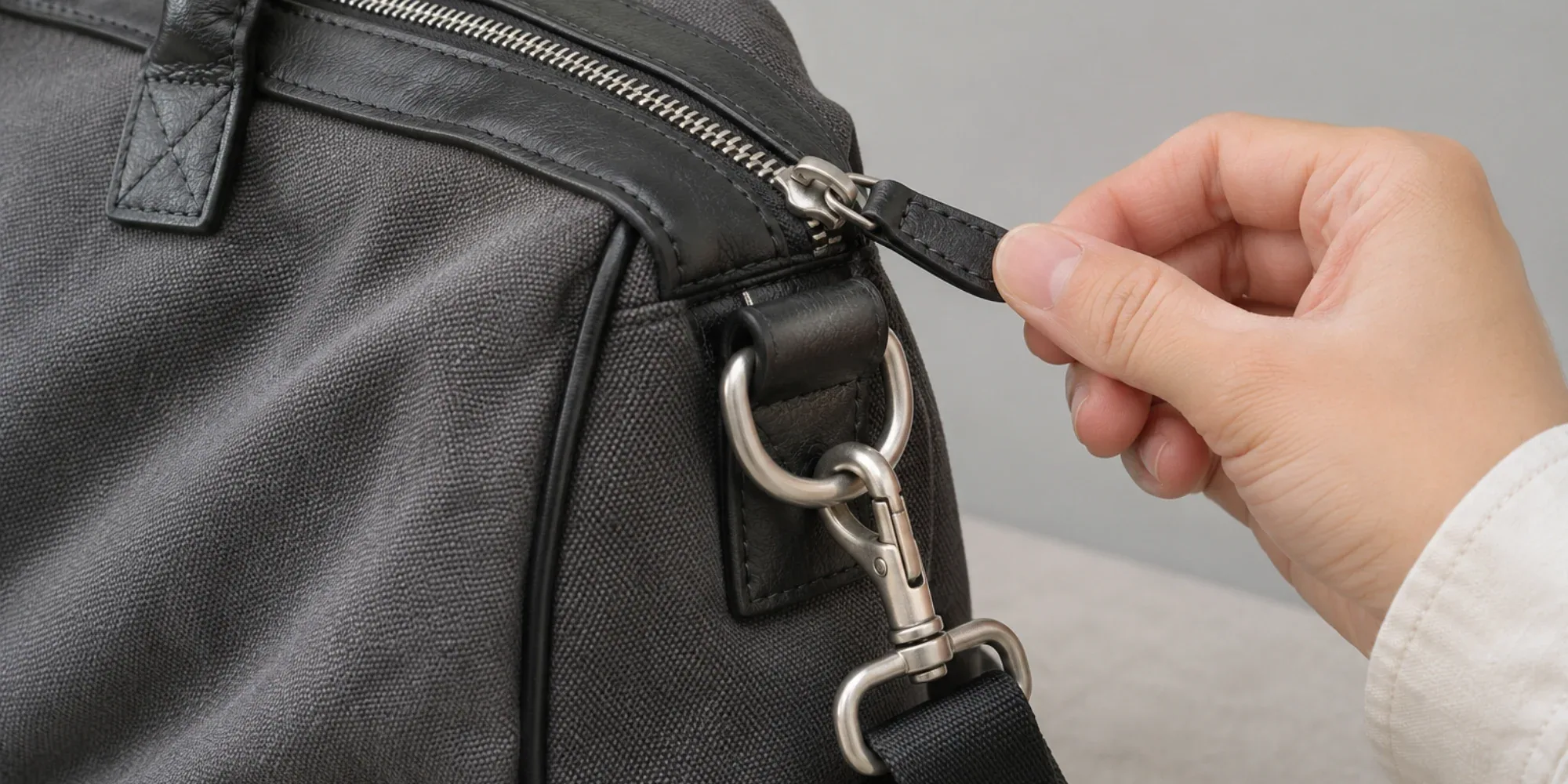
To evaluate a manufacturer's capability for Prada-adjacent hardware, zippers, and trims, use a checklist that assesses their direct sourcing network for luxury components, custom molding and premium plating techniques, strict attachment tolerances that prevent soft fabric distortion, and verifiable quality control testing frameworks.
Evaluating Hardware Supply Chains and Direct Sourcing Networks
Securing luxury-grade hardware, zippers, and trims for soft bags requires rigorous evaluation of a manufacturer's supply chain infrastructure. At the Prada-adjacent quality tier, absolute consistency in metal weight, alloy composition, and zipper operation is mandatory. Bag manufacturers that rely on open-market intermediaries or wholesale spot markets cannot guarantee this consistency across production runs. Intermediaries frequently mix components from different suppliers, which can lead to mismatched plating tones on metal hardware or varying tape tensions from different zipper factories. These inconsistencies can ultimately distort delicate nylons and soft leathers. Sourcing managers must therefore prioritize factories that maintain direct, documented relationships with top-tier component manufacturers.
Direct access to established component brands provides a foundation for technical standardization. Reputable hardware and trim manufacturers often lead industry standardization efforts, ensuring their components meet strict mechanical thresholds. For instance, SBS Zipper acts as the secretariat for the zipper sub-technical committee of the National Hardware Standardization Technical Committee, focusing on developing and manufacturing high-quality, fashionable zippers. When a bag manufacturer works directly with standardized suppliers of this caliber, they secure reliable technical specifications and baseline quality controls that unbranded, open-market alternatives simply cannot provide. sbszipper.com
By eliminating the middleman, factories can also secure the precise custom specifications necessary for high-end soft goods. Luxury bags frequently require custom-dyed zipper tapes to perfectly match specific exterior fabrics, bespoke molded pullers, and proprietary metal finishes. Wholesale markets typically only stock standard, off-the-shelf shapes and colors. A manufacturer with direct supplier accounts can negotiate custom molding and specific plating thicknesses, ensuring the hardware is engineered exactly to the brand's aesthetic and structural requirements. For company-specific information, see GFBags.
- Demand a detailed Bill of Materials (BOM) for initial samples that specifies the exact brand, factory, and origin of all D-rings, zippers, and clasps, rejecting vague descriptions like "standard alloy."
- Request proof of direct supplier relationships, such as official distributor letters or recent purchase orders from recognized premium hardware and zipper manufacturers.
- Verify that the component supplier's custom molding Minimum Order Quantities (MOQs) align with the bag manufacturer's typical production volumes to ensure bespoke logo hardware is economically feasible.
- Assess the bag factory's supply chain traceability to confirm they can track a defective component back to a specific supplier batch.
Finally, an established direct sourcing network must be paired with robust incoming quality control (IQC) at the bag factory. Even when purchasing directly from premium suppliers, the bag manufacturer is responsible for inspecting incoming components for micro-scratches, uneven plating, and zipper teeth alignment before assembly begins. Sourcing managers should verify that the factory does not blindly trust their direct suppliers but actively audits incoming batches. This combination of traceable, direct sourcing and rigorous internal inspection forms the necessary foundation for executing luxury-tier hardware integration.
Zipper Engineering and Tape Alignment Tolerances
High-end zipper engineering goes far beyond simply selecting a reputable zipper brand. At the Prada-adjacent luxury tier, how the factory integrates the zipper into a soft bag dictates the final structural integrity and visual appeal of the product. When assembling zippers into supple nylons or premium leathers, the manufacturer must maintain strict tape alignment tolerances. The zipper tape essentially acts as a secondary structural seam, and any mismatch in tension between the tape and the main body fabric will cause immediate, highly visible defects. If the sewing operator applies too much tension to the tape during insertion, the surrounding soft fabric will instantly pucker and gather along the seam line. Conversely, if the tape is sewn too loosely, the zipper track will wave and distort, compromising both the sleek aesthetic of the bag and the smooth mechanical operation of the slider. Evaluating a factory's zipper assembly process requires assessing their systematic ability to control these operational tolerances across every production batch.
Achieving this balance consistently requires a highly standardized approach, particularly when managing luxury hardware. High-end facilities calibrate their stitching techniques specifically for different material pairings. Sewing a heavy metal zipper into rigid canvas requires different tension settings than inserting it into lightweight nylon. Sourcing managers must verify that the factory utilizes dedicated mechanical guides and specialized presser feet to maintain consistent stitch lengths and tape tension. Without these calibrated procedures, the precision necessary for assembling luxury trims will suffer. Evaluating the factory's approach to these variable material combinations reveals whether they rely on operator guesswork or established mechanical baselines.
Beyond stitching, luxury zippers demand custom engineering down to the individual teeth and slider mechanisms. High-end soft bags feature symmetrically polished metal teeth that ensure a frictionless glide without scratching the user's hands. Procurement teams must verify that the manufacturer specifies individually polished teeth rather than standard stamped tracks with sharp edges. Additionally, the slider must be evaluated for structural stability. A heavy metal puller attached to a standard slider can cause structural failure when pulled at an angle. The factory must demonstrate that they pair bespoke pullers with reinforced sliders designed to handle the specific weight and leverage of custom hardware.
- Zipper Teeth Polishing: Inspect physical samples to ensure metal teeth are polished on all sides, eliminating sharp edges.
- Tape Tension Control: Evaluate stitching techniques to ensure specialized presser feet are used to prevent puckering on soft materials.
- Slider Reinforcement: Verify that oversized pullers are matched with reinforced sliders to prevent separation under heavy torque.
- Dye-to-Match Precision: Check color tolerance standards for zipper tapes, ensuring exact chromatic alignment with the exterior fabric.
To thoroughly audit a manufacturer's zipper integration capabilities, sourcing managers should request unlined prototype sections. Examining a zipper sewn into a raw piece of the intended soft bag fabric reveals the factory's actual skill level long before interior linings hide the structural stitching. Look closely at the start and end stops of the zipper track; luxury assembly requires these terminals to be seamlessly tucked and heavily reinforced without adding awkward visible bulk to the exterior silhouette. For questions regarding the evaluation of specific assembly line procedures or detailed technical specifications, procurement teams can use the Contact Us page of a prospective manufacturer to request their standard operating procedures for hardware integration. For company-specific information, see GFBags.
Assessing Custom Molding and Metal Finish Durability
Bespoke logo hardware is a defining element of Prada-adjacent soft bags. Sourcing managers must evaluate a manufacturer based on their capacity to manage custom metal molding with exceptionally tight tolerances. Standard hardware is often cast using generic molds that leave visible seam lines, pitting, or uneven edges. In contrast, luxury hardware requires highly precise CNC-machined steel molds and careful zinc alloy or brass die-casting to achieve crisp logo engravings and smooth geometric edges. When evaluating a factory, request to examine the raw, unplated castings from previous custom projects. If the unplated zinc or brass already shows surface porosity or rough parting lines, the final plated finish will inevitably magnify those defects.
The plating process fundamentally dictates the visual lifespan and tactile quality of the hardware. High-volume manufacturers typically rely on barrel plating, a method where hundreds of small components are tumbled together in a chemical bath. While cost-effective, this friction causes micro-scratches and uneven coating distribution, which is unacceptable for luxury standards. A rigorous evaluation checklist must require rack plating for prominent exterior hardware. In rack plating, each zipper puller, lock, and D-ring is individually suspended on a fixture before being submerged. This prevents physical contact between pieces and creates a uniform, mirror-like finish. Sourcing managers should also require manufacturers to specify their micron thickness thresholds. Exceptionally thin flash plating will quickly wear off during daily use, revealing the base metal underneath.
Even the thickest rack plating remains vulnerable to tarnishing, humidity, and atmospheric sulfur without proper sealing. Assessing a manufacturer's anti-oxidation treatments is therefore critical. Luxury hardware typically undergoes an electrophoretic clear coating or a specialized baked lacquer process to seal the metal finish. This clear layer must be meticulously applied. If it is too thick, it pools in the recessed areas of engraved logos and creates a plastic-like feel that cheapens the bag. If it is too thin, the underlying metal will quickly oxidize. Evaluate whether the factory calibrates this protective layer to balance durability with tactile quality.
- Molding Precision: Inspect raw castings for surface porosity and visible parting lines before any plating is applied.
- Rack Plating Mandate: Require proof of rack plating lines for exterior components, rejecting barrel plating for visible hardware.
- Micron Thickness Documentation: Demand explicit technical specifications detailing the micron thickness for both base layers and the final alloy finish.
- Topcoat Calibration: Verify that anti-oxidation clear coats are applied evenly without pooling in logo engravings.
Sourcing managers must also account for structural tradeoffs. While dense brass hardware and thick rack plating provide luxurious weight, this added mass can distort lightweight nylons or soft leathers. The manufacturer must demonstrate the expertise to evaluate whether heavy bespoke hardware will cause the soft bag structure to sag. A capable partner will actively advise against excessively heavy designs if they compromise the surrounding fabric.
Defect Reduction Frameworks for Hardware Attachment
Prada-adjacent soft bags frequently pair delicate fabrics like fine nylon or supple calfskin with heavy, densely plated metal hardware. This inherent weight mismatch creates a significant risk of material puckering, tearing, or structural distortion at attachment points. To prevent heavy components from damaging soft materials, a truly capable luxury manufacturer does not simply stitch hardware directly onto a single layer of exterior fabric. Instead, they engineer these stress points using invisible structural reinforcements hidden within the bag panels. Manufacturers insert custom-cut reinforcements, such as high-density polyethylene sheets or bonded leather scraps, directly behind the exterior fabric. This backing acts as a structural anchor, distributing the concentrated mechanical load of a heavy clasp or lock plate across a wider surface area. Without this hidden internal architecture, the localized weight forces the immediate soft material to stretch, which inevitably causes sagging and permanent puckering over time.
Beyond inserting backing materials, the factory must carefully calibrate its stitching machinery to handle these multi-layered sections. Punching through a delicate exterior soft fabric and a rigid backing board requires precise needle selection and rigorous thread tension control. If the sewing tension is too tight, the delicate outer fabric will pucker noticeably around the stitch line. If the tension is too loose, the heavy hardware will lack stability and eventually pull away from the main bag body. Evaluating an unlined, cross-sectional prototype allows procurement teams to confirm that the manufacturer successfully balances stitch strength with fabric integrity long before the interior drop-in lining is attached to conceal the structural workmanship.
To maintain this structural precision across large mass-production runs, manufacturers must implement structured quality evaluation methods rather than relying on reactive trial-and-error corrections. Sourcing managers should verify whether the facility utilizes integrated frameworks like Statistical Quality Control (SQC) and Failure Mode and Effect Analysis (FMEA). Research on woven bag manufacturing demonstrates that utilizing an integrated SQC and FMEA framework allows facilities to systematically analyze product quality and establish prioritized corrective actions based on a Risk Priority Number. Applying this analytical approach to hardware attachment ensures potential failure points—such as incorrect thread tension or inadequate backing thickness—are identified and permanently resolved before causing widespread material distortion. Integrated SQC and FMEA Framework for Woven Bag Defect Reduction In Manufacturing Industry | Academia Open
- Reinforcement Backing Protocols: Inspect cross-sectional cutaways of prototype bags to confirm the presence of high-density backing materials behind heavy metal fixtures.
- Stitch Tension Calibration: Check that the factory utilizes programmable sewing machines adjusted for punching through soft fabrics and rigid boards without stretching the exterior fabric.
- Integrated Quality Frameworks: Request documentation demonstrating how the facility uses SQC and FMEA to prioritize corrective actions for attachment defects.
- Stress Point Stitching: Verify that high-stress zones, such as handle mounts, utilize reinforced stitching patterns that distribute force evenly across the backing layer.
The primary tradeoff for implementing hidden structural reinforcements and analytical defect-reduction frameworks is a significant increase in assembly time and higher per-unit manufacturing costs. Because backing materials must be skived, glued, and stitched precisely into place before final assembly, the labor required per bag increases substantially. Standard factories operating on tight margins often skip structural backing to speed up production. For sourcing managers targeting luxury standards, accepting these shortcuts is an unacceptable risk. A capable factory will proactively present their reinforcement strategies, demonstrating exactly how their engineering choices preserve a flawless architecture.
Verifying Leather Trims and Edge Painting Capabilities
Leather trims, such as zipper pulls, structural piping, handle mounts, and base reinforcements, add necessary rigidity, visual contrast, and tactile luxury to soft bags. Integrating semi-rigid leather with flexible nylon or canvas textiles requires precise manufacturing tolerances. High-end brands demand that these accents meet stringent luxury aesthetic standards while avoiding distortion of the primary fabric. Evaluating a soft bag manufacturer requires assessing both their material procurement network and their technical finishing capabilities for leather accents.
The first step in vetting a manufacturer's trim capability is evaluating their supply chain for leather. Rather than accepting vague claims of premium quality, sourcing managers should look for verifiable origins. Check if the manufacturer procures materials from suppliers audited by the Leather Working Group. Established as a collaborative, multi-stakeholder initiative involving apparel brands and leather manufacturers, the Leather Working Group helps ensure leather is sourced and produced sustainably. When a bag manufacturer maintains active relationships with these audited tanneries, they can provide the necessary documentation to support your responsible sourcing initiatives. What we do – Leather Working Group
Beyond material sourcing, edge painting is a critical indicator of luxury craftsmanship. Prada-adjacent quality requires applying multiple thin coats of specialized edge paint, with meticulous sanding, buffing, and curing between each layer to create a smooth, convex finish. Standard factories might rush this process by applying a single thick layer to save time, leading to brittleness and peeling over time. Thicker single coats may look adequately raised on an initial sample, but they lack the internal flexibility to bend harmoniously with a soft bag structure.
- Traceable Material Sourcing: Request audited tannery documentation to verify that leather components are produced sustainably.
- Skiving Precision: Evaluate the skiving process where leather trims meet soft fabrics to prevent bulky seams and ensure flush transitions.
- Edge Adhesion and Flex Testing: Check if the factory conducts mechanical flex tests on painted edges to ensure the finish does not crack when the soft bag is compressed.
- Thermal Resistance Protocols: Verify that edge finishes undergo temperature testing to confirm the polymer remains stable in extreme climates.
- Climate-Controlled Curing: Observe the drying environments; climate-controlled rooms prevent humidity from introducing bubbles or uneven curing in the edge paint.
When vetting a factory, physically inspect edge-painted trim samples. Run your finger along the edges of straps and pullers to check for a uniform feel without drips or uneven bubbling. A manufacturer equipped for luxury trims will have dedicated edge-painting machinery, such as automated roller guides, to maintain consistency. By systematically checking their edge finishing techniques and requiring transparent sourcing documentation, you ensure that leather accents enhance the soft bag rather than creating aesthetic weak points.
Physical Stress Testing and Quality Control Protocols
Beyond visual inspections and structural reinforcements, luxury hardware requires rigorous physical stress testing. A Prada-adjacent soft bag is a significant investment, and the metal components must withstand years of active use without tarnishing or mechanical failure. Sourcing managers must evaluate a manufacturer based on their documented testing protocols to ensure they conduct or commission standardized physical evaluations on every incoming batch of hardware before it ever reaches the assembly line.
The most critical evaluation for plating durability is the salt spray test. Luxury hardware frequently interacts with atmospheric moisture, acidic skin oils, and variable climates. A standard salt spray test places the metal components in a sealed chamber exposed to a highly corrosive saline mist for a specified duration. Sourcing managers should require manufacturers to document their salt spray testing thresholds. High-end hardware typically demands exposure times far exceeding standard market requirements to guarantee the clear topcoat and underlying rack plating will not oxidize or peel. If a factory relies entirely on initial, one-off supplier certificates, they cannot verify the consistency of the plating across ongoing production runs. To maintain quality control, the manufacturer must either operate internal salt spray testing chambers or regularly submit batch samples to accredited third-party testing laboratories.
Mechanical durability must also be explicitly quantified. Zippers, heavy bespoke D-rings, and spring-loaded clasps bear the brunt of everyday physical tension. The manufacturer must perform tensile strength evaluations using specialized pull-testing machinery to determine the maximum force a component can withstand before the metal distorts or the slider separates from the zipper tape. Furthermore, luxury zippers and locking mechanisms must undergo automated cycle testing. In this process, a machine repeatedly opens and closes the mechanism thousands of times to simulate years of daily use. This guarantees that internal springs maintain their resilience and that symmetrically polished zipper teeth do not grind down or snag over time.
Testing hardware in isolation is only half the requirement; the factory must also test the heavy hardware while it is physically attached to the soft bag fabric. Tensile tests performed on fully assembled prototype seams reveal whether the delicate nylon, the leather trim, or the metal fixture fails first under pressure. Sourcing managers should confirm that the manufacturer integrates these physical testing results into their standard quality management protocols. By systematically logging physical test failures and fabric tearing points, factories can identify specific attachment weaknesses and implement structural corrections before mass production begins.
- Salt Spray Verification: Confirm the factory operates internal testing chambers or regularly utilizes accredited third-party labs to establish baseline hours for luxury-grade anti-oxidation standards.
- Tensile Pull Testing: Require logs of destructive pull tests on both standalone hardware components and fully stitched prototype seams to verify load-bearing thresholds.
- Mechanical Cycle Endurance: Ensure zippers, locks, and spring-loaded clasps undergo automated repetition testing to guarantee long-term mechanical resilience.
- Data Integration: Verify that failure rates and seam tearing thresholds from physical stress testing are actively tracked within factory quality control logs to resolve structural defects.
Certifying Sustainable Trims and Recycled Components
Integrating sustainable materials into luxury soft bags extends beyond the main body fabric. Sourcing managers must rigorously vet a manufacturer's claims regarding recycled metal hardware, eco-friendly zipper tapes, and sustainably processed leather trims. Unlike surface plating or zipper alignment, the recycled content or sustainable origin of a component cannot be verified through physical inspection or mechanical testing. Because Prada-adjacent brands face intense scrutiny over greenwashing, a manufacturer's capability to procure and integrate sustainable components must be evaluated on their verifiable chain of custody. Relying on a factory's self-declared environmental claims introduces significant risk; the assessment must instead demand formal, specialized third-party verification.
When auditing a manufacturer's sustainable hardware supply chain, look for established certification programs that specialize in material composition. For instance, SCS Global Services launched the first third-party certification program for recycled content claims in 1989 and provides comprehensive assessment and certification for recycled content in the market today. Procuring hardware from foundries that undergo this level of independent auditing ensures that the recycled zinc, brass, or aluminum used in bespoke logo plates and D-rings actually contains the percentage of diverted waste claimed by the supplier. Recycled Content Certification | ISO 14021 & SCS‑103 | SCS
A critical aspect of evaluating the manufacturer is determining how this certification transfers to the final soft bag. Traceability must not break at the assembly line. SCS Global Services notes that their private label certification is available to customers of certified manufacturers, which allows the re-branding of certified products under the customer's company name. Sourcing managers should verify if the bag manufacturer has the administrative controls to facilitate these private label transfers, ensuring the luxury brand can legally and transparently market the sustainable trims. Recycled Content Certification | ISO 14021 & SCS‑103 | SCS
- Demand current, third-party certificates for all recycled hardware, cross-referencing the certificate holder's name with the bag manufacturer's documented direct suppliers.
- Review the factory's internal chain of custody protocols to ensure recycled zipper tapes and sustainable trims are physically segregated from virgin materials on the production floor.
- Verify the availability of private label certification programs that allow the brand to accurately claim the recycled hardware under its own name.
- Request mechanical stress test comparisons proving that the recycled metal alloys and eco-friendly polymer trims achieve the exact same tensile strength and plating adhesion as conventional luxury components.