 Skip to content

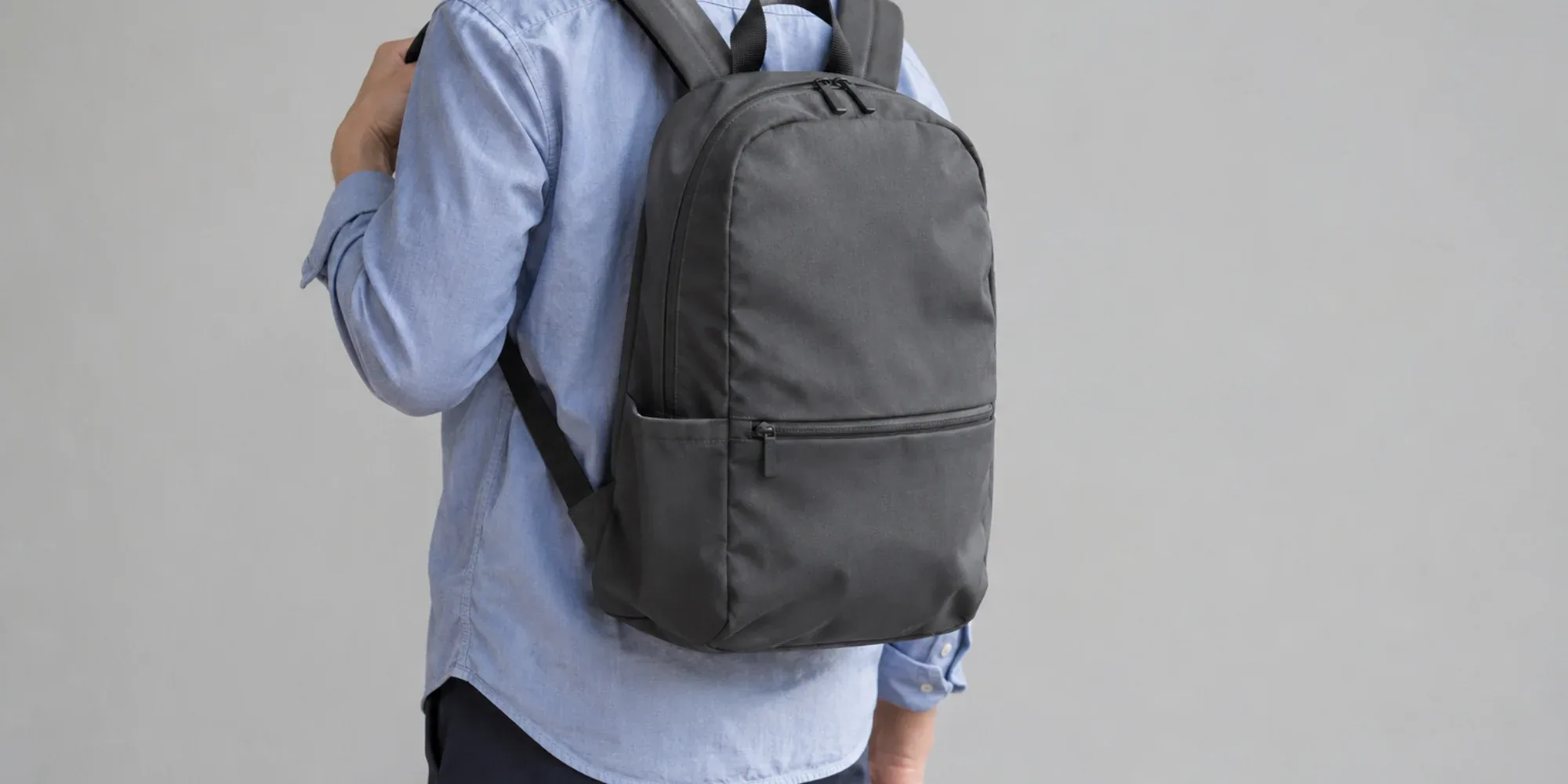
To successfully implement a commuting backpack through an Original Design Manufacturer, start by selecting a base model that already meets core ergonomic and structural needs, then customize the materials, specify reliable hardware brands for daily durability, establish clear defect reduction protocols, and verify any sustainability claims through third-party certifications before signing off on mass production.
Evaluating ODM Base Models for Commuting Use
When transitioning from retail purchasing to B2B procurement, sourcing managers often find that partnering with an Original Design Manufacturer fundamentally changes the product development cycle. Rather than engineering a bag from the ground up, the process begins with selecting an existing base model. This approach minimizes initial tooling costs, accelerates the sampling timeline, and leverages the factory's established production techniques. To start, buyers should browse the manufacturer's Home page or digital catalog to identify templates designed specifically for daily travel. The primary task is not inventing a new silhouette, but rigorously evaluating these established templates to ensure they meet the non-negotiable structural and functional requirements of a commuting backpack. For company-specific information, see GFBags.
The structural integrity of the base model dictates how well it will protect high-value electronics and maintain its shape during daily transit. Commuting bags must carry dense loads, typically consisting of laptops, chargers, and documents, without sagging. Sourcing managers should inspect the base template for a suspended laptop sleeve, which keeps the device elevated from the bottom panel to prevent impact damage when the bag is dropped. Additionally, while not an absolute requirement, many users prefer a chassis that exhibits enough rigidity to stand upright independently. A bag that maintains its shape when partially empty looks professional and makes accessing internal compartments easier during a busy morning commute, although soft-sided roll-tops can also function perfectly well for daily transit without a free-standing base.
Ergonomics represent another critical baseline that is difficult to drastically alter once a base model is selected. Because commuters wear these backpacks while walking, standing on trains, or cycling, the harness system must effectively distribute weight. Evaluate the shoulder straps to confirm they utilize high-density EVA foam, which resists flattening over months of continuous use, unlike standard low-density sponge padding. The back panel structure must include distinct air channels or spacer mesh to facilitate ventilation and reduce heat buildup. Buyers should request physical samples of the unaltered base model and test them with heavy, realistic loads to ensure the center of gravity remains close to the wearer's body without pulling backward.
Compartmentalization and overall capacity are equally important when evaluating a manufacturer's template. A standard commuting backpack typically holds between fifteen and twenty-five liters. The internal layout of the base model must support rapid, organized access. Look for templates that already incorporate distinct functional zones, such as a secure main compartment, a secondary organizer panel for small accessories, and quick-access exterior pockets for transit cards or keys. If a base model requires extensive repositioning of internal panels or entirely new compartments, the project risks shifting into a more complex custom manufacturing process, which negates the inherent lead-time advantages of using an Original Design Manufacturer.
Finally, the construction methods used in the base model influence its inherent weather resistance. While the exterior fabric and hardware can be upgraded during the customization phase, the template's seam placement and zipper orientation are typically fixed. Sourcing managers must examine how the main entry points are structured. A template designed with exposed top-facing seams or unprotected zipper tracks is vulnerable to water ingress during rainy commutes. Selecting a base model that features protective fabric welts, reverse-coil zipper placements, or angled seam constructions provides a stronger foundation for building a truly weather-resistant commuter bag. By carefully vetting these structural, ergonomic, and functional baselines, product developers ensure their customization efforts are built on a proven, high-performing chassis.
Specifying Materials and High-Use Hardware
Transitioning from base model selection to customization requires product developers to rigorously specify every material. In an Original Design Manufacturer framework, a factory's default inventory often prioritizes general availability and cost efficiency over the specialized durability required for urban transit. Commuting backpacks endure relentless friction against transit seats and abrasive outerwear. To mitigate premature wear and maintain a professional appearance, buyers must move beyond generic fabric descriptions. Instead, explicitly mandate high-tenacity synthetics, such as heavy-duty ballistic nylon or high-density oxford cloth. Specifying the exact denier count, weave structure, and the application of an interior polyurethane backing ensures the exterior shell provides a measurable defense against physical abrasion and environmental moisture during a daily commute.
Beyond the exterior fabric, the structural seams bear the concentrated, shifting weight of laptops, chargers, and thick documents. Sourcing managers should specify the use of bonded nylon thread rather than standard polyester for load-bearing seams, particularly where the shoulder harness attaches to the back panel. Bonded nylon resists fraying and possesses superior tensile strength, significantly reducing the risk of seam blowout under heavy daily use. This level of granular specification must be documented in a comprehensive Bill of Materials that leaves no core component to the factory's discretion, ensuring consistency across bulk production runs.
While fabrics maintain the bag's structure, hardware components experience the highest frequency of repetitive stress. A commuter typically cycles the main compartments' zippers dozens of times a day. Relying on unbranded, factory-standard zippers introduces a severe vulnerability, as a single track failure renders the backpack unusable. To prevent this, sourcing managers must upgrade to recognized, reliable zipper brands. For example, SBS promotes its zippers as high-quality by marketing its role as the secretariat for the national zipper sub-technical committee. Documenting specific branded components establishes explicit quality standards and prevents factories from substituting cheaper alternatives during mass production. sbszipper.com
When specifying these high-use zippers, buyers must evaluate the functional tradeoffs between weather resistance and mechanical friction. Polyurethane-coated, water-resistant zippers effectively shield sensitive internal electronics from rain, but the protective coating inherently increases resistance along the zipper track. This requires the user to exert more pulling force, which can accelerate wear on the metal slider if installed along a sharp curve on the bag's chassis. Developers must balance weatherproofing against smooth, one-handed access. A practical solution involves reserving coated zippers for the laptop compartment, while utilizing standard reverse-coil zippers protected by overlapping fabric welts for quick-access pockets.
Similar rigor applies to buckles, tension locks, and D-rings. While metal hardware offers a premium aesthetic, it adds unnecessary weight to a bag already burdened by electronics. Specifying high-impact acetal resin plastic for structural buckles provides exceptional tensile strength and flexibility under load without the weight penalty of cast metal. Furthermore, the interior lining requires careful consideration. Standard low-denier polyester linings are prone to tearing when snagged by keys or rigid folders. Upgrading to a reinforced ripstop weave prevents minor punctures from expanding into larger tears.
Selecting a high-contrast interior lining color, such as bright yellow or light grey, significantly improves internal visibility, allowing users to locate small accessories quickly in poorly lit transit environments. Once all materials and hardware tradeoffs are resolved, the sourcing team must require physical production samples utilizing the exact specified components, rather than proxy materials, to validate how the customized elements interact. For detailed inquiries regarding hardware availability, minimum order quantities for custom trims, or establishing a specification sheet with a manufacturing partner, sourcing teams can use the Contact Us page to align technical requirements. For company-specific information, see GFBags.
Customization Strategies for B2B Procurement
When sourcing commuting backpacks for B2B procurement, such as employee onboarding kits or corporate gifting programs, product developers face a distinct set of customization priorities. Unlike consumer retail, where a bag must stand out on a shelf, B2B commuting backpacks must integrate into a professional environment while representing the purchasing organization. Research on bag manufacturing for corporate gifting emphasizes that successful B2B strategies rely heavily on a customer-centric approach to customization. This means the specification phase should prioritize the daily transit habits and professional requirements of the end-user over aggressive corporate branding. Strategies for Effective B2B Sales in the Corporate Gifts Industry: Best Practices and Success Tactics in the w.r.t Bag Manufacturing in Ahmedabad City | International Journal of Business and Management Practices (IJBMP)
The most immediate tradeoff in B2B customization involves brand visibility. Sourcing managers often receive requests to maximize logo size for exposure. However, an overtly branded backpack acts as a billboard, which many professionals hesitate to carry on crowded trains or into client meetings. To ensure the backpack is actually utilized for daily commuting, developers should specify subtle branding techniques. These include tonal embroidery that matches the primary fabric color, debossed patches, or custom-molded zipper pulls. Placing primary brand colors and step-and-repeat logos on the interior lining allows the purchasing company to maintain a strong brand identity without compromising the bag's outward appearance.
Beyond visual branding, structural customization must align with the specific hardware the purchasing organization issues to its workforce. A selected base model might feature a standard laptop sleeve, but if a corporate client equips its engineering teams with bulky mobile workstations, that standard sleeve becomes a daily friction point. Sourcing managers must provide the Original Design Manufacturer with the exact dimensions of the intended hardware. Modifying the internal suspended sleeve by adjusting the width, depth, and the density of the surrounding foam is a functional customization that directly improves the commuter's experience.
Sourcing managers must also balance the desire for custom corporate colors with the realities of factory minimum order quantities. Specifying a custom color for the primary exterior fabric typically requires the factory to dye a new master batch of material, which significantly increases volume requirements. If a B2B order falls below this threshold, developers can achieve a customized look by selecting standard exterior fabrics from the manufacturer's existing inventory and applying custom colors to lower-minimum accents.
- Interior Linings: Factories often hold a wide spectrum of standard lining colors and can print custom patterns at lower volume thresholds than heavy-duty exterior fabrics require.
- Webbing and Trims: Accenting a standard exterior with corporate-colored webbing for the top handle or side compression straps provides a distinct look without requiring a custom fabric dye run.
- Custom Hardware: Specifying powder-coated zipper sliders or woven side-seam labels introduces brand identity into the manufacturing process while keeping primary material sourcing efficient.
Implementing Quality Control and Defect Reduction
Transitioning a commuting backpack from an approved sample to mass production introduces the risk of manufacturing variance. Because commuting bags carry dense loads like laptops and are subjected to daily transit stresses, minor inconsistencies in assembly can lead to premature failure. Sourcing teams cannot rely solely on end-of-line inspections to catch these issues. Instead, they must establish structured quality assurance protocols with the Original Design Manufacturer to identify the root causes of recurring defects early in the production cycle.
Effective defect reduction requires moving beyond simple pass-or-fail grading. It demands a systematic framework for tracking production data and understanding how specific components might fail during everyday use. When evaluating quality protocols, product developers should confirm that the manufacturer applies integrated analytical methods to monitor the assembly process. In bag manufacturing, pairing statistical quality control with a structured failure analysis helps pinpoint exactly where the production line deviates from the approved specifications.
Applying this framework to a commuting backpack involves mapping out potential failure points before mass production scales up. The failure analysis assesses how a defect could impact the user. For example, incomplete stitching on a shoulder strap harness presents a high functional risk, as it compromises the load-bearing integrity of the bag. Conversely, a slightly misaligned interior pocket stitch might represent a minor aesthetic flaw. By multiplying the severity of the potential failure, the likelihood of its occurrence on the production line, and the difficulty of detecting it during assembly, the quality control team generates a risk priority metric for each potential issue.
This priority metric provides a clear, objective roadmap for the factory manager and the sourcing team. Rather than attempting to fix every minor inconsistency simultaneously, which can slow down production and increase costs, the manufacturer targets the high-risk defects first. If the analysis shows a high risk associated with water-resistant zipper installations, the corrective action might involve retraining operators at that specific sewing station or adjusting the tension on the sewing machines.
- Incoming Material Inspection: Verifying the structural integrity, colorfastness, and dimensional accuracy of fabrics and hardware before they reach the cutting floor.
- In-Line Inspection: Using statistical quality control to sample semi-finished backpacks directly on the sewing line, allowing supervisors to catch and correct calibration errors immediately.
- Final Product Audit: Conducting randomized structural and visual checks on completed bags to confirm that the established corrective actions successfully reduced the target defects.
Establishing these protocols requires clear documentation. Product developers must provide the manufacturer with detailed specifications and acceptable tolerance ranges for critical dimensions, such as laptop sleeve width and strap placement. Without defined tolerances, the factory cannot effectively measure whether a variation constitutes a defect. The buyer and the manufacturer should agree on a standard sampling plan, which determines how many units from each batch will be inspected to achieve a statistically valid representation of the overall production run.
Documenting the defect data and the corresponding corrective actions also creates a valuable feedback loop. When planning subsequent production runs or updating the base model for a new season, the sourcing team can review the historical performance data. If a specific structural element consistently generates a high defect rate despite corrective actions, it may indicate that the design itself is too difficult to manufacture at scale. Recognizing these patterns allows product developers to simplify the bag construction or specify different materials, ultimately improving production efficiency and ensuring the final commuting backpacks meet the rigorous demands of daily use.
Assessing Factory Productivity and Lean Practices
After locking in the base model, customizing materials, and establishing quality controls, sourcing managers must evaluate the factory's ability to produce the customized commuter backpack on schedule. A factory's theoretical production capacity means little if its floor operations are inefficient. Assessing factory productivity is crucial to ensuring that customized orders scale reliably without unexpected lead-time extensions or rushed, error-prone assembly. This evaluation shifts the focus from product design to manufacturing execution.
Evaluating a manufacturer's operational capacity often involves looking for established efficiency methodologies. Research into manufacturing operations demonstrates that planning productivity improvement efforts around lean manufacturing concepts proved effective in a plastic bag manufacturing case study. While commuting backpacks utilize heavy-duty textiles and intricate sewing techniques rather than automated industrial plastics processes, the core lean principles of eliminating wasted movement and streamlining assembly steps remain directly applicable to complex soft-goods production lines. Productivity Improvement in Plastic Bag Manufacturing through Lean Manufacturing Concepts: A Case Study | Scientific.Net
When touring a facility or reviewing its operational documentation, buyers should look for practical indicators of these lean practices. Commuting bags involve numerous distinct structural components, from suspended laptop sleeves and organizer panels to ventilated back harnesses. If semi-finished goods must travel back and forth across a massive factory floor between disconnected sewing stations, production delays multiply. An efficient Original Design Manufacturer organizes its floor layout sequentially so that materials flow smoothly from the cutting room to final assembly.
- Material Staging: Workstations should feature organized, just-in-time material delivery rather than cluttered piles of fabric, ensuring operators spend their time assembling rather than searching for matching parts.
- Standardized Instructions: Clear, visual assembly instructions posted at each station help operators maintain consistent cycle times when attaching complex components like high-density foam straps.
- Bottleneck Management: The factory floor managers should demonstrate a clear protocol for identifying slow sewing stations and rebalancing operator workloads to prevent semi-finished bags from piling up.
For a customized commuter bag, which relies heavily on precise component alignment, standardized workflows are essential. When a manufacturer minimizes material handling and actively balances the production line, they reduce the total cycle time required to complete each unit. This operational efficiency allows the factory to maintain strict delivery windows, even when scaling up from a pilot run of a few hundred pieces to a full-scale mass production order.
Furthermore, lean practices improve a factory's adaptability during the critical scale-up phase. If a specific structural customization, such as a reinforced bottom panel or a specialized water-resistant zipper installation, unexpectedly slows down the line, a lean-oriented manufacturer will quickly identify the bottleneck and adjust the workflow. Factories lacking these productivity controls often attempt to force production through bottlenecks, which invariably leads to compromised stitch quality, missed ship dates, and an unreliable supply chain.
Verifying Sustainability and Material Certifications
When a purchasing organization requires environmental criteria for its commuting backpacks, sourcing managers must transition from evaluating physical durability to rigorously verifying material provenance. Original Design Manufacturers often offer base models described generally as eco-friendly or made from recycled plastics. However, accepting informal factory assurances or unverified supplier claims introduces significant compliance risk. If a brand markets an unsubstantiated environmental claim based solely on a manufacturer's casual description, it risks violating strict corporate sustainability policies and consumer protection standards. Therefore, buyers must require formal documentation and independent verification for every sustainable material specified in the backpack, shifting the burden of proof from the final assembly factory back to the raw material suppliers.
The exterior shell of a commuting backpack is frequently constructed from synthetic materials like nylon or polyester. When specifying recycled alternatives to these virgin plastics, product developers need objective validation of the material's origins. Relying on generic tags claiming a percentage of recycled material is insufficient. Instead, sourcing teams should require formal assessments from specialized third-party certifiers to track recycled inputs. For instance, SCS Global Services states that it launched the first third-party certification program for recycled content claims in 1989. Engaging with recognized certification programs provides a structured framework for auditing the supply chain, helping buyers document that the claimed recycled content actually reached the final product. Recycled Content Certification | ISO 14021 & SCS‑103 | SCS
To implement these standards during the manufacturing process, buyers must request the specific certification documents for the exact fabric lot used in their production run, rather than accepting a generic certificate from the factory's past projects. Some certification programs also offer pathways for direct brand alignment. Through SCS Global Services, private label certification is available to customers of certified manufacturers, allowing the re-branding of certified products under the customer's company name. Sourcing teams should integrate these documentation requirements directly into the initial Bill of Materials, ensuring the factory understands that only verified textiles will be accepted for mass production. Recycled Content Certification | ISO 14021 & SCS‑103 | SCS
Beyond synthetic fabrics, many commuting backpacks incorporate leather elements, such as reinforced top handles, zipper pulls, or base panels, to achieve a professional aesthetic suitable for B2B environments. Verifying the sustainability of these components requires a different set of standards focused on the environmental impact of the tanning and production process. The Leather Working Group, established in 2005, operates as a global non-profit, multi-stakeholder initiative committed to building a world where leather is sourced, produced, and used sustainably, protecting people and the planet. The organization supports and encourages the use of responsibly made leather as a sustainable material by inspiring, educating, and challenging those that produce and use leather. What we do – Leather Working Group
If the customized bag design relies on leather, product developers should specify that the material must originate from a verified supply chain. This helps ensure the tanneries handling the material have met specific operational benchmarks for environmental management and chemical use. Because an Original Design Manufacturer may source hardware and trims from dozens of distinct sub-suppliers for a single commuting backpack, the buyer must trace the leather back to its specific tannery. Without this precise traceability, the purchasing organization cannot substantiate claims about responsibly produced components to its corporate clients.
- Documentation Review: Mandate that the factory provides active, unexpired certificates for the specific materials before bulk ordering begins.
- Material Segregation: Ensure the factory has established protocols to keep certified sustainable materials separated from standard virgin materials during the cutting and assembly phases.
- Cost Analysis: Account for the premium pricing typically associated with verified materials, balancing the corporate sustainability requirements against the target unit cost for the daily commuter bag.
Sources
- sbszipper.com
- Strategies for Effective B2B Sales in the Corporate Gifts Industry: Best Practices and Success Tactics in the w.r.t Bag Manufacturing in Ahmedabad City | International Journal of Business and Management Practices (IJBMP)
- Integrated SQC and FMEA Framework for Woven Bag Defect Reduction In Manufacturing Industry | Academia Open
- Productivity Improvement in Plastic Bag Manufacturing through Lean Manufacturing Concepts: A Case Study | Scientific.Net
- Recycled Content Certification | ISO 14021 & SCS‑103 | SCS
- What we do – Leather Working Group