Skip to content
Nylon vs Polyester Backpack Fabric for Commuter Bags: Manufacturing Pros and Cons
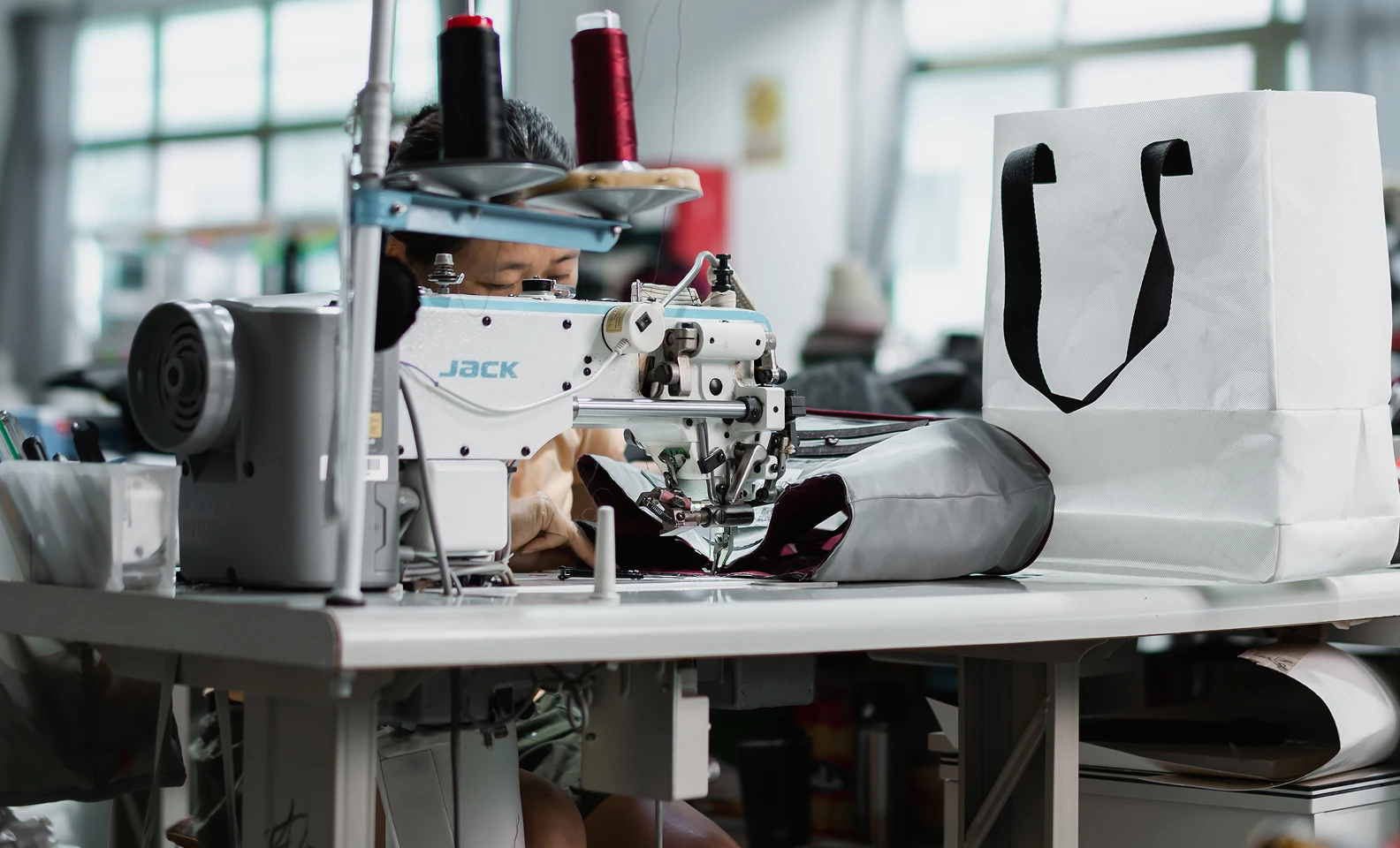
Summary answer: For OEMs in Berlin and nearby European markets, choosing between nylon and polyester for commuter backpacks typically comes down to desired abrasion resistance, weight, water behaviour, and cost. GFBags’ factory experience shows nylon often gives higher abrasion resistance and a lighter hand at similar deniers, while polyester can be more colorfast and cost-effective for large OEM runs — final choice depends on denier, coatings, and the approved sample.
From a factory/manufacturing perspective: we review raw rolls, run lab abrasion cycles, assemble working samples on the line, and iterate finishes before approving a production-ready spec.
Overview: nylon vs polyester for commuter backpacks — what manufacturers consider
Manufacturers evaluating materials for commuter backpacks look at:
- Durability under daily transit (back-and-forth on public transport, abrasion from bike straps, zipper wear).
- Water performance for rainy cities (Berlin, Amsterdam, London).
- Weight vs strength trade-offs for commuters carrying laptops and daily essentials.
- Cost-per-unit at scale, including fabric, coatings and finishing steps.
- Compatibility with branding requirements (printing, reflective trims, colorfastness).
Practical factory notes: on the production floor we typically compare material bolts using the same pattern and hardware to isolate fabric performance. We also produce at least two sewn proto samples (pre-FP) before approving bulk.
Material construction and common deniers used in commuter backpack production
Common constructions and deniers:
- 200–420D nylon (plain/ballistic/nylon taffeta): used for lightweight to mid-weight commuter packs.
- 300–600D polyester: common for budget-friendly and colorfast commuter models.
- 600–1680D high-denier nylon or coated polyester for heavy-duty or anti-abrasion panels.
Denier is a measure of yarn linear density — higher denier usually means heavier, more durable fabric but increased weight [S1].
| Fabric | Typical denier range for commuter packs | Typical uses |
|---|---|---|
| Nylon (taffeta, cordura types) | 200–1680D | Lightweight commuter packs (200–420D); abrasion panels (600D+) |
| Polyester (plain, oxford, ripstop) | 300–600D | Cost-efficient commuter packs, colorfast designs |
| Coated fabrics (PU, TPU on base fabric) | Varies | Water resistance and surface durability |
See our raw material options and specifications for detailed material sheets and available deniers.
Durability and abrasion resistance: manufacturing pros and cons for nylon and polyester
Manufacturing lens — durability testing and factory observations:
- Nylon generally shows higher tensile strength and better abrasion resistance at comparable deniers, making it a common choice for commuter bags that see rough handling.
- Polyester can perform well with the right weave and finish; it often holds color better under UV and repeated washes.
- Factory durability checks include Martindale or Wyzenbeek abrasion cycles, seam tensile tests, zipper cycle tests and accelerated wear panels on stitched prototypes [S2].
Pros and cons (manufacturing perspective):
- Nylon pros: higher abrasion resistance for panels and base, lighter at same tensile strength; cons: can be more expensive and may require more careful dyeing for color consistency.
- Polyester pros: cost-effective, better colorfastness, better hydrophobic behaviour in certain weaves; cons: may need heavier denier to match nylon abrasion life.
Water resistance, coatings and finishing options (PU, DWR) in mass production
Coatings and finishes applied in production:
- PU coating (back coating): adds waterproofing and improves abrasion resistance; common thicknesses vary by spec.
- DWR (durable water repellent): surface treatment to shed water; often applied before or after dyeing depending on supplier process.
- TPU laminates: used when higher waterproofing or welded seams are required; more costly and affects breathability.
Factory note: applying PU or DWR adds processing steps, curing time, and QC checks (adhesion, water column) that impact lead time and cost-per-unit. For specific coating options and impact on MOQ/pricing, review our pricing and MOQ guidance or contact the raw material team.
Weight, packability and tactile differences that affect commuter bag design
From a manufacturing point of view:
- Nylon weaves (e.g., 210D taffeta) can give a smoother, more “premium” hand and better packability.
- Polyester generally feels stiffer at the same denier; it can be engineered to be more structured for business/professional aesthetics.
- The choice affects cut-and-sew handling: stretch, slippage and feed rates on machines differ; operators adjust tension and stitch type accordingly.
Design implication: softer nylon may wrinkle less in transit, while stiffer polyester can hold structured laptop compartments without internal foam.
Cost-per-unit, sourcing and supply-chain implications for OEM production
Cost factors to consider:
- Base fabric price per meter (varies by denier, supplier, recycled content).
- Coating/finish costs (PU, TPU, DWR).
- Waste and consumption rate based on pattern efficiency.
- Duty, freight and lead time for importing fabrics to the production factory.
Typical manufacturing considerations:
- Polyester often provides lower fabric cost per unit at scale; nylon may increase raw material cost but could reduce replacement claims if abrasion failure is reduced.
- Recycled polyester typically increases material cost vs virgin polyester but supports sustainability claims (and may affect lead times).
For project-specific pricing and MOQ tradeoffs, consult our pricing page and request a quote.
Coloration, dyeing, and finish limitations by material at scale
Dyeing and finishing lens:
- Nylon accepts deep dye shades well but can be sensitive to dye lot variation; requires tight batching and lab-dip approvals.
- Polyester is more commonly dyed by disperse dyeing and can have superior UV/colorfastness; however, deep blacks may require specific dye recipes.
- High-visibility or reflective finishes: reflective trims and heat-transfer inks are common; compatibility tests are recommended for adhesion and washfastness.
Factory process step: approve lab dips and produce small pilot runs to confirm batch-to-batch consistency before bulk dyeing.
Sustainability considerations: recycled polyester, blended fabrics and material traceability
Sustainability options available in production:
- Recycled polyester (rPET) is available as a drop-in option for many commuter backpacks; traceability depends on supplier certificates and chain-of-custody documentation.
- Blends and partially recycled nylons are possible but need confirmation of mechanical properties and finish compatibility.
- Note: certification status depends on chosen materials and documented certificates — confirm with GFBags for the specific batch and supporting documents.
Read more about our sustainability and material certifications.
Quality control and testing protocols for fabric selection and production
Factory QC steps we typically follow:
- Incoming fabric inspection: check weight, denier, weave, visual defects, and roll-length verification.
- Lab testing on samples: abrasion (Martindale/Wyzenbeek), water column, tensile and seam strength [S2].
- 100% quality inspection before shipment as part of our standard process (visual and functional checks on each unit).
- Documented checklists and sample retention for reorders.
See our quality control processes used in production for detailed checkpoints.
Design and customization implications for branded commuter backpacks (hardware, pockets, straps)
Manufacturing/design considerations:
- Hardware (zippers, buckles) should be selected to match fabric strength; heavy denier fabrics may need larger bar-tacks and reinforced attachment points.
- Branding: embroidery, woven labels, silicone badges and heat transfers each have compatibility constraints by substrate; test on sample panels.
- Pocket and strap placement: abrasion-prone areas (bottom, strap edges) may call for reinforced nylon or higher-denier panels even in a mainly polyester pack.
Explore our see our backpack product categories to view construction examples.
Recommendations by commuter use-case: daily urban commute, cycling commuters, business commuting
- Daily urban commute (public transit, walking): 300–420D nylon or polyester with DWR finish; prioritize colorfastness and moderate abrasion resistance.
- Cycling commuters (higher abrasion, rain exposure): use 600D+ abrasion panels (nylon preferred) and robust PU/TPU laminates on the base; add reflective trims.
- Business commuting (laptops, meetings): smoother nylon 400D with structured internal padding and professional finishes; focus on stain resistance and refined hardware.
How to move from material choice to production: sampling, approval, and scalable manufacturing
Step-by-step (factory workflow):
- Define target spec: denier, coating, color, hardware list.
- Request fabric swatches and lab-dips for selected materials.
- Produce 1–2 prototype samples on intended hardware and lining.
- Run lab testing (abrasion, water column, seam strength).
- Approve pre-production sample (PPS) and confirm packaging/labels.
- Start pilot production (small run) to validate processes and yields.
- Move to mass production with documented QC checkpoints and sample retention.
If you want to begin, contact GFBags to request samples — our OEM/ODM team supports fast sampling capability (timeline depends on project confirmation).
Table: Quick manufacturing pros/cons summary
| Factor | Nylon | Polyester |
|---|---|---|
| Abrasion resistance | Often higher at same denier | Generally lower, needs higher denier |
| Weight | Lighter for same strength | May be heavier or stiffer |
| Colorfastness | Good but dye-sensitive | Often better UV/colorfastness |
| Cost per meter | Typically higher | Typically lower |
| Coating compatibility | Good with PU/TPU | Good, but adhesion recipes differ |
| Sustainability options | Recycled nylon less common | Recycled polyester widely available |
Limitations and boundaries
- Specific performance varies by supplier, weave, denier and coating; always confirm by approved sample and datasheet.
- Certification or sustainability claims depend on chosen materials and documented certificates — request documentation for traceability.
- Lead times and pricing are project-dependent; do not assume fixed delivery times without contract confirmation.
FAQ
Which fabric is more abrasion resistant for daily commuter use: nylon or polyester?
In many factory tests and typical constructions, nylon shows higher abrasion resistance at comparable deniers, making it a common choice for high-wear panels and bases. However, tightly woven or coated polyester at a higher denier can achieve similar abrasion life — final performance should be confirmed with lab abrasion tests on your selected material [S2].
How do nylon and polyester compare for water resistance and which coatings are typically applied?
Neither fabric is fully waterproof by itself — manufacturers commonly use PU or TPU laminates and DWR surface treatments to improve water performance. PU back-coatings increase water resistance and add stiffness, while DWR helps water bead off the surface [S1][S2].
What are realistic cost differences per unit between nylon and polyester for OEM backpack runs?
Polyester typically offers lower base fabric cost per meter which can reduce cost-per-unit at scale. Nylon may raise raw material cost but could lower warranty claims if abrasion failures are reduced. Exact numbers depend on denier, coating, trims, and order volume — request a project quote for accurate per-unit pricing.
Can GFBags produce commuter backpacks using recycled polyester or other sustainable materials?
Yes — GFBags can work with recycled polyester (rPET) and other sustainable material options, subject to supplier availability and traceability documentation. Please confirm desired certification and request supporting documents during the material selection process. See our sustainability and material certifications for more detail.
How does fabric denier affect durability and weight for commuter backpacks?
Denier correlates to yarn thickness: higher denier usually increases durability and weight. For commuters, 200–420D is common for lightweight packs, while 600D+ is used for high-wear panels. Balance denier with coatings and construction to meet your target weight and durability [S1].
What quality-control checks should an OEM customer request when choosing fabric?
Request incoming roll inspection, lab test reports for abrasion/water column/tensile, sample retention for reorders, and documented 100% visual and functional checks before shipment. GFBags follows a documented QC process and can share checklists on request.
Are there finishing or dyeing limitations for high-visibility or reflective commuter bags?
Reflective trims and high-visibility dyes can be integrated, but they require compatibility testing for washfastness, adhesion, and color migration. Heat-transfer reflective films and taped trims also need sewing and seam testing to ensure durability.
What steps are involved in sampling and approving a fabric choice before mass production?
See the step-by-step section above: define spec → request swatches/lab-dips → sew prototype → lab tests → PPS approval → pilot run → mass production. GFBags offers end-to-end OEM/ODM support through these stages and can provide timelines on confirmation.
Sources
- Denier (unit) — Wikipedia [S1]: https://en.wikipedia.org/wiki/Denier_(unit)
- Durable water repellent — Wikipedia (overview of DWR treatments) [S2]: https://en.wikipedia.org/wiki/Durable_water_repellency
- Nylon — Wikipedia: https://en.wikipedia.org/wiki/Nylon
- Polyester (fiber) — Wikipedia: https://en.wikipedia.org/wiki/Polyester_fiber
Next steps / Call to action
If you're an OEM or brand in Berlin, Amsterdam or London planning a commuter backpack line, we recommend requesting fabric swatches and a sampling quote. GFBags provides end-to-end custom OEM and ODM services, scalable production capacity, and a 100% inspection routine before shipment — start by contacting us to request samples and a production timeline: contact GFBags to request samples.
(Note: final product details, materials and certifications should be confirmed by approved sample and contract. Specifications may vary by model and batch.)