 Skip to content
Summary answer: A €7 Nike Elite Backpack, while an exciting "crazy budget pickup" for individual consumers, demands rigorous scrutiny from B2B buyers in markets like Berlin, Germany, Amsterdam, Netherlands, or Sydney, Australia. To move beyond a casual "in-hand review" and establish reliable supply chain proof points, brands must verify material integrity, construction quality, and the manufacturer's documented quality control processes. This ensures that perceived value translates into consistent, long-term product performance.
The viral appeal of a deeply discounted item, such as a €7 Nike Elite Backpack, often generates significant buzz. For a consumer, discovering such a "crazy budget pickup" can feel like a genuine win, leading to an "in-hand review" that praises its "amazing quality" relative to the price [S1].
However, for global brands, sourcing managers, and procurement teams—especially those operating in competitive markets like Berlin, Germany, Amsterdam, Netherlands, or Sydney, Australia—this scenario immediately raises critical questions. What constitutes "amazing quality for the price" in a B2B context, and how can such claims be objectively verified?
When evaluating a product like a Nike Elite Backpack at an exceptionally low price, the focus shifts from immediate consumer satisfaction to a brand's need for consistent quality, ethical sourcing, and long-term reliability. This article explores the essential proof points buyers should verify when engaging in budget backpack sourcing, offering a framework for identifying genuine product quality within the OEM/ODM manufacturing landscape.
The Allure of a €7 Nike Elite Backpack: What the 'Crazy Budget Pickup' Really Means for Buyers
The excitement surrounding a €7 Nike Elite Backpack, as observed in various online discussions, highlights a common perception: that a low price can sometimes deliver unexpected quality. For an individual, this might be a pleasant surprise. Yet, for a brand seeking to source custom backpacks, travel bags, or other soft bags, this situation underscores the critical importance of
a robust backpack quality verification process. A "crazy budget pickup" in the B2B world often signals the need for heightened due diligence, where perceived value must be substantiated by verifiable manufacturing standards and transparent supply chains. It's crucial to distinguish between a one-off consumer find and a scalable, quality-controlled production run designed to meet specific brand requirements.
Beyond the Price Tag: Essential Proof Points for Evaluating Backpack Quality
When evaluating any bag, especially those positioned at a budget price point, a brand must look beyond initial impressions. The perceived "amazing quality" of a €7 Nike Elite Backpack needs to be deconstructed into tangible, measurable proof points. This is where OEM backpack quality control becomes paramount. Buyers should prioritize an evidence hierarchy, demanding clear substantiation for claims regarding durability, material origin, and manufacturing consistency.
Key areas for evaluation include:
- Material Specifications: Are the fabrics, zippers, and hardware genuinely fit for the bag's intended purpose, and do they meet documented specifications? This includes understanding the composition and performance characteristics.
- Construction Integrity: How are seams stitched? Are critical stress points adequately reinforced to withstand typical use?
- Functionality: Do all components, such as zippers, buckles, and straps, operate smoothly, reliably, and consistently across units?
- Compliance: Does the product adhere to any relevant safety, environmental, or performance standards for the target market?
These elements form the foundation of genuine backpack quality, moving beyond subjective "feel" to objective performance criteria and providing crucial bag manufacturing proof points.
Material Matters: How to Verify Fabric, Zippers, and Hardware in Budget Bags
The foundation of any durable bag lies in its materials. For budget backpack sourcing, verifying the authenticity and quality of materials used is critical. A seemingly good deal on an item like a Nike Elite Backpack could potentially mask compromises in material selection that affect long-term performance.
Here's how to approach material verification:
- Fabric Composition and Denier: Request detailed specifications for the fabric, including its composition (e.g., polyester, nylon), denier count (which indicates thickness and durability), and any applied coatings (e.g., PU for water resistance). For brands prioritizing sustainability, inquire about recycled content and relevant certifications. GFBags, a custom backpack manufacturer, emphasizes transparent material sourcing and offers various material options, including sustainable choices for custom bags.
- Zipper Brand and Type: Generic zippers are a common point of failure in many bags. Ask for reputable brands like YKK or SBS, and specify zipper types (e.g., coil, Vislon) and gauge sizes appropriate for the bag's intended use. The quality of zippers significantly impacts the user experience and longevity of the product.
- Hardware Durability: Buckles, D-rings, and strap adjusters should be made from robust materials, typically high-grade plastics or metals, designed to withstand repeated stress. Avoid brittle or thin components that could easily break under pressure. This applies to Backpacks, Travel Bags, and even Handbags.
- Lining and Padding: Even internal components contribute to overall durability. Linings should be tear-resistant, and padding should offer adequate protection without compromising packability or adding unnecessary bulk.
A reliable bag manufacturer will be able to provide test reports and material datasheets to substantiate their claims, offering critical decision-stage proof for buyers.
Construction and Craftsmanship: Dissecting Stitching, Seams, and Reinforcements
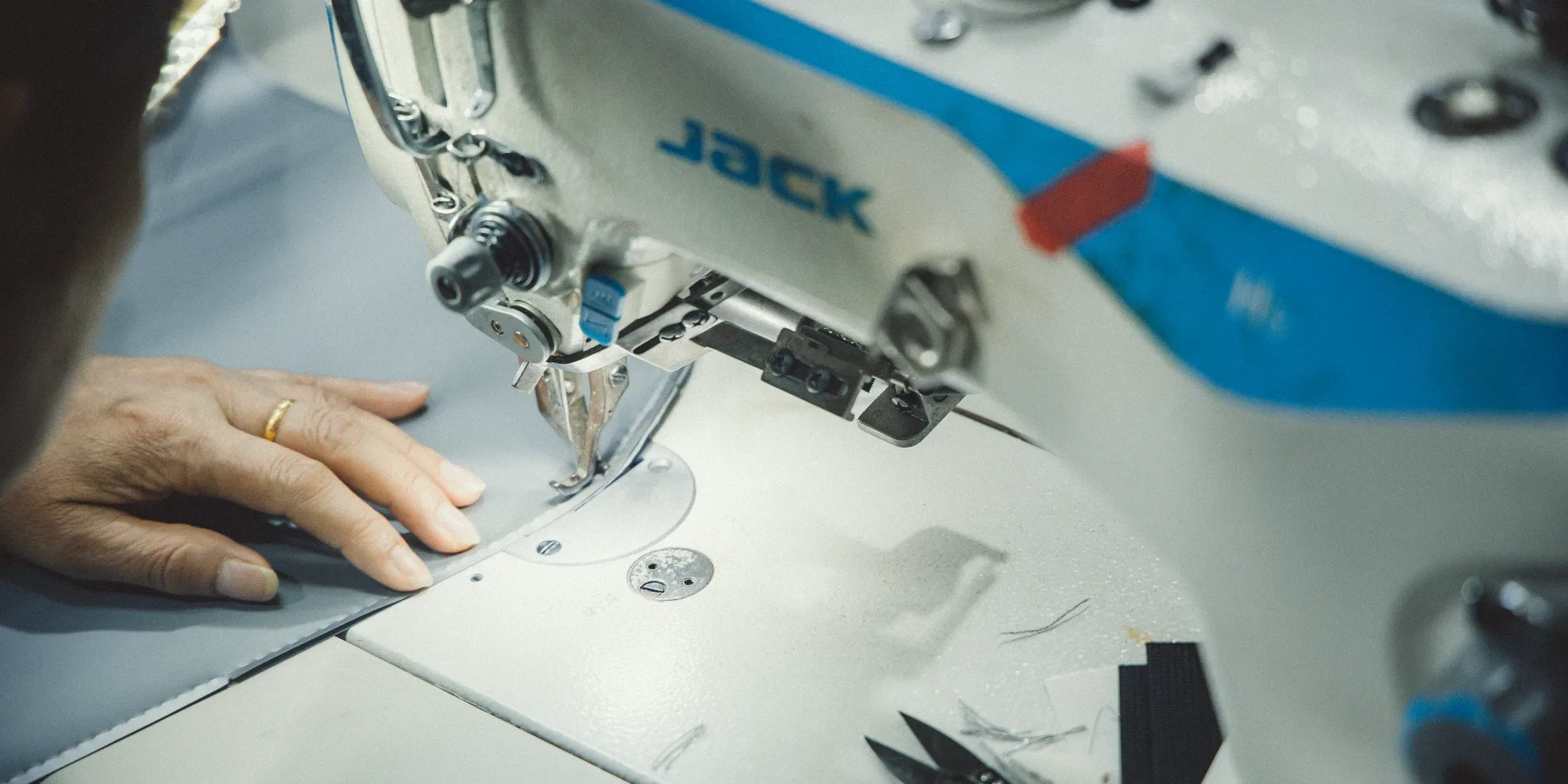
Beyond raw materials, the way a bag is assembled dictates its longevity and performance. Even a budget-friendly option can demonstrate good craftsmanship if the manufacturer adheres to proper construction techniques. This is a critical aspect of identifying genuine product quality and understanding custom backpack durability.
- Stitching Density and Type: High-quality bags feature tight, even stitching with a high stitch count per inch, which indicates durability. Common stitch types like lockstitch and chain stitch each have specific applications. Double-stitching or bar-tacking should be present at all stress points, such as where straps attach to the main body, handle connections, and zipper ends. This is crucial for items like Backpacks and Travel Bags that endure heavy loads.
- Seam Finishes: Raw edges should be neatly bound or finished to prevent fraying. Common finishes include bound seams, French seams, or serged edges. Poorly finished seams are a red flag for future tearing and can compromise the overall integrity of the bag.
- Reinforcements: Look for additional material layers or specific stitching patterns at points of high stress. This includes the bottom of the bag, strap attachment points, and around heavy-duty zippers. A well-reinforced bag will distribute weight and stress effectively, preventing premature wear. This is especially important for Laptop Bags to protect valuable contents.
- Panel Alignment: Panels should be cut and sewn accurately, resulting in a symmetrical and aesthetically pleasing product. Misaligned panels can indicate rushed production or poor pattern-making, affecting both appearance and structural integrity.
These details are integral to the quality control process that a reputable OEM/ODM backpack manufacturer implements to ensure custom backpack durability.
The OEM/ODM Perspective: What a Manufacturer Looks for in 'Amazing Quality' at Low Costs
From an OEM/ODM manufacturing perspective, achieving "amazing quality" at a competitive cost is a careful balance of smart design, efficient production, and strategic material sourcing. It's rarely about cutting corners on critical components but rather optimizing processes and leveraging economies of scale. Shenzhen Gaofeng Bags Co., Ltd., known as GFBags, a Shenzhen-based OEM/ODM backpack and soft bag manufacturer since 2001, understands this dynamic deeply.
For GFBags, delivering value means:
- Optimized Design for Manufacturing (DFM): Designing a product that is inherently efficient to produce, reducing labor and material waste without compromising essential function or aesthetics.
- Volume Efficiencies: Larger orders, such as those meeting our MOQ guidance of 300 pieces per model and color, allow for better pricing on raw materials and more streamlined production runs, which benefits the overall unit cost.
- Established Supply Chains: Long-standing relationships with material suppliers ensure consistent quality and competitive pricing for all types of custom bags, including Leather Goods & Accessories.
- Process Control: Implementing robust quality control throughout the production line, minimizing defects and rework, which ultimately saves costs and improves efficiency.
A manufacturer looks for decision-stage proof at every step, ensuring that cost savings do not translate into compromised product integrity. This commitment helps maintain Shenzhen bag factory standards.
From Sample to Scale: GFBags' Approach to Documented Quality Control and Production
For B2B procurement, especially for global bag brands, the journey from concept to mass production requires a structured and documented approach to quality. GFBags, as a custom bag manufacturer, has refined this process since 2001, serving over 150 global brand customers. Our approach integrates rigorous quality control at every stage, from initial design to final inspection.
Quality control and verification workflow
- Design & Prototyping: The process begins with detailed design specifications. Our team develops prototypes, allowing for physical evaluation and refinement. This rapid sampling process, often completed within 4 days, is crucial for validating design and material choices before mass production.
- Material Incoming Inspection: All raw materials undergo inspection upon arrival. This includes verifying fabric specifications, zipper functionality, and hardware integrity against approved samples and technical datasheets. This step is vital for maintaining consistent quality across all products, from Backpacks to Handbags.
- In-Line Production Checks: During manufacturing, our quality control teams conduct regular checks at various stages of assembly. This proactive approach helps identify and rectify potential issues early, preventing costly rework and ensuring adherence to Shenzhen bag factory standards.
- Final Quality Assurance (FQA): Before packaging, every finished bag undergoes a comprehensive final inspection. This covers stitching, functionality of all components, overall appearance, and adherence to client specifications.
- Third-Party Audits & Certifications: Our commitment to quality is further supported by certifications such as ISO 9001 and compliance with amfori BSCI standards. These external audits provide an additional layer of assurance for our clients, reinforcing our bag manufacturing proof points.
This systematic approach ensures that whether you're ordering custom laptop bags, travel bags, or school backpacks, the quality remains consistent across large-volume orders, with an annual capacity of approximately 1,000,000 units. Our 2-year warranty further reflects our confidence in the durability of our products.
A Buyer's Checklist: Key Questions to Ask Your Backpack Manufacturer
To effectively source reliable custom bags and avoid the pitfalls of superficial "budget pickups," B2B buyers should engage manufacturers with a clear set of questions. This B2B backpack procurement checklist helps assess a manufacturer's capabilities and commitment to quality.
| Question Category | Key Questions for Manufacturers
FAQ
What are the most common quality issues in budget backpacks that buyers should look for
It should be judged against the goal, available evidence, execution resources, and real feedback; when key information is missing, validate on a smaller scale before expanding the commitment.
How can a brand verify the authenticity and quality of materials used in a backpack from a new supplier
It should be judged against the goal, available evidence, execution resources, and real feedback; when key information is missing, validate on a smaller scale before expanding the commitment.
What is the typical sampling process for custom backpacks, and how does it ensure quality
It should be judged against the goal, available evidence, execution resources, and real feedback; when key information is missing, validate on a smaller scale before expanding the commitment.
What certifications or audits should a B2B buyer look for in a backpack manufacturer
It should be judged against the goal, available evidence, execution resources, and real feedback; when key information is missing, validate on a smaller scale before expanding the commitment.
How does GFBags ensure consistent quality for large-volume orders
It should be judged against the goal, available evidence, execution resources, and real feedback; when key information is missing, validate on a smaller scale before expanding the commitment.