 Skip to content
Summary answer: Achieving the meticulous quality required for luxury handbags, similar to the high expectations set by brands like Gucci, necessitates a comprehensive OEM approach. This involves stringent material selection, precise manufacturing process controls, and rigorous testing protocols, including AQL. For global brands in Berlin, Germany, Amsterdam, Netherlands, and Sydney, Australia, partnering with an experienced OEM/ODM custom bag manufacturer in Shenzhen, like GFBags, can help implement these detailed quality assurance frameworks.
For high-end fashion brands, a handbag is more than just an accessory; it's a statement of craftsmanship, material integrity, and brand promise. When considering luxury handbag manufacturing quality, particularly for brands with a reputation like Gucci, the bar for excellence is set exceptionally high.
OEM manufacturers aiming to meet these expectations must integrate robust quality standards into every stage of production. This involves not only adhering to technical specifications but also understanding the aesthetic and tactile nuances that define a premium product.
The challenge for sourcing managers, procurement teams, and product developers is to find an OEM partner capable of consistently delivering this level of quality for custom bags. This guide explores the critical elements of quality assurance in luxury handbag production, offering insights into the standards and practices that can elevate an OEM's capabilities.
Understanding the Landscape of Luxury Handbag Manufacturing
Luxury handbag manufacturing operates in a distinct segment of the soft bag manufacturing industry, characterized by an unwavering focus on detail, durability, and aesthetic perfection. Unlike mass-market production, where efficiency often takes precedence, high-end bag production prioritizes flawless execution and the use of superior materials. Brands like Gucci meticulously oversee their supply chain and manufacturing processes to ensure every product reflects their heritage and commitment to excellence.
OEM manufacturers stepping into this space must recognize that merely producing a functional item is insufficient. The product must embody the brand's identity, with every stitch, seam, and hardware component contributing to an overall sense of luxury. This often means working with specialized materials, employing highly skilled artisans, and implementing multi-layered quality checks throughout the entire production cycle.
The objective is to minimize defects, as even minor imperfections can significantly devalue a luxury item. The stringent Gucci handbag quality control standards for OEM manufacturers serve as a prime example of the precision required.
Key Quality Control Pillars for High-End Bags
Effective quality management in luxury handbag manufacturing rests on several interconnected pillars, each crucial for upholding a brand's reputation. These pillars extend beyond simple defect detection to proactive prevention and continuous improvement.
The foundation of superior product quality is laid during the design and development phase. This includes precise technical drawings, material specifications, and detailed construction methods. Rapid sampling, such as GFBags' stated 4-day rapid sampling capability, allows for quick iteration and refinement of prototypes, ensuring that the design intent translates accurately into a physical product.
The choice and verification of raw materials are paramount; luxury items often feature premium leathers, exotic skins, or high-grade textiles, along with custom hardware. Ensuring the authenticity, consistency, and performance of these materials is a critical first step.
Throughout the production line, strict process controls are necessary to maintain consistency and precision, encompassing everything from cutting patterns to stitching, edge painting, and hardware attachment. Skilled craftsmanship and adherence to documented procedures are essential. Beyond visual checks, materials and finished products undergo various tests to confirm durability, colorfastness, and structural integrity.
These tests often align with international standards to provide objective measures of quality. Finally, even the packaging contributes to the luxury experience; proper protection during transit is vital to prevent damage and maintain the pristine condition of the product upon arrival.
Material Sourcing and Verification: The Foundation of Luxury Quality
For luxury bags, the materials themselves often define the product's perceived value and longevity. Therefore, material sourcing for high-end bags involves a rigorous selection and verification process. An OEM bag manufacturer must establish strong relationships with reputable suppliers and implement thorough incoming material inspections.
Key considerations for material sourcing and verification include:
- Authenticity and Grade: For leather goods, verifying the type, grade, and origin of the leather is crucial. This might involve checking supplier certifications or conducting independent lab tests. For textiles, confirming fiber composition and weave quality is important.
- Performance Characteristics: Materials must meet specific performance criteria. This includes resistance to abrasion, tearing, fading, and water. For example, specific textile testing for luxury bags might involve tests like ASTM D5034 for breaking strength [S2] and ASTM D3884 for abrasion resistance [S3].
- Color Consistency: Achieving consistent color across different batches of material is vital for brand integrity. OEMs often use spectrophotometers to match color standards precisely.
- Sustainability and Ethical Sourcing: Increasingly, luxury brands demand transparency in their supply chains, including sustainable bag production standards. This involves verifying that materials are sourced ethically and, where applicable, meet certifications like OEKO-TEX STANDARD 100 for harmful substances [S4] or GRS for recycled content. GFBags, for instance, emphasizes material selection options, including sustainable choices where applicable, aligning with modern brand requirements. More details can be found on our Raw Material page.
- Hardware Quality: Zippers, buckles, clasps, and other metal components must be robust, smoothly operating, and resistant to tarnishing or corrosion. Finishes must be consistent and durable.
Manufacturing Process Controls: Precision and Craftsmanship
The journey from raw material to finished luxury item requires meticulous process control and skilled craftsmanship. An OEM's ability to maintain precision throughout production directly impacts the final product's quality.
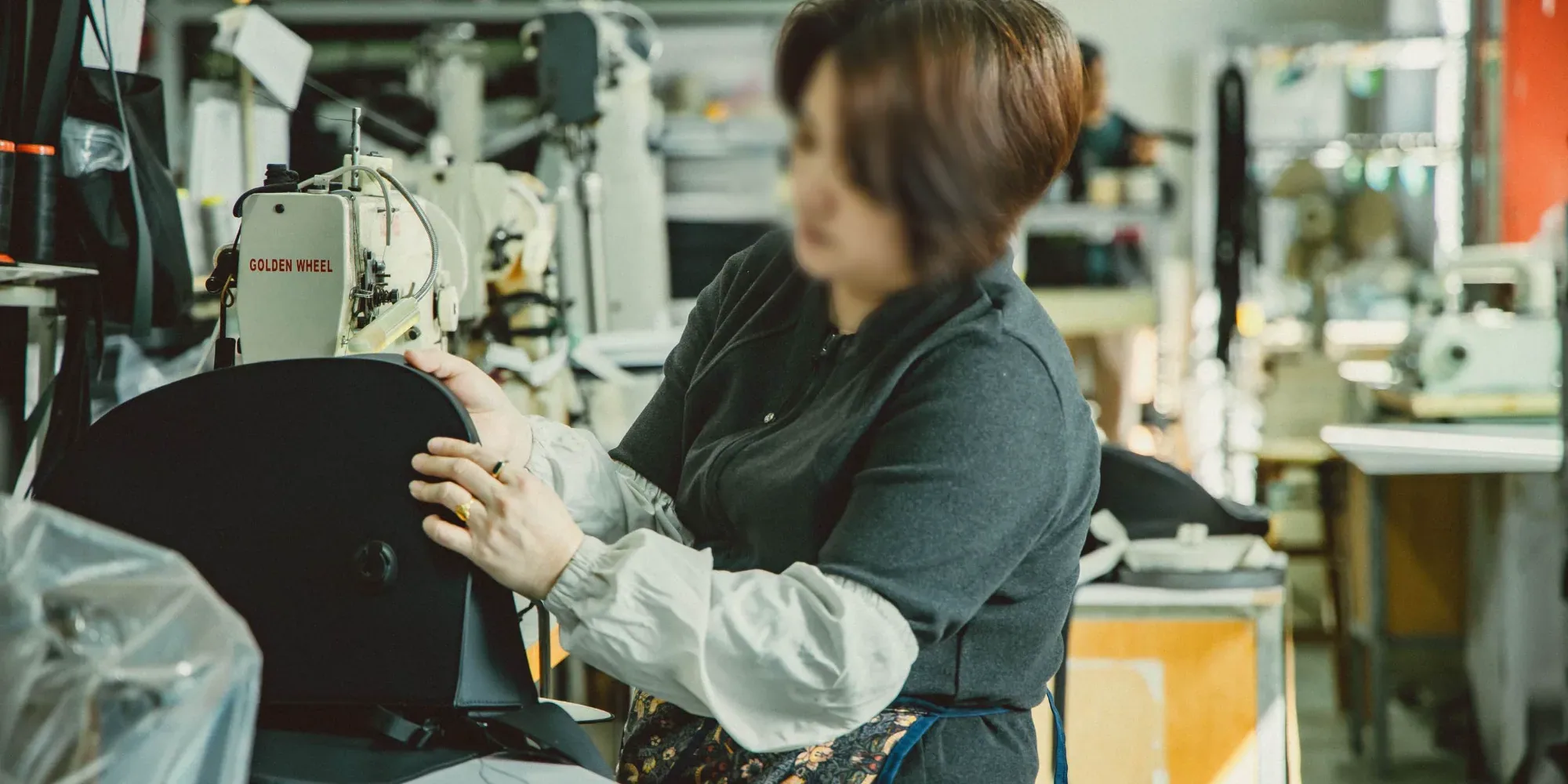
Precision cutting is fundamental, often utilizing automated cutting machines to ensure accuracy and minimize material waste, especially for complex designs. The quality of stitching is a hallmark of luxury, encompassing stitch density, thread type, and consistency of seam allowances.
Skilled operators are trained to achieve perfectly straight lines and even tension, often using specialized sewing machines. For leather bags, edge painting or burnishing is a critical detail, requiring multiple layers and careful application to create a smooth, durable, and aesthetically pleasing finish.
Hardware must be securely attached without damaging the material, often involving specialized tools and techniques to ensure durability and prevent loosening over time. The interior of a luxury bag is just as important as the exterior; linings must be perfectly fitted, pockets precisely constructed, and all internal components finished to the same high standard.
Finally, regular in-process quality checks at various stages of production help identify and rectify issues early, preventing defective components from progressing further down the line, saving time and resources. This comprehensive approach is vital for maintaining the high Shenzhen bag factory quality expected by global brands.
Rigorous Testing and Inspection Protocols
To ensure luxury handbag manufacturing quality, a comprehensive suite of tests and inspection protocols is essential. These go beyond visual checks to quantify material and construction performance.
| Test Type | Purpose | Relevant Standards (Examples) |
|---|---|---|
| Material Durability | Assess resistance to wear, tear, and abrasion. | ASTM D5034 (Breaking Strength), ASTM D3884 (Abrasion Resistance) [S2, S3] |
| Colorfastness | Determine resistance to fading from light, washing, or rubbing. | ISO 105 series, AATCC Test Methods |
| Hardware Durability | Test strength, corrosion resistance, and functionality of components. | Salt spray tests, cycle testing for zippers/clasps |
| Stitch Strength | Evaluate the integrity of seams and stitching under stress. | ASTM D1683 (Seam Strength) |
| Water Repellency | Measure resistance to water penetration (for specific materials). | AATCC 22 (Spray Test) |
| Chemical Resistance | Check material reaction to common chemicals (e.g., cleaning agents). | Specific brand protocols |
| Overall Construction | Verify structural integrity, balance, and alignment of components. | Visual inspection, functional checks |
These tests, combined with detailed visual inspections, form the backbone of an OEM bag quality control system. For a custom backpack manufacturer or a soft bag manufacturer, adapting these rigorous protocols is crucial for meeting the demands of global brands.
Implementing AQL (Acceptable Quality Limit) in Handbag Production
AQL (Acceptable Quality Limit) is a widely used statistical sampling method to determine whether a batch of products meets specified quality benchmarks. For luxury handbag production, AQL standards for handbags are typically very stringent due to the high value and brand reputation at stake.
Here’s a step-by-step guide to implementing AQL in handbag production:
- Define Critical, Major, and Minor Defects:
- Critical Defects: Render the product unsafe or unusable, or completely deviate from specifications (e.g., broken strap, missing hardware). These are typically not tolerated in luxury goods.
- Major Defects: Significantly reduce usability or salability, or are clearly noticeable (e.g., prominent scratch, uneven stitching, incorrect color).
- Minor Defects: Slight deviations that do not affect usability or salability, but are still imperfections (e.g., small loose thread, slight discoloration in an inconspicuous area).
- Select AQL Levels:
- Luxury brands often require very low AQL levels. Common AQL levels might be:
- Critical: 0% (no critical defects allowed)
- Major: 1.0% or 1.5%
- Minor: 2.5% or 4.0%
- These percentages represent the maximum acceptable percentage of defective units in a sample that would still allow the lot to pass.
- Determine Sample Size:
- Using ISO 2859-1 (Sampling procedures for inspection by attributes) [S1] or similar guidelines, determine the appropriate sample size based on the total production lot size and the chosen inspection level (e.g., General Inspection Level II is common).
- For example, for a lot size of 1,201 to 3,200 units, a General Inspection Level II might require a sample size of 125 units.
- Perform Inspections:
- Randomly select the determined sample size from the finished production lot.
- Inspect each unit in the sample against the defined defect criteria (critical, major, minor).
- Record the number of defects found for each category.
- Compare with Acceptance/Rejection Numbers:
- The AQL tables also provide acceptance and rejection numbers for each defect level based on the sample size.
- If the number of defects for any category exceeds the rejection number, the entire lot is considered to have failed the inspection and may require 100% re-inspection or rework.
- Document and Report:
- Maintain detailed records of all inspections, including dates, inspectors, lot numbers, sample sizes, defects found, and disposition of the lot. This documentation is crucial for traceability and continuous improvement.
Implementing AQL correctly provides a systematic way to manage quality expectations and ensure that large production runs meet the stringent requirements for high-end products, aligning with the Gucci handbag quality control standards for OEM manufacturers.
Partnering with an OEM Manufacturer for Luxury Standards
For global brands, selecting the right OEM is a strategic decision that directly impacts product quality and brand reputation. When seeking a partner for luxury bag production, several factors come into play beyond just price.
An OEM with a long history in the industry, particularly with high-end products, often possesses the institutional knowledge and skilled workforce necessary for luxury manufacturing. GFBags, for example, has been an OEM/ODM backpack and soft bag manufacturer in Shenzhen since 2001, serving over 150 global brands.
Look for manufacturers with established quality management systems, such as ISO 9001. This indicates a structured approach to quality assurance and continuous improvement. Adherence to social compliance audits like amfori BSCI also demonstrates a commitment to ethical production.
The ability to translate complex designs into high-quality prototypes quickly and accurately is vital; a manufacturer offering rapid sampling can significantly reduce development timelines. A robust network of trusted material suppliers, including options for sustainable materials, is crucial for both quality and ethical sourcing.
Clear and responsive communication is essential for managing expectations and resolving issues, especially for international customers in locations like Berlin, Germany, or Sydney, Australia. Finally, a manufacturer confident in their quality will often offer a warranty; GFBags provides a 2-year warranty on its products, reflecting confidence in its manufacturing processes.
GFBags' Approach to Quality in OEM/ODM Bag Manufacturing
GFBags, as an experienced OEM/ODM custom bag manufacturer in Shenzhen, understands the critical importance of quality for global brands. Our approach to manufacturing custom backpacks, Travel Bags, Handbags, Laptop Bags, and Leather Goods & Accessories is built on a foundation of documented processes and continuous oversight. This commitment helps us meet the stringent expectations, including those comparable to Gucci handbag quality control standards for OEM manufacturers.
From the initial product development phase to final inspection, GFBags integrates a multi-layered quality assurance strategy. Our product development team works closely with brands to refine designs and specifications. Our rapid sampling capability ensures that prototypes accurately reflect design intent and quality expectations before mass production.
We leverage a network of vetted suppliers for a wide range of materials, including sustainable options. All incoming materials undergo stringent checks to ensure they meet specified quality and performance criteria. More information is available on our Raw Material page.
Throughout the manufacturing process, from cutting to stitching and assembly, our production lines incorporate regular quality checks. This proactive approach helps identify and address potential issues early, minimizing defects. Before shipment, all finished products undergo a comprehensive final inspection based on mutually agreed-upon AQL standards.
This ensures that the outgoing goods meet the brand's quality requirements. Our detailed Quality Control page outlines these processes. Our operations are guided by principles consistent with ISO 9001 quality management systems and amfori BSCI, reflecting our commitment to both product quality and ethical production.
We also support brands looking for sustainable bag production standards, as detailed on our Sustainability page. Our goal is to build long-term B2B production partnerships. We believe that consistent quality, transparent communication, and a reliable 2-year warranty are key to fostering trust and repeat business with our 150+ global brand customers.
Whether you are a brand in Amsterdam, Netherlands, or New York, United States, seeking a custom backpack manufacturer or a partner for high-end Handbags, GFBags is equipped to meet your quality demands. We invite you to explore our Custom Service options and discuss how we can support your next project.
Non-official industry analysis and boundaries
This article provides independent industry analysis and does not imply any official affiliation, endorsement, or partnership with Gucci. The discussion of "Gucci handbag quality control standards" serves as a benchmark for understanding the high expectations within the luxury segment of the handbag manufacturing industry.
Specific brand requirements may vary and should always be confirmed directly with the brand. GFBags is an OEM/ODM backpack and soft bag manufacturer and does not claim to be an authorized manufacturer or official partner of Gucci.
FAQ
What are the typical AQL levels for luxury handbag manufacturing?
For luxury handbag manufacturing, AQL levels are typically very strict due to the high value and brand reputation involved. While specific levels can vary by brand, common AQL targets might be 0% for critical defects (meaning no critical defects are accepted), 1.0% to 1.5% for major defects, and 2.5% to 4.0% for minor defects. These low percentages reflect the industry's demand for near-perfect products.
How do OEM manufacturers ensure material authenticity and quality for high-end brands?
OEM manufacturers ensure material authenticity and quality for high-end brands through a multi-pronged approach. This includes partnering with verified and reputable suppliers, requesting material certifications (e.g., origin, composition, ethical sourcing), conducting in-house or third-party laboratory testing (e.g., for strength, colorfastness, chemical resistance), and performing rigorous incoming material inspections. Transparency in the supply chain and documented verification processes are crucial for maintaining luxury handbag manufacturing quality.
What specific tests are performed on luxury handbag materials and components?
Specific tests performed on luxury handbag materials and components often include material durability tests (e.g., ASTM D5034 for breaking strength, ASTM D3884 for abrasion resistance), colorfastness tests (e.g., to light, rubbing, washing), hardware durability tests (e.g., salt spray tests for corrosion, cycle tests for zippers and clasps), and stitch strength tests. Chemical resistance and water repellency tests may also be conducted depending on the material and product function.
Can an OEM manufacturer in Shenzhen meet the stringent quality demands of luxury brands like Gucci?
Yes, an experienced OEM manufacturer in Shenzhen, such as GFBags, can meet the stringent quality demands of luxury brands. Shenzhen is a hub for manufacturing with access to advanced technology, skilled labor, and a mature supply chain. Success hinges on the OEM's commitment to established quality management systems (like ISO 9001), robust product development, precise process controls, rigorous
testing, and a proven track record of serving global brands with high standards. This demonstrates strong Shenzhen bag factory quality.
What is the role of rapid sampling in achieving luxury quality standards?
Rapid sampling plays a critical role in achieving luxury quality standards by allowing brands and OEMs to quickly iterate and refine prototypes. This process enables early identification and correction of design flaws, material inconsistencies, or construction issues before mass production begins. For example, GFBags' stated 4-day rapid sampling capability helps ensure that the final product meets exact specifications and aesthetic expectations, reducing costly rework and delays.
How does GFBags integrate sustainability into its quality control processes for custom bags?
GFBags integrates sustainability into its quality control processes for custom bags by offering material selection options that include sustainable choices, such as recycled fabrics. Our quality control extends to verifying the sustainability credentials of these materials, where applicable, and ensuring that production processes minimize waste and adhere to ethical standards, consistent with principles like amfori BSCI. This allows brands to meet their sustainability goals without compromising on product quality.
What kind of warranty can be expected from an OEM for luxury bag production?
For luxury bag production, OEMs that are confident in their quality often provide a warranty. The specific terms can vary, but a common offering might be a 1-year or 2-year warranty covering manufacturing defects. GFBags, for instance, offers a 2-year warranty, demonstrating its commitment to the durability and quality of its custom bags and backpacks.
How do brands audit OEM factories for quality compliance?
Brands typically audit OEM factories for quality compliance through a combination of methods. This includes initial factory audits (e.g., for ISO 9001, amfori BSCI), pre-production meetings, in-process inspections during manufacturing, and final inspections of finished goods, often conducted by third-party quality control agencies or the brand's own QA teams. Regular communication and transparent documentation from the OEM are also key to ensuring ongoing compliance. This is a vital aspect of custom backpack manufacturer quality control.