 Skip to content
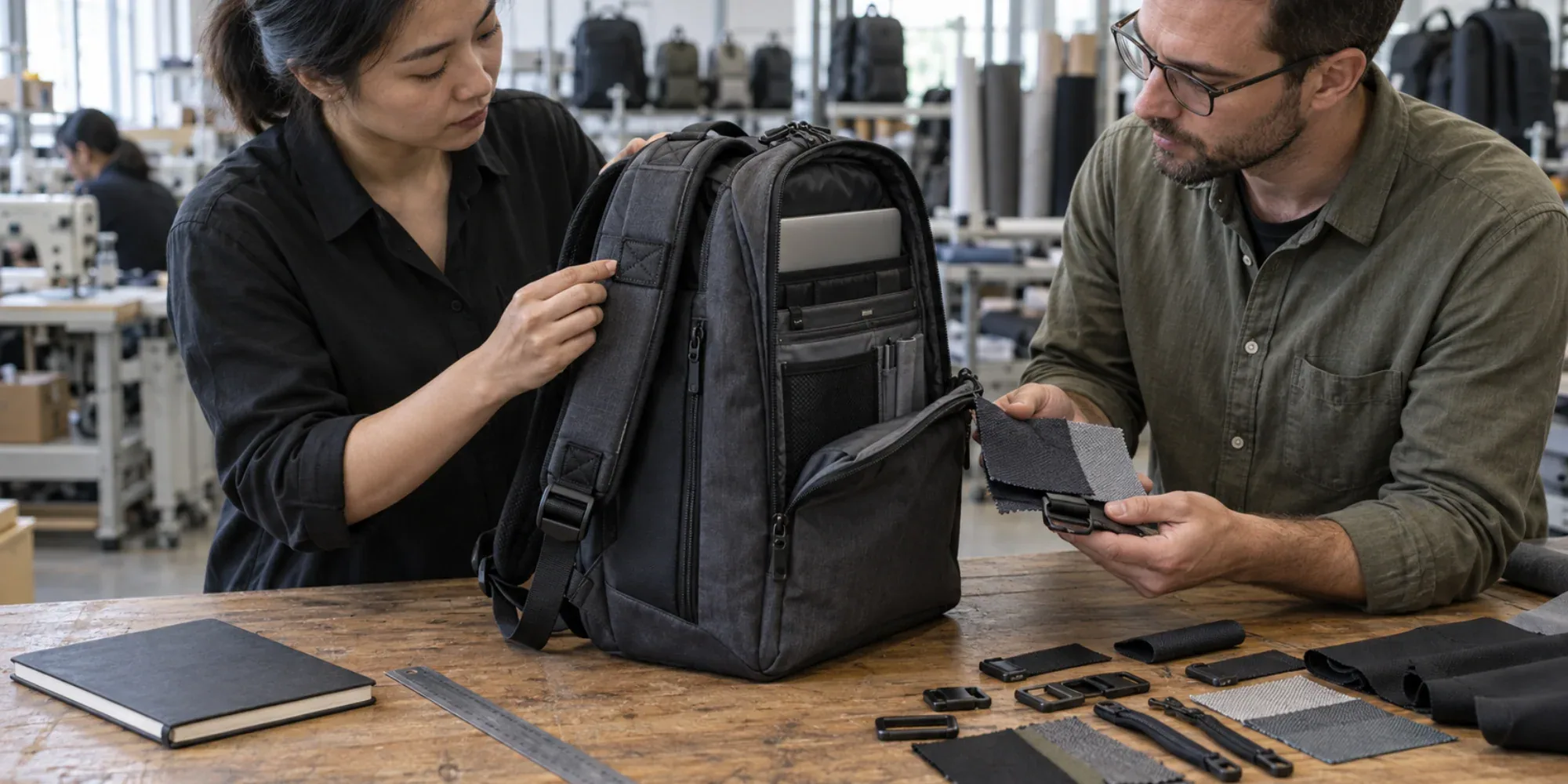
The implementation process for custom commuting backpacks requires product developers to translate daily transit needs into strict manufacturing specifications. Sourcing managers must define precise laptop compartment dimensions and weather-resistant requirements, select verified materials such as certified recycled fabrics, validate the design through physical prototyping focused on load distribution, and establish clear quality control tolerances before moving to bulk production.
Translating Commuter Requirements into Manufacturing Specifications
Converting qualitative commuter needs into a functional product requires strict technical specifications. A commuting backpack must bridge the gap between office aesthetics and daily physical abuse. When sourcing managers hand over designs to a manufacturing partner, qualitative descriptions such as protective, weatherproof, or durable are highly insufficient. These vague terms leave crucial production decisions entirely to the factory floor, which can easily lead to inconsistent material choices and compromised long-term performance. Instead, developers must build a comprehensive technical pack that explicitly defines dimensions, material properties, hardware components, and precise construction methods. This document serves as the absolute baseline for all factory interactions.
A primary requirement for commuting backpacks is reliable electronic device protection. Rather than requesting a heavily padded sleeve, the specification must provide exact internal dimensions for the target devices, such as accommodating a standard laptop with maximum dimensions of 360 millimeters by 250 millimeters by 20 millimeters. The specification should also dictate the foam chemical composition, thickness, and density. For example, specifying 8-millimeter high-density ethylene-vinyl acetate foam offers superior impact absorption without excessive bulk compared to standard low-density polyethylene foam. Furthermore, the design must specify a false bottom or suspension gap, typically targeting a 15-millimeter to 25-millimeter distance between the lower seam of the laptop compartment and the actual base of the backpack. This structural detail ensures that when the user sets the bag down on hard surfaces, the laptop does not bear the impact.
Weather resistance is another critical factor for daily transit that requires precise manufacturing parameters. Commuters need protection from sudden rain, but specifying a waterproof bag can unintentionally result in an airtight, welded-seam dry bag that is impractical for office use. The technical specification should instead define the required hydrostatic head rating for the primary exterior fabric, generally aiming for 1500 to 3000 millimeters depending on the regional climate. It must detail the exact barrier methods, such as a polyurethane coating on the fabric backing and a durable water repellent treatment applied to the exterior face. Zippers represent a common point of water ingress and must be specified accordingly. Product developers should mandate reverse-coil zippers treated with polyurethane coatings rather than relying on standard coil zippers with fabric flaps that can snag or fold back during use.
Managing the daily load of laptops, water bottles, and accessories demands strict structural reinforcements. A fully loaded commuter bag concentrates stress at specific junction points, particularly where the shoulder straps and top grab handle meet the main body panel. The bill of materials must specify the type of webbing used, favoring nylon for its higher tensile strength and abrasion resistance over standard polypropylene. Additionally, the construction notes must explicitly require bar-tack stitching at all high-stress anchor points. Specifying the thread material, such as a bonded nylon thread in a defined tex size, ensures the seams will resist stretching and degradation over repeated daily load cycles.
Defining the exterior textile involves balancing abrasion resistance with the finished weight of the bag. While a 1000-denier ballistic nylon offers maximum abrasion resistance against concrete and transit turnstiles, its inherent rigidity and heavy weight may conflict with a streamlined, comfortable commuting profile. Sourcing managers often specify 500-denier nylon or 600-denier polyester as a highly functional middle ground, providing adequate puncture and tear resistance while keeping the overall bag lightweight. The specification document should also define the specific fabric weave pattern. Utilizing a ripstop grid, for example, integrates heavier reinforcement threads at regular intervals to prevent small punctures from expanding into catastrophic fabric tears during active use.
Clear communication of these technical requirements is essential before any fabric is cut. Engaging a manufacturer's custom service requires submitting these technical drawings, dimensional tolerances, and the complete bill of materials. Commuting backpacks often need to comply with specific spatial constraints, such as fitting under transit seats or within airline personal item limits. Setting strict dimensional tolerances, typically allowing no more than a one-centimeter variance on overall height and width, establishes a clear rejection threshold that forces the manufacturer to tightly control material expansion during bulk assembly. This exactness establishes a reliable baseline for the initial prototyping phase and ensures the resulting sample actually reflects the commuter's operational needs. For company-specific information, see GFBags.
Material Selection and Verifying Sustainable Claims
Selecting materials for a custom commuting backpack requires balancing daily wear resistance with overall weight and professional aesthetics. The daily commute exposes a bag to specific forms of abrasion. Commuters frequently slide backpacks across concrete station platforms, squeeze through transit turnstiles, and subject the back panel to constant friction against heavy coats. Sourcing managers must evaluate fabrics based on these observable environmental interactions rather than visual appeal. When prioritizing material durability over environmental marketing claims, evaluating physical characteristics like yarn thickness, weave structure, and chemical treatments takes precedence. Product developers typically request laboratory test data, such as Taber abrasion results, to validate endurance. This empirical data ensures the material withstands daily friction without premature pilling or catastrophic thread failure.
The exterior shell fabric serves as the primary barrier against daily wear. While high-denier ballistic nylons, such as 1050-denier or 1680-denier, offer exceptional tear resistance, their substantial weight can rapidly induce commuter fatigue. Instead, developers often specify a 500-denier nylon or a 600-denier to 900-denier polyester. These mid-weight textiles provide a functional middle ground, delivering adequate puncture resistance for urban transit while keeping the empty weight manageable. The specification must also define the weave style. A plain weave offers a smooth, professional appearance suitable for corporate environments, whereas a ripstop weave incorporates heavier reinforcement threads at regular intervals to aggressively stop small punctures from expanding into larger tears during active use.
Interior fabrics demand a different set of functional priorities. Because the lining does not face external environmental abrasion, sourcing managers can safely select much lighter materials, typically ranging from 150-denier to 210-denier polyester or nylon. However, the interior material selection significantly impacts the daily user experience. Commuters often struggle to locate small items like keys, cables, or adapters inside deep, dark compartments. Specifying a high-visibility lining in lighter colors drastically improves internal visibility in low-light transit environments. Additionally, developers should ensure the interior fabric receives a light polyurethane back-coating applied to the reverse side. This hidden coating provides structural stiffness to prevent loose fabric folds from bunching and prevents fraying along raw internal seams during the sewing process. Meanwhile, the uncoated woven face remains exposed to the interior, providing a smooth contact surface that allows devices and documents to slide in and out without snagging.
Beyond standard synthetic textiles, many brands intend to market their commuting backpacks using environmental or recycled content claims. When a brand targets these sustainability goals, the material selection process becomes significantly more complex. Replacing virgin polyester with post-consumer recycled polyester alters supply chain requirements. Sourcing managers must first account for potential variations in material performance. Because mechanical recycling involves melting and re-extruding plastic waste, recycled yarns can sometimes exhibit slight variances in tensile strength or color consistency compared to virgin counterparts. Before finalizing the bill of materials, product developers must request specific tear strength and colorfastness testing on proposed recycled fabric lots. This confirms they still meet the rigorous physical demands of daily commuting, as failing these checks compromises bag utility regardless of environmental benefits.
If the selected recycled materials successfully meet all physical durability requirements, the sourcing manager must then implement strict verification protocols. Unverified environmental claims expose brands to significant compliance risks and consumer trust issues. The manufacturer cannot simply state that a fabric is recycled; the sourcing manager must mandate established third-party certifications to validate the material origin. Independent organizations provide comprehensive assessments for recycled content in the market. For instance, SCS Global Services introduced the initial third-party certification program for recycled content claims in 1989 and conducts detailed assessments for verifying recycled inputs. Furthermore, customers utilizing a certified manufacturer can access their Private Label certification, which allows them to officially rebrand the verified products under their own company name without losing the documented chain of custody. Recycled Content Certification | ISO 14021 & SCS‑103 | SCS
Securing these certified materials requires integrating chain-of-custody documentation directly into the manufacturing agreement. A sourcing manager should mandate that the factory provides transaction certificates for every batch of recycled fabric purchased for the bulk production run. This documentation traces the yarn, ensuring the manufacturer uses the verified material approved during sampling rather than a non-certified substitute. Once the main body fabrics, interior linings, and verifiable material origins are strictly defined in the technical specification, the project can safely proceed to physical prototyping. Setting exact material requirements ensures that the eventual prototype accurately reflects the brand's functional targets and compliance standards. For company-specific information, see GFBags.
Navigating Regional Textile Regulations and Consumption Context
Sourcing materials for a custom commuting backpack requires aligning physical specifications with the specific consumption context and regulatory frameworks of the target market. A backpack designed for a region where daily commutes are dominated by cycling necessitates different functional materials, such as high-visibility reflective yarns or highly water-resistant thermoplastic polyurethane coatings, compared to a bag engineered for a subway-dependent commuter market. Beyond these physical use cases, product developers must navigate complex regional regulations that dictate chemical compliance, material labeling, and environmental reporting. Designing a product without evaluating these regional priorities risks creating a highly functional bag that cannot legally cross borders or appeal to local market preferences.
The European market provides a clear example of how regional frameworks directly influence material sourcing. Brands distributing their finished goods in this region must adhere to strict environmental and chemical directives. Sourcing teams can consult the European Commission, which provides publications and statistics on EU textile consumption. Aligning the bill of materials with this data helps developers understand shifting regional consumption trends and regulatory expectations regarding textile inputs. Relying on this structured regional data prevents sourcing managers from guessing which sustainable materials and supply chain practices are acceptable in specific markets. European Commission, official website
Chemical compliance represents one of the most immediate hurdles in regional material sourcing. Weather resistance is universally demanded for commuting backpacks, but the allowable chemical treatments vary significantly by region. For instance, many regions have implemented stringent restrictions on specific per- and polyfluoroalkyl substances commonly used in durable water repellent treatments. If a target market prohibits these compounds, a sourcing manager cannot rely on traditional waterproofing methods. They must explicitly mandate alternative exterior barrier techniques, such as non-fluorinated durable water repellent treatments or silicone-based exterior finishes, in the technical specifications. The factory must be instructed to source fabrics that meet these exact chemical thresholds to avoid costly customs seizures upon import.
Emerging textile consumption frameworks also focus heavily on product end-of-life and circularity, which directly impacts backpack construction. Commuting bags historically utilize a complex mix of materials—nylon exteriors, polyester linings, ethylene-vinyl acetate foams, and plastic hardware—which are difficult to separate for recycling. In markets advancing extended producer responsibility schemes, complex multi-material products may incur higher regulatory fees. To adapt, product developers are increasingly specifying mono-material constructions. By designing a bag where the shell fabric, interior lining, webbing straps, and even the structural foam are all derived from a single polymer family, sourcing managers can align the product with regional sustainability frameworks and simplify compliance documentation.
Translating these complex regional requirements into actionable manufacturing directives requires uncompromising documentation. A sourcing manager cannot issue vague instructions such as requesting market-compliant fabrics. Instead, the technical specification document must mandate the exact regulatory testing standards required for the target region directly within the bill of materials. Furthermore, the sourcing team must require the manufacturer to provide current passing test reports from accredited third-party laboratories for the exact fabric lots intended for bulk assembly. Establishing these rigid compliance checks during the material sourcing phase guarantees that the finished backpacks will successfully meet both the commuter's physical needs and the destination region's legal market requirements.
Evaluating Prototypes and Pre-Production Samples
Once technical specifications and material frameworks are established, the implementation process moves to the prototyping phase. A manufacturer translates the initial technical pack into a first-round physical sample. For product developers, this pre-production prototype is the first opportunity to physically evaluate the bag's geometry, material behavior, and assembly execution. Approving a sample is not simply a visual review; it establishes the exact physical standard for bulk manufacturing. Any defect, sizing error, or ergonomic flaw will be replicated across the entire production run. Therefore, sourcing managers must subject prototypes to rigorous evaluations mimicking the commuting environment.
A commuter backpack must securely manage dense, heavy items like laptops, battery banks, and liquid containers. Evaluating load distribution begins by packing the prototype with a realistic proxy weight to simulate a fully equipped daily carry. Developers should assess the center of gravity; a well-constructed commuting bag pulls the heaviest part of the load inward toward the wearer's mid-back. Poorly balanced designs allow the load to sag outward, causing excessive shoulder strain. When fully loaded, the laptop compartment's false bottom must be physically verified to ensure it maintains a protective clearance from the ground. If the laptop sleeve's internal suspension stitching stretches under the device's weight, or if its supporting foam compresses excessively, this crucial clearance is compromised. The manufacturer must then adjust the sleeve's internal anchoring or substitute denser foam before proceeding to mass production.
Ergonomic fit must be tested across different user profiles and clothing variations. Commuters wear backpacks over varied apparel, from lightweight summer shirts to heavy winter coats. Evaluators should test harness adjustability to ensure the shoulder straps offer enough webbing length to accommodate bulky outer layers while tightening sufficiently for smaller frames. The straps require physical inspection to confirm they do not pinch the neck or chafe the arms during walking motions. Furthermore, developers should evaluate the back panel's intended ventilation channels. The physical prototype reveals whether the chosen mesh and foam configuration maintains structural airflow channels under a heavy load. If the foam flattens completely against the wearer's back, it eliminates airflow and causes heat buildup during a commute.
Hardware functionality is highly dependent on how rigid components interact with surrounding textiles. Sourcing managers must repeatedly test zippers under realistic tension to ensure smooth operation. For instance, reverse-coil zippers treated with a polyurethane coating can be inherently stiffer than standard zippers. The evaluation must verify that these zippers navigate corners without snagging internal binding tape or requiring excessive pulling force. Buckles, magnetic clasps, and sternum straps must also be tested for usability. Commuters frequently access bags on crowded transit systems, making one-handed operation of key access points a significant functional advantage. If a buckle requires too much dexterity, or if a specialized zipper requires two hands to bypass a tight corner, the pattern or hardware selection must be revised.
Structural integrity must be physically validated beyond the visual inspection of thread paths. Sourcing managers evaluate seam strength at critical anchor points, specifically where shoulder straps and the top grab handle integrate into the main body. A standard method for evaluating these junctions involves hanging the fully weighted bag by one shoulder strap and then by the top grab handle, observing the fabric for stretching or thread exposure at the seams. Evaluators must also inspect internal finishing. Unbound seams or loose threads inside the main compartment can easily catch on folders, cables, or pens. Ensuring internal edges are bound with bias tape prevents fraying and user frustration during daily packing.
Evaluating a pre-production sample often requires multiple iterations. It is common for the initial sample to require adjustments in strap angles, foam thickness, or internal pocket placement. Product developers document every required change in a formal sample feedback report, directing the manufacturer to produce a revised prototype. Once a physical sample meets all load, hardware, structural, and ergonomic criteria, it is signed and sealed as the officially approved reference sample. This physical unit is preserved by the sourcing team and factory to serve as the definitive benchmark for establishing quality control tolerances and managing bulk production.
Establishing Quality Control and Production Tolerances
Moving from an approved pre-production prototype to bulk production introduces the risk of manufacturing drift. While a single sample proves a custom design is viable and establishes the baseline, consistent mass manufacturing requires explicit defect tolerances and standardized inspection points. Product developers must provide the factory with a definitive quality control manual translating the approved prototype into strictly measurable metrics. Without documented tolerances, variations in manual assembly will inevitably lead to inconsistent product performance. This is particularly problematic for highly structured commuting backpacks, where minor deviations compound and compromise user experience.
The most critical manufacturing tolerances in a commuting backpack involve the protective electronics compartments. If a factory allows a standard two-centimeter sizing variance on main body panels, the internal laptop sleeve may shrink enough to prevent a standard fifteen-inch device from fitting smoothly. Sourcing managers must define strict dimensional boundaries, typically permitting no more than a five-millimeter variance for rigid device compartments and a one-centimeter variance for overall external bag dimensions. Additionally, the suspension gap at the bottom of the laptop sleeve must be repeatedly measured during active production. If this gap collapses during bulk assembly, the bag loses its primary drop protection and exposes the hardware to concrete impacts.
Structural failure during a daily commute often stems from inconsistent stitching rather than external fabric tears. A comprehensive quality control framework specifies the required stitches per inch for different assembly stages. For standard commuting backpack seams using medium-weight nylon or polyester, sourcing managers generally mandate eight to ten stitches per inch. Fewer stitches weaken the seam, while too many perforate and compromise the fabric backing. The specification must dictate exact parameters for bar-tacks at high-stress anchor points, such as shoulder strap attachments. Inspectors must verify that these reinforcements match the golden sample's width and stitch density, ensuring every unit handles dynamic transit loads.
To manage bulk manufacturing effectively, developers utilize the Acceptable Quality Limit framework to classify potential defects and establish clear batch rejection criteria. Defects are categorized as critical, major, or minor. A critical defect poses a safety risk or renders the bag unusable, such as a broken main zipper track. Major defects affect usability or brand perception, such as misaligned laptop padding or reversed zippers. Minor defects are cosmetic issues like uncut internal threads. Sourcing managers typically set strict quality indices, such as 2.5 for major defects and 4.0 for minor defects. These indices are not raw defective unit limits. Instead, inspectors use these index values alongside the drawn sample size to determine specific accept and reject integer numbers from standard Acceptable Quality Limit tables. If the count of defective units in the sample equals or exceeds the designated reject number from the table, the entire batch is rejected for factory rework.
Implementing these precise standards requires scheduled physical inspections on the factory floor rather than waiting for the finished goods. Relying solely on a final pre-shipment inspection is highly risky; discovering structural flaws after thousands of bags are closed leads to expensive delays and material waste. Sourcing managers should mandate during-production inspections when approximately twenty percent of the order is completed. This allows inspectors to check the initial assembly of back panels, harness integration, and lining installation before the components are permanently sealed. Final random inspections then evaluate the packaged goods against the dimensional tolerances.
Beyond visual inspection, bulk production batches must undergo random physical testing to confirm mechanical reliability. Inspectors should perform targeted load tests on a subset of the production run, hanging bags by their straps with weights exceeding typical commuter loads to verify seam integrity. Zippers must be repeatedly cycled under tension to ensure the teeth do not separate and sliders glide smoothly around stiff corners. Only after passing these rigorous dimensional, visual, and physical assessments can the custom backpacks be authorized for distribution.