 Skip to content

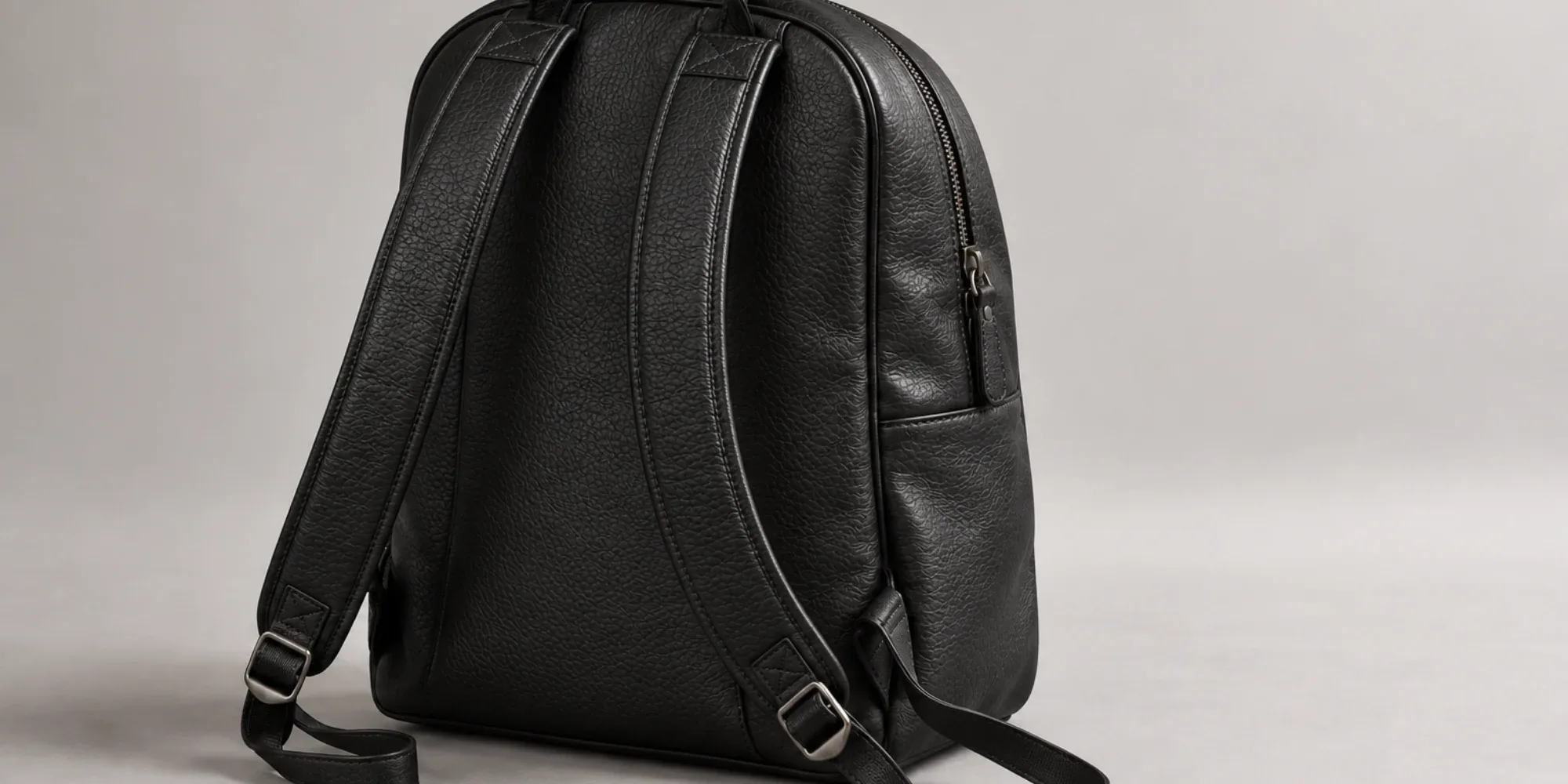
To evaluate a manufacturer for luxury-tier custom backpacks, use a checklist that assesses their premium material sourcing networks, precision assembly capabilities, structural reinforcement techniques, and rigorous quality control tolerances. Verifying their ability to handle certified leathers, execute high stitch-per-inch counts, apply flawless edge painting, and consistently align complex patterns is essential for achieving a high-end finish.
Material Sourcing and Certification Verification
Evaluating a manufacturer for luxury-adjacent custom backpacks begins with their material sourcing infrastructure. A high-end product demands textiles, hardware, and leathers that perform structurally while offering a premium tactile experience. The manufacturer must have an established procurement network capable of securing consistent, high-grade inputs. This requires assessing their supply chain transparency and their procedures for incoming material inspection. Standard factories often rely on open-market stock materials, which can suffer from lot-to-lot color variation, inconsistent weave tension, and irregular finishes. A manufacturer equipped for luxury-tier production will instead demonstrate direct relationships with specialized mills and tanneries. These direct partnerships allow the factory to commission custom dye batches, specify exact material weights, and enforce strict tolerances that align precisely with a detailed technical pack.
When the backpack design incorporates leather trim, handles, or full leather panels, the capability checklist must address the origin and processing of these hides. Luxury brands increasingly require verifiable claims regarding environmental stewardship and ethical production to satisfy consumer expectations. Sourcing managers should verify if the manufacturer partners with audited tanneries rather than purchasing untraceable market stock. One prominent benchmark is participation in the Leather Working Group. Originating in 2005 as a collaborative initiative among footwear brands, apparel companies, and leather manufacturers, this global non-profit, multi-stakeholder organization focuses on sustainable leather sourcing and production practices. Checking a factory's ability to procure materials through such documented initiatives confirms their capacity to meet stringent brand compliance standards while supporting responsible material processing. What we do – Leather Working Group
Similarly, if the luxury backpack utilizes advanced synthetic materials or recycled fabrics, the manufacturer must be capable of maintaining a strict chain of custody. Evaluating their capability here means looking for documented relationships with recognized third-party certification bodies, as verbal assurances from a factory are insufficient for brand-level marketing claims. For example, SCS Global Services has been a leading authority in this space since launching its first third-party recycled content certification program in 1989. Through comprehensive assessments, a qualified factory can source materials that support verified environmental claims. Furthermore, specific private label certification options allow customers of these certified manufacturers to rebrand the assessed products under their own company name, providing seamless integration for the brand. Recycled Content Certification | ISO 14021 & SCS‑103 | SCS
- Verify direct procurement relationships with specialized textile mills and audited tanneries rather than relying on open-market stock.
- Request chain of custody documentation and transaction certificates for all environmentally claimed materials, such as recycled synthetics.
- Confirm the ability to source hides from participants in established multi-stakeholder sustainability programs to ensure traceable processing.
- Check for integration with third-party certification bodies that permit private label rebranding for the final consumer product.
- Assess the manufacturer's internal intake quality control process for inspecting raw material consistency, color matching, and structural integrity before assembly begins.
Once the premium materials arrive at the facility, the manufacturer must possess the capability to rigorously inspect and reject substandard batches before they ever reach the cutting floor. High-end backpacks require highly consistent grain structures in leather components and completely uniform tension in woven synthetics. The factory should demonstrate a systematic intake quality control process, utilizing tools like spectrophotometers for exact color matching and physical testing equipment for assessing tear strength and abrasion resistance. A factory that merely accepts supplier shipments without independent internal verification poses a significant risk to luxury-tier production. Defects discovered late during assembly or final inspection lead to expensive production delays, compromised structural integrity, and unacceptable material waste.
Structural Reinforcement and Shape Retention
Beyond verifying premium exterior materials, evaluating a manufacturer for luxury-tier custom backpacks requires a deep assessment of internal construction capabilities. A defining characteristic of a structured high-end backpack is its ability to maintain a precise architectural silhouette, whether completely empty or fully loaded. Standard production often relies entirely on the exterior fabric and a basic lining for shape, which eventually leads to sagging, creases, and structural collapse. A capable manufacturing partner must demonstrate mastery over concealed reinforcements, utilizing specialized stiffeners tailored to specific stress points.
The capability to properly manage material thickness is an essential checkpoint. When working with luxury leathers or solid non-woven materials, joining multiple layers creates bulky seams that compromise the backpack's refined appearance. Assess the facility's skiving machinery and operator expertise. They must be able to shave down the edges of these thick materials with exact precision before folding and stitching. However, skiving cannot be applied to woven synthetic canvases, as shaving cuts the warp and weft yarns, causing the fabric to fail structurally. For thick woven fabrics, sourcing managers should instead look for alternative bulk-reduction techniques like precision seam grading. Because grading cuts raw woven edges close to the stitch line, these seams must utilize low-profile edge binding tapes to prevent fraying. Once thickness is managed, panels require secondary backing to restore strength without adding volume. Verify the factory's inventory of interfacings, such as bonded leather boards, EVA foam, and non-woven reinforcements. The selective application of these unseen layers dictates how well a curved gusset holds its arch after extended use.
- Assess skiving and trimming capabilities: Verify machinery for thinning solid leather edges, and check seam grading techniques for reducing woven canvas bulk alongside proper edge binding to prevent fraying.
- Evaluate backing material selection: Check for access to graduated thicknesses of EVA foam, bonded leather, and non-woven stiffeners.
- Inspect load-bearing reinforcement: Confirm the use of anti-stretch nylon tapes or internal webbing behind strap attachments.
- Review base construction techniques: Ensure the factory can integrate rigid bottom boards and edge piping to prevent base sagging.
- Examine adhesive application: Verify the use of even adhesive coating techniques that do not bubble or delaminate under heat.
Straps and handle attachments represent primary load-bearing zones, making them critical structural failure points if improperly constructed. In standard manufacturing, straps are frequently sewn directly into the top seam with minimal anchoring. To achieve luxury-adjacent durability, the manufacturer must utilize internal anti-stretch tapes and hidden nylon webbing that actively disperse physical stress across a wider area. During the evaluation, request to inspect cross-section cutaways to see how these anchor points are built internally. The manufacturer should articulate the specific tradeoffs between using a rigid internal backplate, which maximizes load capacity, and a flexible high-density foam insert that preserves natural drape.
The structural foundation concludes at the base and side gussets. For structured designs, a luxury item must sit completely upright when placed on the ground, without side panels collapsing inward. Assess the manufacturer's ability to seamlessly integrate rigid base boards and structure-defining edge piping. If a factory relies on overly thick, cheap plastics that crack under heavy pressure rather than flexible, high-recovery polymer composites, the bag will deform over time. Sourcing teams should require factories to demonstrate their shape-retention protocols on physical pre-production samples, identifying which hidden layers prevent buckling. For company-specific information, see GFBags.
Precision Assembly and Stitching Tolerances
The transition from structural reinforcement to final assembly is where a manufacturer's technical precision becomes visible. For sourcing managers evaluating custom backpacks, assembly tolerances separate standard bags from luxury-tier products. The most immediate indicator is stitch density. Standard nylon backpacks often use a sparse stitch count to accelerate production. Luxury-adjacent construction requires consistent stitch lengths calibrated to the material. For heavy structural leather or thick synthetic panels, industry benchmarks typically require five to eight stitches per inch, preventing needle holes from creating a weakening perforation line. Conversely, thinner non-structural leathers and refined synthetics require a denser execution of eight to twelve stitches per inch. Sourcing managers must verify the factory maintains this exact density on straight runs, around tight gusset curves, and across varying material thicknesses.
Achieving consistent stitch lengths and perfect thread tension across complex material stacks requires specialized machinery. If a factory relies entirely on standard drop-feed sewing machines, thick layers of reinforced materials will shift during assembly, resulting in puckered seams. A manufacturer capable of luxury-tier execution must utilize compound feed or walking foot sewing machines, which pull the material evenly from the top and bottom. Thread tensioning must also be flawless. Assess the manufacturer's samples to ensure the top and bobbin threads lock exactly in the center of the material layers. If the bobbin thread pulls up to the visible surface, the factory's calibration protocols are insufficient for high-end production.
- Inspect machinery capabilities to ensure the presence of walking foot or compound feed machines for managing thick material stacks.
- Measure stitch-per-inch consistency across difficult transitional areas where material thickness suddenly changes.
- Examine thread tensioning to confirm threads lock internally rather than resting loosely on the material surface.
- Verify backstitching execution, ensuring finishing stitches are perfectly stacked rather than forming bulky thread nests.
- Assess internal seam finishing, confirming the use of clean binding tapes without exposed raw edges.
Edge finishing is another critical assembly capability requiring distinct technical expertise. Where raw edges are exposed on handles or structural trims, luxury execution demands flawless edge painting. Standard manufacturing often applies a single, thick layer of paint that quickly cracks when flexed. Sourcing managers should inspect the factory's finishing stations for a multi-step process. Capable facilities apply a base primer, mechanically sand the edges to a smooth profile, and apply multiple thin coats of edge paint. Evaluating environmental controls in the painting area is also useful, as humidity fluctuations can disrupt the curing process of premium edge treatments.
Finally, evaluate the factory's tolerance for pattern alignment. When a luxury backpack design incorporates directional grains or intersecting seams, the visual lines must align perfectly across the join. Standard manufacturing tolerances might permit a noticeable variance at a seam junction. Luxury assembly requires strict tolerances, often allowing only a single millimeter of variance. Assess whether the manufacturer utilizes precision cutting methods and strict alignment jigs to achieve this precision, as manual alignment rarely yields the absolute consistency required for high-end batch production.
Hardware Finishing and Integration
Hardware serves as a primary visual and tactile indicator of luxury in custom backpacks. When evaluating a manufacturer for high-end production, their ability to source and integrate premium metal components is as critical as their stitching. Standard factories often rely on stock catalogs for zippers and buckles, compromising the bespoke feel of a luxury-adjacent design. Assess the facility's capacity for bespoke hardware development. A capable partner should manage the creation of custom molds for solid brass or dense zinc alloy components. Solid brass offers superior weight compared to hollow composites, immediately signaling quality. Look for the ability to achieve crisp, debossed logos with clean internal edges, entirely free from casting flash.
The metal finishing process dictates how well hardware withstands daily wear. Standard electroplating often tarnishes or scratches easily under normal use. For luxury applications, verify if the manufacturer partners with plating facilities utilizing physical vapor deposition or thick, multi-layer electroplating sealed with anti-oxidation lacquer. Evaluate this by requesting salt spray test reports and abrasion resistance data from their suppliers. The surface should exhibit a consistent finish, whether specifying a mirror-like high polish, a brushed matte texture, or a distressed look. Exact color matching across different hardware pieces on the same backpack, such as matching zipper teeth to strap adjusters and base feet, is a mandatory checkpoint requiring strict supplier coordination.
How the factory installs this hardware determines both the bag's structural lifespan and its immediate aesthetic presentation. Luxury hardware is comparatively heavy and requires deliberate internal support where it attaches to the bag body. Assess the manufacturer's capabilities to see how they integrate rigid backing plates behind rivets, turn-locks, and magnetic closures. Without adequate internal reinforcement, heavy hardware will eventually stretch or tear through soft leathers and fine synthetics. Furthermore, observe their assembly protocols for protecting finished components during production. High-end manufacturers apply temporary protective films to plated surfaces and use specialized, non-marring press dies to set rivets. If a factory uses bare metal hammers or leaves finished hardware exposed during sewing, the risk of micro-scratches increases significantly. For company-specific information, see GFBags.
- Custom mold coordination: Ability to produce proprietary shapes and crisp logo engravings in solid brass or high-density zinc alloy.
- Plating durability: Utilization of multi-layer plating or physical vapor deposition, backed by verified salt spray testing documentation.
- Color consistency: Exact visual matching of metal tones across zippers, pullers, buckles, clips, and protective base feet.
- Installation tooling: Use of non-marring dies, protective adhesive films, and verification that the final assembly stage only involves cleaning finished hardware, not abrasive polishing.
- Structural backing: Implementation of internal reinforcement plates at all high-stress hardware attachment points to prevent material tearing.
Final quality control for hardware integration requires strict mechanical defect tolerances. Inspectors should systematically check the tension, alignment, and smooth operation of all moving parts, such as spring-loaded dog clips and zipper sliders. There must be zero tolerance for stiff clasps, misaligned magnetic snaps, or zipper tape that puckers unevenly around the metal teeth. By isolating these hardware handling capabilities, sourcing managers can confidently identify manufacturing partners equipped to execute the flawless details demanded by luxury-adjacent backpack production.
Pattern-Making and Rapid Prototyping Capabilities
Translating a complex technical pack into a physical luxury backpack requires an advanced technical design team. Standard manufacturers often rely on simplified pattern blocks that compromise the intended silhouette to speed up production. Luxury-adjacent designs, which frequently feature multi-layered gussets, asymmetrical paneling, or continuous leather grains, demand exact pattern-making precision. Evaluate the manufacturer's pattern department to ensure they utilize contemporary digital drafting tools alongside traditional paper draping methods. A capable facility will carefully analyze the technical pack, calculate precise thickness tolerances and turn allowances for specific leathers or synthetics, and draft patterns that seamlessly accommodate internal stiffeners and reinforcements without distorting the exterior dimensions.
The sampling phase is the crucial testing ground for a factory's technical capabilities. Before committing to mass production, sourcing managers must verify how the manufacturer handles the prototyping process. Assess whether the factory maintains a dedicated sample room equipped with its own skiving, sewing, and edge-painting machinery. When sampling is integrated directly onto the main factory floor, prototypes are often rushed, and critical adjustments are delayed. A standalone sampling team allows master pattern makers to construct the initial prototype systematically, documenting every necessary machine calibration and material allowance. This documentation ensures that the exact specifications achieved in the sample can be reliably replicated across large production runs.
Developing a luxury-tier backpack is rarely completed in a single draft. The process requires iterative refinement of structural drape, strap placement, and hardware integration. Consequently, prototyping speed is a vital capability metric. Evaluate the facility's standard turnaround time for an initial prototype and subsequent revisions. Highly capable factories can produce a physical sample from a completed tech pack in a matter of days, provided the raw materials are in stock. This rapid iteration allows product developers to quickly test the physical load distribution and aesthetic proportions, adjusting internal foam densities or stitching margins without losing weeks of the development calendar.
- Verify the presence of a dedicated sampling department separate from the main production floor.
- Assess the factory's digital pattern-making capabilities and their process for calculating thickness tolerances and turn allowances.
- Evaluate prototyping speed and the established timeline for completing initial samples and incorporating physical revisions.
- Confirm the technical team's ability to document machine calibrations and material allowances during the sample phase for mass production transfer.
- Review past prototypes to check if the finished three-dimensional sample accurately preserves the intended volume and silhouette of the two-dimensional technical pack.
A critical aspect of pattern-making for high-end backpacks is managing material transition zones. When a design requires combining soft leather with rigid hardware backing, the pattern maker must calculate the exact skiving margins and seam allowances. If the pattern is drafted poorly, the resulting sample will display puckered seams or warped panels where the materials fight each other. Sourcing managers should review the first prototype specifically to see how the technical team resolved these complex junctions. The manufacturer should proactively suggest structural adjustments to the tech pack, demonstrating their expertise in balancing the designer's aesthetic vision with the physical realities of luxury bag construction.
Quality Control and Defect Tolerance Standards
The transition from the sample room to mass production exposes a manufacturer's true quality control capabilities. For standard backpacks, factories typically employ Acceptable Quality Limit standards such as 2.5 for major defects and 4.0 for minor defects, inspecting only a statistical fraction of a production run. To achieve luxury-adjacent quality, sourcing managers must verify that the manufacturer operates under vastly stricter parameters. High-end production mandates complete in-line and end-of-line inspection, meaning every single unit is individually assessed. The manufacturer's capability checklist must include their protocols for identifying, isolating, and rectifying aesthetic and structural deviations before a backpack is packaged. Relying entirely on final random inspections lacks the real-time feedback loop necessary to prevent systematic assembly errors from ruining a batch.
Aesthetic defect tolerances for luxury backpacks are exceptionally narrow, particularly regarding primary exterior panels. Standard quality control might allow a minor scuff, a slight grain inconsistency in a leather panel, or a single skipped stitch if it does not affect function. In contrast, a facility equipped for high-end production will have zero tolerance for visible surface blemishes, mismatched leather grain alignments, or hardware micro-scratches. Evaluate the factory's inspection stations: they should feature high-luminosity, color-balanced lighting to reveal subtle dyeing inconsistencies and polishing flaws. The quality control checklist should confirm the inspectors' ability to spot thread tension imbalances, uneven edge paint applications, and the slightest puckering around zipper tracks.
Dimensional and structural tolerances require precise physical measurement, not just visual review. A luxury backpack must flawlessly mirror the approved pre-production sample in every dimension. Sourcing managers must assess the factory's allowable variance for seam margins and panel alignment. While standard production might forgive a three-millimeter deviation in a gusset seam, luxury assembly restricts this variance to one millimeter or less. Inspectors must physically check the bag's symmetry, ensuring that left and right strap attachments mirror each other exactly and that the bag sits perfectly level when placed on a flat surface. If the bag leans or twists, a critical structural or assembly error has occurred—such as misaligned panels, uneven seam allowances, or improperly applied internal reinforcements—and the unit must be rejected.
- Confirm the implementation of complete unit inspection rather than relying solely on statistical sampling.
- Assess lighting at inspection stations to ensure inspectors can detect micro-scratches and minute dye variations.
- Verify dimensional tolerance limits, restricting seam and alignment deviations to one millimeter or less.
- Evaluate structural symmetry checks, ensuring the finished backpack sits perfectly level without leaning.
- Review procedures to confirm the factory can trace defects back to specific assembly stations for correction.
Finally, a comprehensive quality control checklist must address mechanical and stress testing. While visual perfection is paramount, the backpack must function flawlessly under daily load. The manufacturer should maintain documented protocols for testing hardware endurance and structural integrity on production units. This includes cycle testing zippers to ensure smooth operation, and load-testing top handles and shoulder straps to verify that reinforcements hold under sustained weight. A factory capable of luxury production will readily provide testing data and demonstrate how their defect tracking system isolates recurring issues, ensuring that the final delivered product precisely matches the structural and aesthetic expectations of a high-end consumer.