 Skip to content

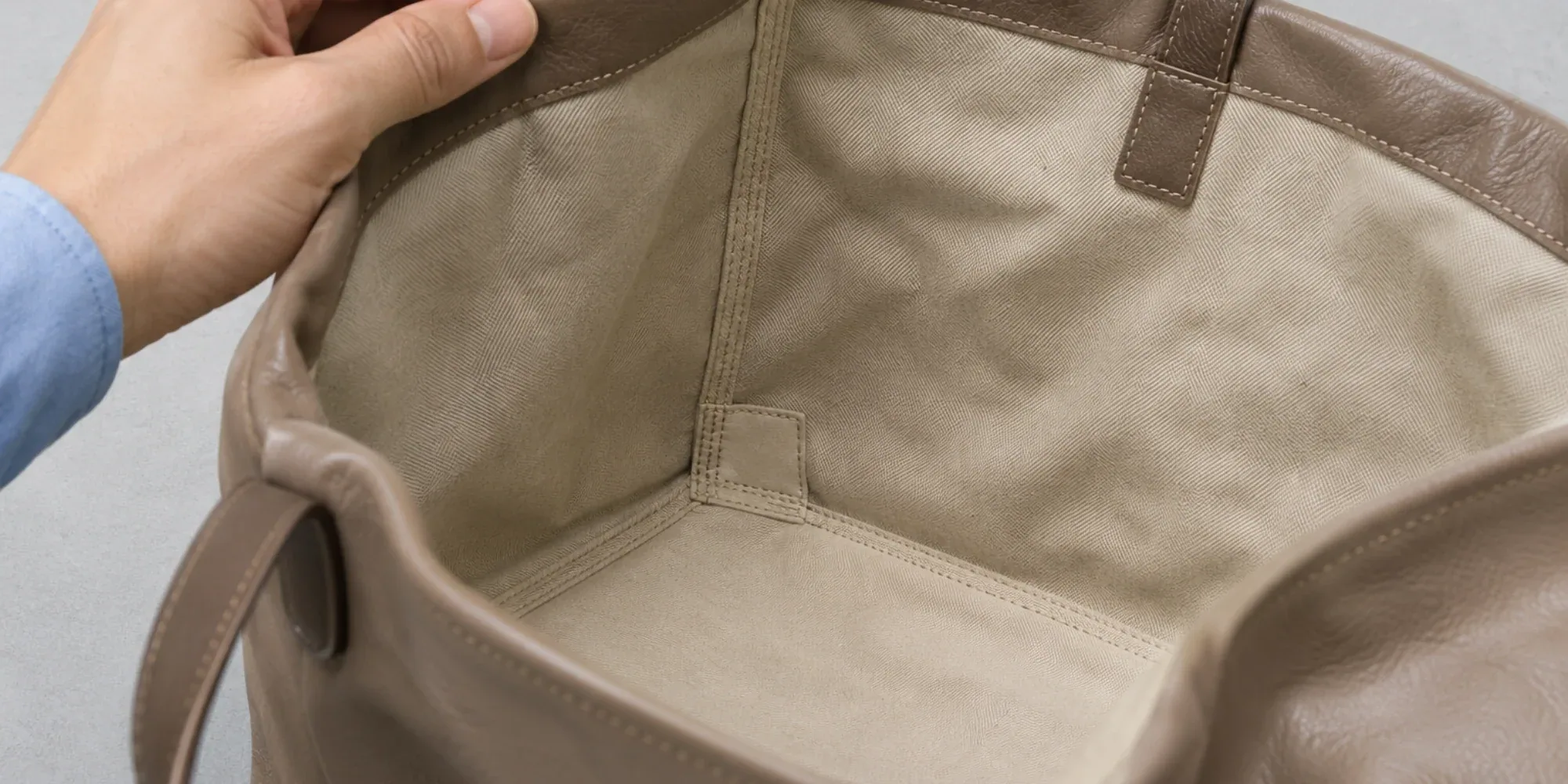
Evaluating a manufacturer for Louis Vuitton-tier custom bags requires a checklist focused on precise pattern alignment, robust structural reinforcements, and rigorous material testing. A capable manufacturing partner must demonstrate documented statistical quality control, verify base material tear strength through standardized testing, accurately process PVC-coated fabrics, and source premium trims through certified channels like the Leather Working Group.
Check 1: Material Tear Strength and Reinforcement Testing
The foundational requirement for luxury-adjacent custom bags is uncompromising base fabric durability. Premium bags experience significant dynamic stress at handle attachments, bottom corners, and zipper terminations. To replicate the longevity expected of top-tier brands, the foundation material cannot merely look correct; it must possess verified structural integrity before any cutting or assembly begins. This prevents catastrophic failures such as strap detachment or seam blowouts when the bag is fully loaded. A capable manufacturing partner should not rely solely on supplier data sheets but must independently verify fabric performance on the factory floor or within a dedicated quality control laboratory.
The primary metric for this durability is tear strength. Specifically, evaluate whether the manufacturer utilizes the D2261 standard test method for tearing strength of fabrics by the tongue, or single rip, procedure. This standardized approach measures the force required to propagate an existing tear in a fabric, typically using a Constant-Rate-of-Extension tensile testing machine. While modern facilities generally use these advanced extension machines, it is recognized that some older constant-rate-of-traverse-type tensile testing machines continue to be used effectively in the industry for this purpose. D2261 Standard Test Method for Tearing Strength of Fabrics by the Tongue (Single Rip) Procedure (Constant-Rate-of-Extension Tensile Testing Machine)
Under this testing protocol, it is a strict requirement that the tear be initiated before testing begins. This simulates a realistic scenario where the bag's fabric has already sustained minor damage, a puncture from a heavy stitching needle, or wear at a flex point. By measuring the precise mechanical force needed to continue the rip from that initial point of failure, product developers can establish strict performance thresholds for their base materials. If a fabric fails this test prematurely, the manufacturer must implement structural reinforcements, such as backing layers or adjusted stitch densities, to ensure the final product meets luxury standards. D2261 Standard Test Method for Tearing Strength of Fabrics by the Tongue (Single Rip) Procedure (Constant-Rate-of-Extension Tensile Testing Machine)
It is also vital to assess the scope of the manufacturer's environmental testing conditions. The D2261 instructions provide clear guidelines for testing specimens with or without wetting. For travel bags and daily commuter backpacks intended for varied climates, structural integrity can change drastically when exposed to moisture. A manufacturer producing luxury-adjacent items must routinely perform these tests under both dry and wetted conditions to ensure that water exposure does not compromise the textile's tear resistance. Relying exclusively on dry testing leaves a critical vulnerability unchecked for outdoor applications. D2261 Standard Test Method for Tearing Strength of Fabrics by the Tongue (Single Rip) Procedure (Constant-Rate-of-Extension Tensile Testing Machine)
The presence of operational testing equipment and documented procedures is a non-negotiable requirement for high-end sourcing. When exploring a factory's Custom Service, sourcing managers should explicitly request recent material testing logs and verify that their equipment is regularly calibrated. A premier manufacturing partner will proactively share these tearing strength results during the prototyping and material selection phases to justify their engineering choices. For company-specific information, see GFBags.
- Verify the presence of Constant-Rate-of-Extension or constant-rate-of-traverse-type tensile testing machines in the quality control laboratory.
- Request documented procedures for the D2261 standard test method for tearing strength by the tongue procedure.
- Confirm that factory technicians properly initiate the tear before testing to accurately measure rip propagation.
- Review testing logs to ensure specimens are evaluated with and without wetting to account for environmental moisture exposure.
- Assess whether the facility uses these test results to determine the placement and type of structural reinforcements. D2261 Standard Test Method for Tearing Strength of Fabrics by the Tongue (Single Rip) Procedure (Constant-Rate-of-Extension Tensile Testing Machine)
Check 2: Precise Pattern Alignment and Distortion Controls
Luxury-tier custom bags are immediately identifiable by their uncompromising visual symmetry. A signature monogram or a repeating geometric print must align flawlessly across structural seams, gussets, and zipper lines. If a bag features mismatched prints or tilted logos, it is instantly recognized as substandard, regardless of the physical durability of the materials used. Sourcing managers must therefore confirm that a prospective manufacturing partner exercises rigorous control over textile distortion before any cutting takes place. This requires a formalized approach to measuring and managing how fabrics behave as they are unrolled for production.
Textile distortion typically manifests in two primary forms: bow and skew. Bow occurs when the filling yarns or printed lines curve across the width of the fabric, creating an arc. Skew happens when these lines remain straight but run at an unintended angle, failing to sit perfectly perpendicular to the fabric edges. When heavy canvas or woven backing materials are subjected to high tension during rolling, coating, or printing processes, these mechanical distortions often become locked into the material. If a factory attempts to process a skewed roll using standard straight-edged pattern templates, the resulting cut panels will inevitably yield a bag with a noticeably tilted monogram.
To prevent these visual defects, the manufacturing facility must apply recognized testing protocols to determine the exact degree of material distortion. Evaluate whether the quality control laboratory utilizes the D3882 standard test method. This recognized protocol covers the determination of bow and skew of filling yarns in woven fabrics, as well as the courses in knitted fabrics. Crucially for luxury bag applications, this specific test method can also be used to measure the bow and skew of printed geometric designs on the fabric surface. By quantifying this distortion with a standardized metric, a capable factory can establish a strict tolerance limit, allowing them to reject or quarantine non-compliant material rolls before they reach the cutting floor. D3882 Standard Test Method for Bow and Skew in Woven and Knitted Fabrics
Identifying the distortion is essential, but the manufacturer must also demonstrate the capability to accommodate or correct it. While some advanced automated cutting machines use optical recognition to map and adjust to minor print skew, heavy coated canvases intended for luxury use often require meticulous manual block-cutting. You should ask potential partners how their operators handle rolls that approach the outer limits of acceptable bow and skew thresholds. If a facility lacks documented measurement controls and relies purely on the naked eye during the spreading process, they will struggle to maintain consistent pattern alignment across a large production run.
When exploring prospective manufacturing partners, evaluating their approach to material alignment is a critical step in the vetting process. Sourcing managers should always request detailed inspection logs that demonstrate how incoming printed textiles are evaluated for dimensional stability before structural assembly begins. For company-specific information, see GFBags.
- Demand documentation showing the factory utilizes the D3882 standard test method to evaluate incoming fabric rolls.
- Verify that the quality control team explicitly measures both the structural filling yarns and the surface printed geometric designs for distortion.
- Establish maximum acceptable tolerance limits for bow and skew specific to your chosen monogram or pattern.
- Ask for procedural outlines detailing how operators adjust cutting templates or reject materials when a roll exhibits excessive skew.
- Review past production samples to physically check pattern alignment at critical junction points like the bottom gusset and side seams. D3882 Standard Test Method for Bow and Skew in Woven and Knitted Fabrics
Check 3: Coated Canvas Handling and Processing Efficacy
For luxury-adjacent custom bags, particularly those inspired by heritage travel collections, PVC-coated canvas is a foundational material. It provides the structured silhouette, weather resistance, and scratch durability expected at premium price points. However, evaluating a manufacturer's ability to handle these coated fabrics requires looking past basic sewing capabilities. The facility must demonstrate specialized protocols for processing, cutting, and reinforcing PVC-coated textiles without degrading their structural integrity or aesthetic finish.
The inherent protective qualities of PVC-coated materials are substantial. Research highlights their robust barrier properties; for example, a PVC-coated fabric bag was evaluated and demonstrated efficacy for on-farm storage for eight months without requiring fumigation. Sourcing managers choose this material precisely for this proven, long-term environmental resistance. Yet, the material's baseline efficacy is only preserved if the manufacturing process respects its unique mechanical properties. Improper handling during bag construction can easily compromise the waterproof coating and overall structural lifespan. Efficacy of PVC coated fabric bag for on-farm storage of wheat (Triticum aestivum) | The Indian Journal of Agricultural Sciences
A critical assessment area is the manufacturer's stitching and tension control. Because PVC is a continuous synthetic coating over a fabric base, needle punctures are permanent. Unlike standard woven cotton or nylon, the coated surface will not self-heal or shift back into place around a stitch. If a facility uses standard presser feet, inappropriate needle profiles, or incorrect thread tensions, the sewing process can introduce micro-tears along the seam line. Over time, these weakened perforations will stretch, invite moisture ingress, and eventually lead to catastrophic seam failure under the weight of a fully packed travel bag. You must verify that the manufacturing partner uses specialized low-friction presser feet and specifically calibrated needle sizes designed for heavy coated canvases.
Structural reinforcement requires equally rigorous vetting. Bonding leather trims, stiffening boards, or interior linings to a PVC surface introduces the risk of chemical incompatibility. Certain adhesives can react with the plasticizers present in the PVC coating, leading to a breakdown of the material that causes it to become sticky, brittle, or discolored after several months. Evaluate the manufacturer's adhesive selection and ask for documentation showing that their bonding agents are formulated for long-term compatibility with plasticized fabrics.
- Ask for production logs detailing the specific needle profiles, thread types, and machine tensions used for PVC-coated panels.
- Examine physical samples for any scuffing, stretching, or finish degradation near structural seams and gussets.
- Request long-term adhesive compatibility tests to confirm that reinforcing layers will not cause plasticizer migration or bubbling.
Check 4: Leather Trim Sourcing and Responsible Processing
Luxury-adjacent custom bags rely heavily on premium leather to reinforce high-stress areas such as handles, piping, base corners, and gussets. Because these components endure the most friction and bear the primary load of the bag, their structural integrity is paramount. Evaluating a potential manufacturing partner requires examining not only how they cut and sew these trims, but also how they source the raw material. A manufacturer operating at a luxury tier must demonstrate transparency in their supply chain, proving that the leather they procure possesses the consistent density and durability necessary for long-term structural reinforcement.
To ensure these raw materials meet rigorous quality standards, sourcing managers should verify whether the manufacturer procures hides from certified facilities. A primary benchmark in this industry is the Leather Working Group. Established in 2005 as a collaborative initiative among leading footwear, apparel, and upholstery brands alongside leather manufacturers, this global non-profit, multi-stakeholder initiative is committed to sustainable leather production. The organization supports and encourages the use of responsibly made leather while protecting people and the planet. A manufacturing partner connected to these certified sources can better guarantee that the leather used for critical structural reinforcements is both responsibly produced and reliably consistent. What we do – Leather Working Group
The structural implications of this sourcing capability are significant. Responsibly processed leather yields a consistent thickness and tighter fiber structure, which is essential for load-bearing anchors and edge binding. If a manufacturer relies on unverified leather, hidden inconsistencies in the hide can lead to uneven stretching, causing handle attachments to fail prematurely under weight. Beyond sourcing, the factory must possess the specialized machinery to process these premium hides. This includes precision skiving machines that thin the leather exactly at the seam allowances without compromising the overall tensile strength of the component. Furthermore, the facility must demonstrate advanced edge-finishing capabilities. In luxury bag construction, exposed leather edges must be meticulously sanded, sealed, and coated with multiple layers of edge paint. This is not merely an aesthetic requirement; it structurally seals the leather fibers against moisture ingress and prevents long-term fraying at high-flex points like strap edges and top collars.
- Request documentation proving that the manufacturer sources leather trims from certified facilities such as those participating in the Leather Working Group.
- Assess the consistency of leather thickness and fiber density across multiple sample batches to ensure reliable structural performance at load-bearing anchors.
- Inspect the facility for precision skiving machinery used to manage seam allowance thickness without weakening the hide.
- Evaluate the edge-finishing process, ensuring the manufacturer utilizes multi-layer painting and sanding techniques to seal exposed fibers against moisture. What we do – Leather Working Group
Check 5: Defect Reduction and Quality Control Frameworks
Establishing a durable foundation and sourcing premium materials are essential, but these steps must be governed by rigorous, systemic quality controls during mass production. High-end construction featuring complex reinforcements, edge-finishing, and multi-layered assemblies carries a high risk for compounding errors. Reactive quality control—where defects are only caught by visual inspectors at the end of the line—is insufficient for Louis Vuitton-tier standards. Sourcing managers must prioritize manufacturers that actively prevent construction flaws before they manifest across an entire production run.
The core of this proactive approach involves formal defect analysis methodologies. Specifically, evaluate whether the manufacturing partner analyzes product quality using an integrated Statistical Quality Control (SQC) and Failure Mode and Effect Analysis (FMEA) framework. This combined approach allows a facility to methodically track production data and defect rates, moving beyond anecdotal observation to concrete, measurable metrics. Integrated SQC and FMEA Framework for Woven Bag Defect Reduction In Manufacturing Industry | Academia Open
Within this integrated framework, FMEA serves as a critical predictive tool for structural design. Before mass production begins, a capable engineering team will use FMEA to systematically anticipate potential failure modes in the bag's construction. For a hypothetical example, consider a heavy weekend travel bag with a reinforced leather handle. The FMEA process might identify that under maximum load, the dense stitching attaching the handle to the base material could act as a perforation line, leading to a catastrophic tear. To quantify this risk, the team determines a Risk Priority Number (RPN) for the defect. By calculating and prioritizing corrective actions based on the highest Risk Priority Number, the manufacturer shifts from guessing to data-driven engineering. In this scenario, a high RPN would mandate an immediate design change, such as adding a secondary structural backing board or altering the stitch density, before the first piece of fabric is ever cut. Integrated SQC and FMEA Framework for Woven Bag Defect Reduction In Manufacturing Industry | Academia Open
SQC complements this predictive engineering by actively monitoring the ongoing manufacturing process. While FMEA designs out the risk, SQC ensures the production floor executes the design consistently. By collecting real-time defect data, an SQC system identifies statistically significant deviations from the established baseline. If a specific structural defect—such as skipped stitches on a thick reinforcement panel or improper tension on a critical load-bearing seam—suddenly spikes, SQC charts visually flag the anomaly. This alerts the production team to halt the line, analyze the root cause, and correct the machinery calibration immediately. Without an integrated SQC framework, a factory relies entirely on end-of-line inspections, where hidden structural defects embedded deep within bound seams might easily pass unnoticed, only to fail months later in the hands of the consumer.
- Request documented examples of Failure Mode and Effect Analysis (FMEA) conducted on previous complex bag designs.
- Verify that the manufacturer calculates a Risk Priority Number (RPN) to determine and implement prioritized corrective actions for structural vulnerabilities.
- Ask to review Statistical Quality Control (SQC) charts from the production floor to see how active defect data is systematically collected and analyzed.
- Confirm that the factory utilizes these integrated frameworks specifically to target structural reinforcement issues rather than strictly cosmetic flaws. Integrated SQC and FMEA Framework for Woven Bag Defect Reduction In Manufacturing Industry | Academia Open
Check 6: Material Compliance and Labeling Accuracy
While physical durability and precise pattern alignment form the mechanical foundation of luxury-adjacent custom bags, the legal verification of those materials is equally critical. A premium bag's construction is defined by the exact composition of its textiles, linings, and reinforcements. Sourcing managers must ensure that a prospective manufacturer does not just promise high-grade materials, but actively maintains accurate, legally compliant documentation for every textile component. Substituting a specified high-tenacity nylon with an undocumented cheaper synthetic blend compromises not only the structural integrity of the final product but also the importing brand's legal standing.
To prevent these liabilities, the manufacturing facility must strictly adhere to international and regional labeling regulations. In the United States market, for example, compliance falls under the jurisdiction of the Textile Fiber Products Identification Act. This regulatory framework specifically deals with mandatory content disclosure in the labeling, invoicing, and advertising of textile fiber products. A sophisticated manufacturing partner must be intimately familiar with these requirements, ensuring that the exact fiber percentages of all woven components from the primary body canvas to the interior pocket linings are accurately identified and declared long before the goods leave the factory floor. Textile Fiber Products Identification Act | Federal Trade Commission
Failure to maintain this accuracy exposes the sourcing brand to severe operational risks. Under the Act, misbranding is unlawful, as is falsely or deceptively invoicing or advertising textile fiber products. For a brand operating at a luxury-tier standard, any incident of misbranding whether caused by intentional substitution or poor factory administration can result in catastrophic customs delays, financial penalties, and irreversible brand damage. Furthermore, the legislation directs the regulating commission to establish a generic name for each man-made fiber that lacks one. Your manufacturing partner must accurately use these established generic names on all commercial invoices and physical tags, rather than relying on internal factory slang or unverified supplier descriptions. Textile Fiber Products Identification Act | Federal Trade Commission
Evaluating this capability requires auditing the manufacturer's administrative controls during the initial sourcing phase. A capable facility will have a transparent tracking system that links the raw material lot numbers provided by their textile mills directly to the final product labels. They should be able to produce verifiable lab testing reports that confirm the exact fiber composition of the materials they intend to use for your custom bags. If a factory hesitates to provide detailed fiber content breakdowns or relies on vague material descriptions on their invoices, it strongly indicates a lack of the rigorous quality control frameworks required for premium manufacturing.
- Request documentation demonstrating how the facility manages mandatory content disclosure for all textile fiber products.
- Verify that the manufacturer uses the correct established generic name for each man-made fiber on commercial paperwork.
- Review the factory's quality control procedures designed to prevent falsely or deceptively invoicing or advertising the final goods.
- Ensure all sewn-in tags and shipping manifests are meticulously cross-checked to avoid unlawful misbranding under regional regulations. Textile Fiber Products Identification Act | Federal Trade Commission
Check 7: Circular Design Integration and Certified Recycled Content
Incorporating environmental considerations into high-end bag construction cannot come at the expense of durability. For luxury-adjacent custom bags, the structural reinforcements required for premium travel must align with modern sustainability goals. The role of design as an enabler of circular business models is crucial for modern textile sectors, demanding that manufacturers prioritize longevity and material recovery from the very first blueprint. Capable partners must engineer bags that minimize waste without weakening critical load-bearing seams. Textiles and the environment: the role of design in Europe’s circular economy | Publications | European Environment Agency (EEA)
Integrating recycled base fabrics and linings is a primary strategy for circular design, but these materials must still meet exacting tear strength and distortion controls. To ensure material claims are authentic, sourcing managers must require third-party certification for recycled content. Established programs have delivered comprehensive assessment and certification for recycled content claims since 1989. Relying on this level of verified certification ensures that the structural materials used in the bag legitimately meet environmental standards without relying on unverified supplier promises. Recycled Content Certification | ISO 14021 & SCS‑103 | SCS
For sourcing managers developing custom product lines, the ability to transfer these environmental credentials directly to the final consumer is highly valuable. Specific certification frameworks offer a private label certification that is available to customers of certified manufacturers to allow re-branding of certified products under the customer's company name. This administrative capability allows a luxury-tier brand to transparently market verifiable recycled content while maintaining the confidentiality of their manufacturing partnerships. Recycled Content Certification | ISO 14021 & SCS‑103 | SCS
Structurally, utilizing recycled materials in high-stress areas like handle anchors or bottom gussets requires precise engineering and rigorous mechanical testing. Sourcing managers must verify that the manufacturing facility evaluates these recycled alternatives against established virgin material baselines before mass production begins. If a certified recycled canvas or lining demonstrates slightly different tensile properties, the factory's circular design strategy must intelligently compensate. This might involve integrating secondary reinforcing boards, altering edge-binding techniques, or adjusting stitch densities to ensure the final product maintains a true luxury-tier lifespan without prematurely tearing at the seams.
- Verify the manufacturer incorporates design as an enabler of circular business models for the selected textiles.
- Demand comprehensive third-party certification for recycled content to authenticate the materials used in structural components.
- Determine if the certification framework allows for private label re-branding of the certified products under your company name.
- Require the factory to test recycled base fabrics against virgin material baselines to guarantee they support necessary structural reinforcements. Textiles and the environment: the role of design in Europe’s circular economy | Publications | European Environment Agency (EEA) Recycled Content Certification | ISO 14021 & SCS‑103 | SCS
Sources
- D2261 Standard Test Method for Tearing Strength of Fabrics by the Tongue (Single Rip) Procedure (Constant-Rate-of-Extension Tensile Testing Machine)
- D3882 Standard Test Method for Bow and Skew in Woven and Knitted Fabrics
- Efficacy of PVC coated fabric bag for on-farm storage of wheat (Triticum aestivum) | The Indian Journal of Agricultural Sciences
- What we do – Leather Working Group
- Integrated SQC and FMEA Framework for Woven Bag Defect Reduction In Manufacturing Industry | Academia Open
- Textile Fiber Products Identification Act | Federal Trade Commission — 2013-07-19
- Textiles and the environment: the role of design in Europe’s circular economy | Publications | European Environment Agency (EEA)
- Recycled Content Certification | ISO 14021 & SCS‑103 | SCS