 Skip to content

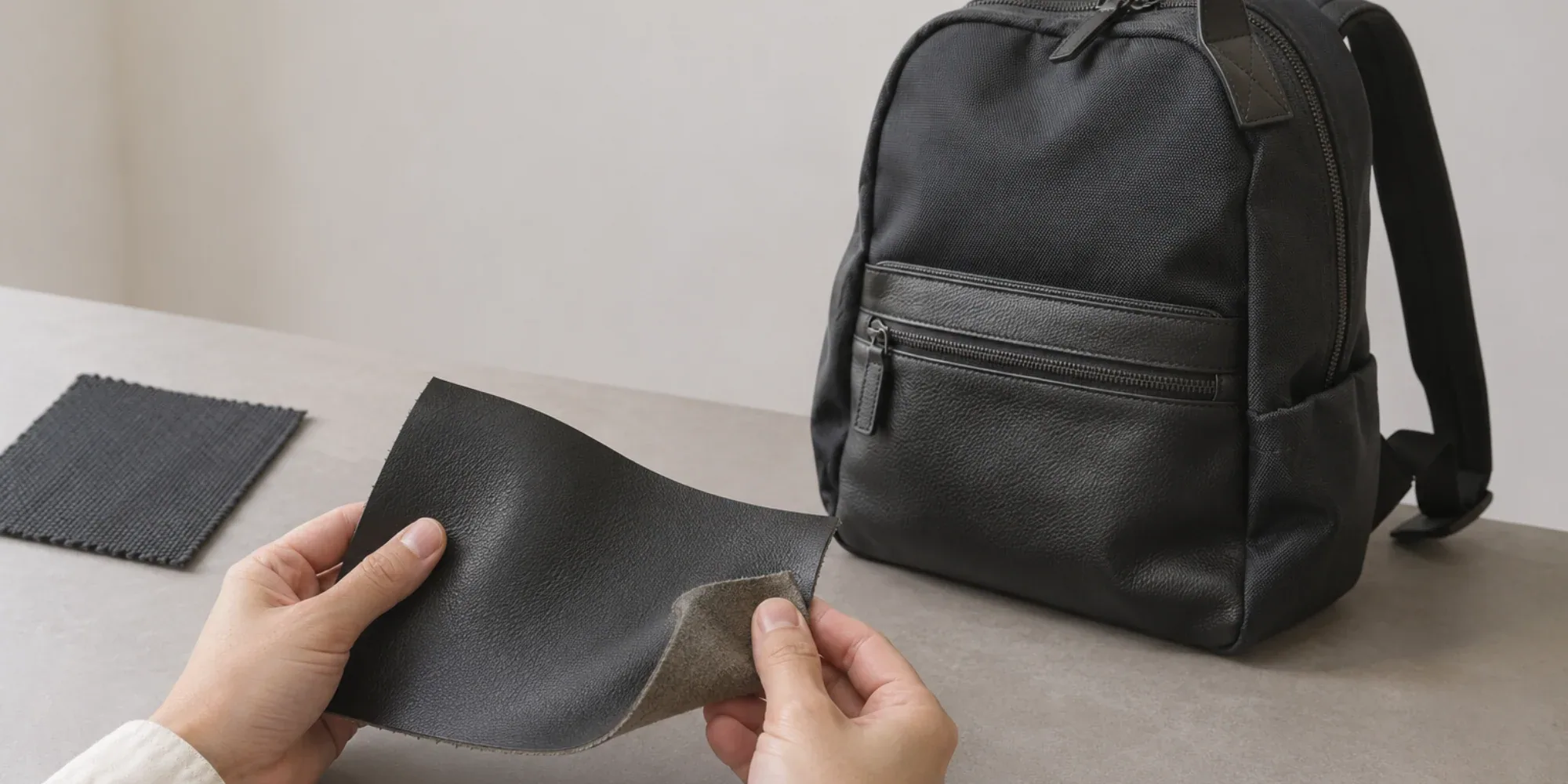
Evaluating a manufacturer for Gucci-adjacent custom backpacks requires a checklist verifying their ability to document material origins, such as LWG-certified leather or SCS-certified recycled content, and execute specific physical testing. This includes evaluating breaking strength via ASTM D5034, tear resistance using ASTM D5587 or D2261, and coated fabric integrity under ASTM D751. Finally, the manufacturer must demonstrate process control using Statistical Quality Control (SQC) and Failure Mode and Effect Analysis (FMEA) to prevent defects and ensure structural and visual consistency across the production run.
Certifying Premium Material Origins and Sustainability Claims
When sourcing materials for Gucci-adjacent custom backpacks, product developers must look beyond the initial tactile quality or visual finish of a sample. At a luxury standard, generic material procurement is entirely insufficient because the final consumer expects verifiable ethical and environmental standards. The manufacturer must possess the administrative and supply chain capabilities to secure, trace, and document premium material origins from raw fiber or hide to the finished good. A comprehensive manufacturing capability checklist begins by assessing whether a production partner can integrate their material supply network with recognized third-party chain-of-custody certifications. This critical distinction separates entry-level assembly operations from capable manufacturing partners that can meet the stringent mandates required by modern high-end brands.
Incorporating recycled textiles into luxury backpacks requires definitive proof of origin to avoid accusations of greenwashing, especially when dealing with complex blended fabrics used for durability. Sourcing managers should verify that the manufacturer can provide documentation from established industry authorities rather than relying on internal supplier declarations. For example, SCS Global Services launched the first third-party certification program for recycled content claims in 1989 and remains a primary authority in this space. If a brand intends to market a high-end backpack using recycled nylons or polyesters, the manufacturer's ability to supply textiles backed by a comprehensive assessment from recognized bodies, such as SCS or the Global Recycled Standard (GRS), is a mandatory capability checkpoint. Recycled Content Certification | ISO 14021 & SCS‑103 | SCS
Furthermore, for brands looking to maintain their own branding on the final certified product, the manufacturer should be intimately familiar with private label transfer processes. SCS Recycled Content Certification Private Label certification is explicitly available to customers of certified manufacturers, which allows the rebranding of these certified products under the customer's company name. A capable manufacturer will understand how to navigate this specific documentation process so that the luxury brand receives the public certification credit without exposing their underlying raw material supply chain to competitors. Recycled Content Certification | ISO 14021 & SCS‑103 | SCS
Leather accents, structural handles, and reinforced base panels are defining features of high-end backpacks, making leather sourcing capabilities another critical area of evaluation. A manufacturer producing luxury-tier goods must demonstrate established, ongoing relationships with tanneries that adhere to stringent environmental and chemical management standards. The industry benchmark for evaluating these practices is the Leather Working Group. Established in 2005 as a collaborative initiative among leading footwear, apparel, and upholstery brands, alongside leather manufacturers, this global non-profit organization rigorously assesses the environmental compliance of leather producers. What we do – Leather Working Group
A sourcing manager's checklist must require that the custom backpack manufacturer can reliably procure materials from facilities audited by this initiative. Because the Leather Working Group encourages the use of responsibly made leather as a sustainable material, specifying LWG-sourced leather ensures that the heavy-duty components used in the final product align with global sustainability expectations while protecting people and the planet. The manufacturer must be able to provide the exact tannery audit ratings and traceability documentation for every batch of leather purchased for the production run. Without this specific administrative capability, the brand cannot confidently claim responsible sourcing in its consumer-facing marketing or retail environment. What we do – Leather Working Group
To validate these claims before mass production begins, product developers should formally incorporate documentation requirements into the initial quoting and prototyping phases. Discussing these specific material certification frameworks during early custom manufacturing discussions establishes the brand's baseline requirements before formal negotiation. By requiring the manufacturer to present external audit credentials alongside physical material swatches, procurement teams can quickly filter out suppliers who rely solely on visual imitation. Buyers should note that demanding fully certified materials often impacts minimum order quantities and sourcing lead times, as certified batches must be tracked separately from standard commercial inventory. Proper planning mitigates these timeline impacts while preserving material integrity. For company-specific information, see GFBags.
- Confirm the manufacturer's ability to supply backpack textiles evaluated and certified by recognized authorities, such as SCS Global Services or GRS, for recycled content.
- Verify the supplier's administrative procedures for executing a private label certification transfer to the buyer's brand name.
- Request documentation proving that all structural and decorative leather components are sourced from facilities actively audited by the Leather Working Group.
- Ensure the manufacturer has inventory controls to match all material certificates to the specific batches used in your custom backpack production run.
Validating Load-Bearing Capacity Through Tensile Testing
Luxury backpacks are expected to be both visually striking and exceptionally resilient. While premium material origins establish brand credibility, the physical reality of a custom backpack is that it functions as a load-bearing tool. Whether carrying heavy electronics during a daily commute or tightly packed gear for weekend travel, the primary textiles face continuous static and dynamic stresses. A comprehensive manufacturer capability checklist must therefore progress beyond material sourcing and mandate rigorous physical performance validation. Sourcing managers cannot rely on generic fabric specifications, such as denier count or nominal weight, to guarantee structural integrity. Instead, they must verify that the manufacturing partner possesses the technical capability to execute or coordinate standardized physical testing on all raw materials before cutting and assembly commence.
Tensile testing forms the absolute foundation of evaluating a fabric's load-bearing capacity. When evaluating a factory's quality control infrastructure, procurement teams must ensure adherence to globally recognized testing frameworks that quantify exactly how much force a textile can endure. This objective testing replaces subjective tactile assessments with reliable data. In the context of Gucci-adjacent custom backpacks, where designers frequently experiment with novel fabric blends or integrate heavy metallic hardware, understanding the exact structural threshold of the baseline material is critical. Without tensile testing, unexpected stress concentrations at strap anchor points or hidden structural seams can lead to catastrophic fabric failure in the field, instantly destroying the product's premium positioning and generating costly consumer returns.
To standardize this evaluation, the capability checklist should specifically require familiarity with the ASTM D5034 Standard Test Method for Breaking Strength and Elongation of Textile Fabrics. Commonly known as the Grab Test, this testing framework covers both the standard grab and modified grab test procedures. It is specifically designed for determining the breaking strength and elongation of most textile fabrics. By applying a controlled, mechanically increasing pulling force to the material sample, the ASTM D5034 method precisely identifies the point of failure. Rather than simulating a sudden, dynamic shock-load, this test measures the maximum static tension the fabric can endure before rupture. By establishing this absolute limit under controlled conditions, sourcing managers can confidently determine whether a fashionable but unproven material is structurally viable for a heavily loaded pack. D5034 Standard Test Method for Breaking Strength and Elongation of Textile Fabrics (Grab Test)
The methodology of the grab test is uniquely suited to backpack manufacturing. Unlike tests that clamp the entire width of a material sample, the grab procedure grips only a central portion of the fabric, leaving the outer edges free. This localized application of force accurately mimics real-world conditions where a specific stress point, such as a heavy handle stitched directly into a top panel, pulls against the wider continuous fabric of the bag. Furthermore, a capable manufacturer evaluates both metrics provided by the test: breaking strength and elongation. While breaking strength indicates the maximum load before tearing, elongation measures how much the fabric stretches before that failure occurs. In luxury bags, excessive elongation is often as problematic as a low breaking strength, as stretching can permanently distort the bag's carefully tailored silhouette or misalign structural zippers.
If a proposed luxury textile exhibits high elongation during testing, a sophisticated manufacturing partner will proactively recommend compensating measures, such as bonding internal backing materials or adding rigid structural reinforcements. Therefore, the capability checklist must verify that the manufacturer not only conducts these tests but understands how to interpret the resulting data to inform product development. A supplier that merely accepts incoming fabric without validating its breaking strength introduces an unacceptable level of risk for a premium brand demanding long-term durability.
- Require documentation proving the manufacturer tests baseline structural fabrics for both breaking strength and elongation.
- Verify the facility uses standardized procedures like the ASTM D5034 grab test to measure localized static strength.
- Assess the manufacturer's ability to interpret elongation data to prevent permanent silhouette distortion in the final backpack design.
- Confirm that test results are actively used to determine the necessity of internal backing layers or structural reinforcements.
Evaluating Fabric Tear Resistance for Everyday Durability
While breaking strength determines a material's capacity to hold heavy loads, everyday wear and tear often involves sudden snagging, accidental cuts, or intense localized stress near heavy zippers and metallic hardware. In luxury custom backpacks, a small puncture should not immediately propagate into a massive, unrepairable rip. Therefore, assessing tear resistance is a non-negotiable step in the material selection process, distinct from overall tensile strength evaluations.
High-end backpacks frequently feature complex paneling, internal structure boards, and heavy metal accents that create concentrated stress nodes. If the bag snags on a sharp edge during transit, the fabric's integrity relies entirely on its tear resistance. A comprehensive capability checklist must confirm that a manufacturer does not just rely on a fabric's nominal denier or weight to predict its durability, but actively conducts standardized tear testing to observe how the textile behaves once a breach has actually started.
One primary evaluation method the manufacturer should be equipped to perform is the single-rip procedure. Specifically, the checklist should require the capability to execute the ASTM D2261 standard test method for the tearing strength of fabrics by the tongue procedure. This method specifically requires that a tear must be initiated in the specimen before the actual pulling test begins. Testing should be performed using a constant-rate-of-extension tensile testing machine. Although it is recognized that some facilities still utilize constant-rate-of-traverse testing machines, sourcing managers must specifically demand constant-rate-of-extension equipment, as it is necessary to execute the complete suite of recommended tear assessments. Understanding the force needed to continue an existing rip is crucial for high-end backpacks, as it dictates whether a minor snag in a high-tension area will remain a localized cosmetic issue or result in catastrophic structural failure. D2261 Standard Test Method for Tearing Strength of Fabrics by the Tongue (Single Rip) Procedure (Constant-Rate-of-Extension Tensile Testing Machine)
For bags with asymmetrical designs or specialized material blends, evaluating tearing strength from a different geometric perspective is often necessary. The capability checklist should also require familiarity with the ASTM D5587 standard test method for tearing strength by the trapezoid procedure. Like the single-rip method, this procedure relies on a recording constant-rate-of-extension tensile testing machine to measure the tearing strength of textile fabrics. However, the trapezoidal clamping setup distributes the stress differently across the fabric's yarns. This specific distribution closely mirrors the multidirectional tension that occurs in complex, contoured backpack panels when they are fully packed and stretched out of their normal resting shape. D5587 Standard Test Method for Tearing Strength of Fabrics by Trapezoid Procedure
A capable manufacturer will understand the tradeoffs between these two testing methodologies and apply them appropriately based on the custom backpack's design specifications. The single-rip procedure is generally highly effective for assessing the resilience of straightforward continuous panels and standard woven materials. In contrast, the trapezoid procedure often provides more relevant data for fabrics that will be cut into complex shapes or subjected to angled, off-axis tension during everyday use. When vetting a factory, the sourcing manager should verify that the quality control laboratory is equipped with the necessary constant-rate-of-extension tensile testing machines and that the technicians know which standard applies to the selected materials. If a manufacturer relies on simple tactile feel rather than these precise, standardized tear tests, they cannot guarantee the durability expected by a luxury-adjacent brand.
- Confirm the manufacturer operates constant-rate-of-extension testing machines, which are required to perform the full suite of tear procedures.
- Verify the capability to execute the ASTM D2261 single-rip procedure to test how easily a localized puncture propagates.
- Ensure the laboratory can perform the ASTM D5587 trapezoid procedure to evaluate multidirectional tearing strength on complex panels.
- Request documentation showing how tear test results inform the reinforcement of high-tension seams and hardware attachment points.
Testing Coated Fabrics and Ensuring Visual Pattern Alignment
Luxury backpacks often push manufacturing boundaries beyond standard woven textiles. Designers frequently specify specialty coated materials for weatherproofing or unique textures, alongside highly recognizable patterned fabrics. Standard tensile and tear tests evaluate the underlying yarn strength, but they do not account for the unique vulnerabilities of specialized surface treatments or the strict aesthetic requirements of a luxury monogram. A complete capability checklist must therefore include specialized protocols for validating coated finishes and ensuring precise visual alignment before assembly begins.
For weather resistance and structural rigidity, Gucci-adjacent designs regularly incorporate coated textiles. These materials, which can include rubber-coated fabrics traditionally associated with tarpaulins, rainwear, and similar protective products, offer distinct tactile and functional advantages. Coated fabrics and rubber products made from coated fabrics are important items of commerce that introduce new failure modes, such as delamination or stiffness in cold environments. Evaluating a factory's capability to handle these materials requires ensuring adequate test methods are available to ensure the quality of these products over time. D751 Standard Test Methods for Coated Fabrics
Sourcing managers should verify that the manufacturer specifically utilizes the ASTM D751 standard test methods for coated fabrics. While standard grab tests apply to basic weaves, ASTM D751 encompasses a suite of evaluations specifically tailored to the unique physical properties of coated textiles. For example, testing the adhesion strength between the textile substrate and its outer rubberized coating is critical; if the layers separate under the friction of daily use, the backpack immediately loses both its water resistance and its premium appearance. A capable manufacturer will systematically test these coated layers to prevent bubbling or peeling on critical touchpoints like the bottom gusset or the main flap. D751 Standard Test Methods for Coated Fabrics
Beyond physical durability, luxury brands are defined by uncompromising visual precision. A hallmark of high-end custom backpacks is the flawless alignment of geometric prints, repeating monograms, or distinct woven patterns across complex contoured panels and seams. A crooked pattern on a front pocket immediately signals poor craftsmanship, regardless of the material's actual physical strength. Therefore, the checklist must assess the manufacturer's ability to measure and control fabric distortion before a single pattern piece is cut.
During weaving, knitting, or printing, fabrics can experience structural distortion known as bow and skew. Bow occurs when the yarns or the printed design curve across the width of the fabric, while skew happens when the patterns run diagonally instead of straight across. If a manufacturer attempts to cut rectangular backpack panels from skewed fabric, the resulting bag will inevitably feature misaligned visual elements. To prevent this, the capability checklist must include the ASTM D3882 standard test method for bow and skew in woven and knitted fabrics. D3882 Standard Test Method for Bow and Skew in Woven and Knitted Fabrics
This standard covers the determination of bow and skew of filling yarns in woven fabrics and the courses in knitted fabrics. Crucially for luxury monogrammed designs, this test method can also be used to measure the bow and skew of printed geometric designs. By implementing these measurements during the incoming inspection phase, a sophisticated quality control team can identify distorted yardage and reject it, or adjust their cutting layouts to compensate for minor variances. This precision differentiates a premium manufacturer from a basic assembly floor that cuts blindly according to marker templates. D3882 Standard Test Method for Bow and Skew in Woven and Knitted Fabrics
Procuring the right textiles is only the first step in luxury production; the manufacturer must possess the analytical tools to verify those textiles meet both structural and aesthetic baselines before assembly. Sourcing managers should insist on reviewing the factory's standard operating procedures for incoming Raw Material inspections. If the facility cannot provide documented procedures for both coating evaluations and pattern alignment measurements, they are likely ill-equipped to handle the strict tolerances demanded by luxury-adjacent backpack programs. For company-specific information, see GFBags.
- Verify the facility executes ASTM D751 test methods specifically for any weather-resistant or rubber-coated fabrics.
- Ensure quality control teams measure the adhesion strength between the textile substrate and its coating to prevent delamination.
- Confirm the use of the ASTM D3882 standard test method to measure bow and skew in woven and knitted fabrics before cutting.
- Check that the manufacturer's incoming inspection procedures specifically assess the bow and skew of printed geometric designs to maintain perfect visual alignment. D751 Standard Test Methods for Coated Fabrics D3882 Standard Test Method for Bow and Skew in Woven and Knitted Fabrics
Implementing Process Controls for Consistent Production Quality
Validating premium materials and executing standardized physical tests establishes a critical baseline for custom backpacks. However, confirming that a single fabric swatch can survive a grab test does not guarantee that the final production run will meet luxury-adjacent standards. The manufacturing capability checklist must extend beyond the laboratory and onto the assembly floor. Sourcing managers need assurance that the factory can maintain structural and visual consistency across high-volume production. To achieve this, a sophisticated manufacturing partner must implement rigorous process controls. Evaluating a facility's defect-reduction framework distinguishes capable partners from those relying on post-production visual inspections, which catch critical errors too late to save the premium textiles.
Many modern facilities attempt to optimize output through broad productivity enhancements. In high-volume commodities, such as plastic bag manufacturing, these improvement efforts are often planned around the concepts of lean manufacturing to boost overall productivity. While efficiency is beneficial, it does not inherently guarantee luxury-level craftsmanship in complex soft goods. Sourcing managers must verify that lean principles are paired with dedicated quality oversight. A fast assembly line cutting corners on seam allowances or hardware attachment points will quickly ruin carefully selected premium materials. Therefore, the checklist must verify that the factory integrates data-driven methodologies to analyze and prevent defects during assembly. Productivity Improvement in Plastic Bag Manufacturing through Lean Manufacturing Concepts: A Case Study | Scientific.Net
To continuously monitor the assembly process, capable manufacturers utilize Statistical Quality Control (SQC) frameworks. The value of these systems is well-documented; for example, studies on industrial woven bag manufacturing demonstrate that analyzing product quality based on actual production and defect data processed using Statistical Quality Control methods allows a factory to track consistency objectively. While a Gucci-adjacent custom backpack with complex leather paneling is vastly more intricate than an industrial woven sack, the underlying quality control requirement remains identical. Rather than relying on subjective judgment, this methodology uses mathematical sampling to detect when a production process begins to drift away from agreed tolerances. Slight deviations in stitch tension or feeding speeds can lead to micro-tears or misaligned geometric patterns. Statistical tools help the quality control team identify these subtle trends before a large batch of expensive raw material is irreparably damaged. Procurement teams should request examples of a factory's daily defect tracking logs during the quoting phase to confirm these tools are genuinely in use. Integrated SQC and FMEA Framework for Woven Bag Defect Reduction In Manufacturing Industry | Academia Open
Identifying a defect is only half of the quality control equation; preventing its recurrence is equally vital. The capability checklist should mandate the use of Failure Mode and Effect Analysis (FMEA). As demonstrated in the woven bag defect reduction research, an integrated SQC and FMEA framework provides a comprehensive approach to defect reduction. While statistical monitoring highlights that an error is occurring, the effect analysis systematically determines the root cause of the failure and assesses its potential consumer impact. By calculating a Risk Priority Number, the quality management team can determine prioritized corrective actions. For luxury-adjacent backpacks, where a failed heavy-duty zipper or a frayed load-bearing strap attachment represents a catastrophic failure of brand trust, prioritizing the most critical failure modes ensures engineering resources are deployed exactly where they are needed most to protect the product's integrity. Integrated SQC and FMEA Framework for Woven Bag Defect Reduction In Manufacturing Industry | Academia Open
When auditing a potential partner, a sourcing manager should require documented proof that these frameworks are actively deployed on the cut-and-sew factory floor, rather than serving as theoretical concepts in a forgotten quality manual. A capable factory will have documented operating procedures detailing how data collection and failure analysis integrate into their workflows for custom backpacks. Procurement teams should ask the factory to demonstrate how they use these systems to adjust assembly techniques when introducing a specialized recycled textile or a complex heavy metal hardware piece. This proactive approach to process control ensures that rigorous material selection and testing phases translate directly into consistently flawless finished backpacks.
- Verify that generic productivity enhancements, such as the lean manufacturing efforts common in plastic bag production, are balanced with structured defect-reduction frameworks suitable for luxury goods.
- Confirm the factory uses Statistical Quality Control methods, as proven in woven bag manufacturing, to objectively analyze production data.
- Require the use of Failure Mode and Effect Analysis to identify root causes of manufacturing errors on the assembly line.
- Ensure the manufacturer calculates a Risk Priority Number for identified defects to determine and execute prioritized corrective actions.
- Request documented examples of how quality control data proactively adjusts assembly techniques for complex custom backpack materials. Productivity Improvement in Plastic Bag Manufacturing through Lean Manufacturing Concepts: A Case Study | Scientific.Net Integrated SQC and FMEA Framework for Woven Bag Defect Reduction In Manufacturing Industry | Academia Open
Sources
- Recycled Content Certification | ISO 14021 & SCS‑103 | SCS
- What we do – Leather Working Group
- D5034 Standard Test Method for Breaking Strength and Elongation of Textile Fabrics (Grab Test)
- D2261 Standard Test Method for Tearing Strength of Fabrics by the Tongue (Single Rip) Procedure (Constant-Rate-of-Extension Tensile Testing Machine)
- D5587 Standard Test Method for Tearing Strength of Fabrics by Trapezoid Procedure
- D751 Standard Test Methods for Coated Fabrics
- D3882 Standard Test Method for Bow and Skew in Woven and Knitted Fabrics
- Productivity Improvement in Plastic Bag Manufacturing through Lean Manufacturing Concepts: A Case Study | Scientific.Net
- Integrated SQC and FMEA Framework for Woven Bag Defect Reduction In Manufacturing Industry | Academia Open