 Skip to content

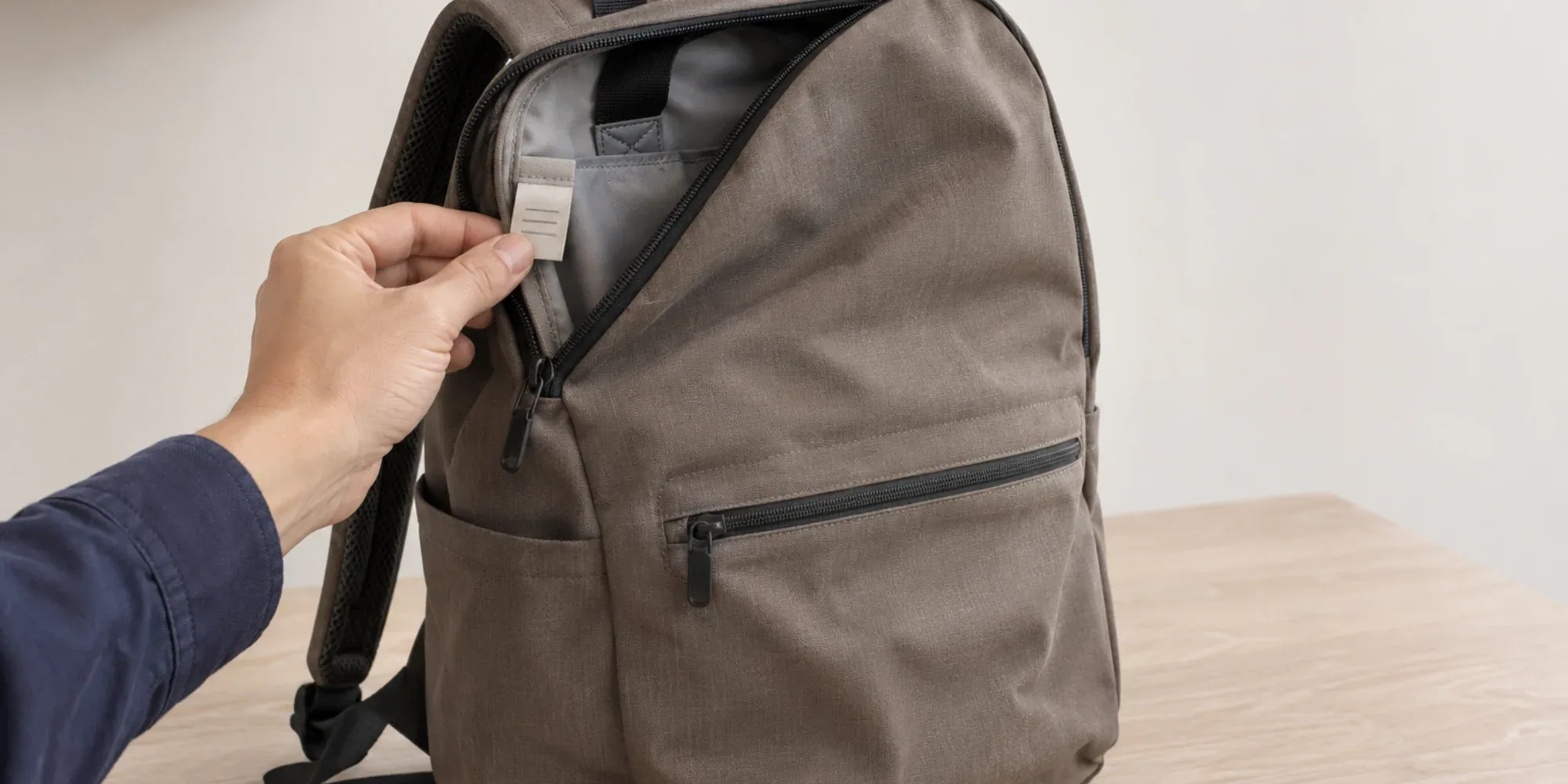
Sourcing a custom commuter backpack manufacturer for an EU brand requires evaluating a facility's ability to meet European circular economy design standards, execute standardized structural testing such as grab and tear tests, and maintain documented statistical quality control. Because commuter bags face daily environmental stress and heavy loads, buyers must verify that a supplier can source authenticated sustainable materials and apply rigorous failure mode analysis to seams and weather-resistant coatings.
Aligning Manufacturing Capabilities with EU Circularity Mandates
The European Union regulatory landscape has fundamentally shifted how bag brands approach product development and sourcing. Through the adoption of the EU Strategy for Sustainable and Circular Textiles, the European Commission emphasizes that textile products placed on the market must meet strict environmental standards. For sourcing managers developing custom commuter backpacks, this transforms the initial facility vetting process. Selecting a manufacturing facility is no longer based solely on unit cost and production capacity; it requires evaluating whether a factory possesses the technical and operational framework to support sustainable design principles. Because textiles represent a critical sector for the European economy, environmental agencies explicitly identify product design as a primary enabler of circular business models. Consequently, the chosen manufacturing partner must be capable of executing these specific design parameters, ensuring the final backpack can be maintained, repaired, and eventually recycled. Textiles Strategy – Environment – European Commission Textiles and the environment: the role of design in Europe’s circular economy | Publications | European Environment Agency (EEA)
Commuter backpacks are inherently complex assemblies. They typically incorporate synthetic fabrics, coated panels for weather resistance, foam padding, metallic hardware, and specialized zippers. In a linear production model, these mixed materials make end-of-life recycling nearly impossible. To align with European mandates, a manufacturer must be equipped to implement circular design strategies on the factory floor. This means they need established supply chains for verifiable recycled materials and the technical expertise to assemble the bag using modular construction techniques. For instance, rather than permanently bonding disparate materials together with heavy chemical adhesives, which prevents future recycling, the manufacturer should have the capability to utilize advanced stitching or mechanical fastening methods. Sourcing teams must verify these construction capabilities during the initial audit phase, ensuring the factory can actively participate in achieving the brand sustainability targets.
Evaluating a factory commitment to sustainable production often relies on standardized, third-party frameworks. Certifications serve as observable indicators of a facility operational standards and reduce the compliance risks associated with importing textiles into the European market. For example, the OEKO-TEX STeP certification establishes high requirements for both the environmental and social aspects of textile and leather production. When a manufacturer maintains this level of certification, it indicates that their production processes, chemical management, and environmental footprint are systematically monitored. Sourcing managers should prioritize factories that hold these verifiable credentials, using them as an initial filter before moving forward with prototype development or technical specifications. OEKO-TEX® Sustainable Textile and Leather Production (STeP)
As EU brands move from initial vetting to requesting prototypes, the alignment between brand intent and factory capability is rigorously tested. Engaging a facility for Custom Service requires the manufacturer to collaboratively source compliant materials without compromising the commuter backpack structural integrity or daily utility. Product developers must establish specific, acceptable thresholds for material waste and chemical inputs directly in the initial specification sheets, while evaluating overall energy efficiency separately through recognized facility-level environmental audits. If a factory relies on outdated, high-waste cutting methods or cannot provide transparent documentation regarding its dyeing and coating processes, it will fundamentally struggle to meet the strict traceability requirements enforced by European regulators. Clear communication of these circularity expectations ensures the manufacturer understands that environmental compliance is just as critical as stitch quality or unit cost. For company-specific information, see GFBags.
To ensure compliance with European circular economy mandates, sourcing managers should evaluate potential partners against several specific operational criteria:
- Verification of facility-level certifications such as OEKO-TEX STeP that confirm adherence to strict environmental and social manufacturing controls.
- Supply chain transparency demonstrating the ability to trace all raw materials including recycled synthetic fibers and eco-friendly weather coatings back to certified tier-two suppliers.
- Demonstrated technical skill in modular assembly utilizing physical stitching and strategic seaming rather than relying on irreversible chemical adhesives.
- Established procedures for minimizing cutting floor waste and appropriately routing scrap textiles for recycling rather than landfill disposal.
- Experience generating the exact material declarations and compliance paperwork required by European customs and environmental regulatory bodies. OEKO-TEX® Sustainable Textile and Leather Production (STeP)
Material Selection and Daily Commuter Performance
Sourcing managers evaluating custom manufacturers for the European market must establish strict criteria for material performance. Beyond initial factory introductions, the critical task is assessing whether a facility deeply understands how specific fibers and hardware components respond to continuous daily wear. European commuters expose their backpacks to a demanding mix of conditions, ranging from crowded transit environments and active e-bike cycling to fluctuating temperatures and unpredictable weather. A competent manufacturer must move beyond basic cut-and-sew capabilities and actively evaluate material specifications based on these harsh environmental realities. A baseline understanding of material behavior distinguishes a reliable manufacturing partner from a simple assembly operation. For company-specific information, see GFBags.
Commuter backpacks rely heavily on synthetic fabrics, particularly nylon and polyester, due to their excellent strength-to-weight ratios, abrasion resistance, and ability to hold weather-resistant coatings. However, active commuting introduces body heat, perspiration, and environmental moisture directly to the back panel and harness systems of the bag. Over time, this trapped moisture can lead to persistent odor retention, which degrades the user experience and often leads to premature product disposal. When discussing material selection with a potential manufacturer, sourcing teams frequently encounter oversimplified assumptions regarding how different synthetic fibers manage moisture and odor. A common, yet flawed, industry assumption is that choosing fibers with higher moisture regain will inherently provide better odor management for active users.
To evaluate a manufacturer's material expertise, sourcing managers should verify their understanding of fiber performance nuances. Textile research comparing odor intensity between nylon and polyester fabrics following wear against the body revealed that nylon actually exhibited a higher odor intensity than polyester. This observation was unexpected because nylon is significantly more hydrophilic than polyester. This finding challenged the assumption that higher moisture regain universally reduces odor across all fibers. It did not dispute previous research showing an inverse relationship between moisture regain and odor when comparing polyester with fabrics made from natural fibers, but it demonstrated that greater moisture absorption does not automatically equate to better odor control within synthetic categories. A qualified manufacturing partner must understand these specific material tradeoffs. Rather than blindly specifying highly hydrophilic nylon for back panels under the false assumption that it naturally prevents odors, the manufacturer should recommend appropriate polyester blends. If nylon is strictly necessary for structural durability, the facility must source complementary topical treatments or engineered spacer mesh to manage the realities of daily commuter wear. Abdul-Bari | Comparison of Odor Intensity between Nylon and Polyester | International Textile and Apparel Association Annual Conference Proceedings
Beyond textiles, the daily usability of a commuter backpack depends heavily on its mechanical hardware. Commuters require continuous, rapid access to compartments for laptops, transit passes, and secure storage. Consequently, backpack zippers endure thousands of opening and closing cycles under varying levels of tension, often while the bag is overstuffed. Zipper failure is one of the primary causes of premature bag retirement, directly contradicting EU circularity goals that emphasize long product lifecycles. Therefore, a critical sourcing criterion is the evaluation of the manufacturer's hardware supply chain. Buyers must determine if the factory procures generic closures from the spot market or if they maintain established relationships with reputable hardware suppliers who can provide engineering datasheets.
Reliable hardware manufacturers operate within strict engineering tolerances and often help define industry standards. For instance, according to its corporate profile, major supplier Fujian SBS Zipper Science and Technology serves as the secretariat for the zipper sub-technical committee of the national hardware standardization technical committee. When a backpack manufacturer sources components from established entities rather than opaque secondary markets, they provide a reliable foundation for specifying zippers that possess the consistent teeth engagement, pull strength, and fatigue resistance required for daily use. However, the manufacturer must still actively specify the correct zipper gauge, slider alloy, and coil type for the intended load. European sourcing managers must require detailed documentation of all hardware origins during the initial vetting process, ensuring that critical closures meet verifiable engineering standards. sbszipper.com
Selecting a manufacturer for the European market requires establishing rigorous, observable checks on both textile and component sourcing. The chosen facility must prove its capability to source textiles that balance necessary tensile strength with accurate odor management, actively avoiding outdated assumptions about moisture regain and fiber behavior. Simultaneously, they must demonstrate a formalized hardware procurement process that relies on standardized suppliers rather than inconsistent, low-cost alternatives. By enforcing these stringent material selection criteria during the initial facility audit, EU brand product developers can ensure that the resulting custom commuter backpacks will comfortably withstand the complex mechanical and environmental stresses of daily urban travel, maintaining their structural and functional integrity over an extended lifespan.
Standardized Testing for Structural Durability and Weather Resistance
Sourcing managers evaluating custom commuter backpack manufacturers must prioritize structural durability to align with European consumer expectations for product longevity. Commuter bags are subjected to constant mechanical stress, from bearing the weight of laptops and hydration containers to withstanding the abrasion of crowded public transit. Vague assurances describing a fabric as heavy-duty are insufficient for ensuring verifiable product longevity. Instead, product developers must establish objective sourcing criteria that require manufacturing partners to utilize recognized, standardized material testing protocols before mass production begins. Evaluating a factory familiarity with these specific testing standards reveals whether they treat physical durability as a measurable science with observable data, rather than relying on a subjective marketing claim.
The most fundamental mechanical requirement for a commuter backpack is its ability to support heavy daily loads without the primary shell fabric stretching excessively or failing under tension. To evaluate this capability, sourcing managers should request documentation on the base textile breaking strength. A competent manufacturer will not rely on informal pull tests on the factory floor; instead, they will utilize standardized procedures to determine both breaking strength and elongation for their textile fabrics. For instance, evaluating the fabric under the grab test method outlines a standardized way to grip and pull the textile to accurately measure its breaking threshold. By requiring grab test results, buyers can objectively compare different synthetic fabric blends during the prototyping phase and ensure the selected material possesses the necessary tensile strength to support modern commuting loads without permanent structural deformation. D5034 Standard Test Method for Breaking Strength and Elongation of Textile Fabrics (Grab Test)
Beyond overall load-bearing capacity, backpacks must resist localized damage. An accidental puncture from a set of keys or a snagged zipper can quickly compromise the entire bag if the fabric allows the damage to spread. Consequently, tearing strength must be evaluated independently of general breaking strength. Sourcing criteria should mandate that manufacturers measure textile tearing strength using established testing methods. One valid example is the trapezoid procedure, which utilizes a recording constant-rate-of-extension tensile testing machine to carefully measure the force required to continue a tear once started. While the trapezoid method is not the sole acceptable proof, manufacturers must provide data from a recognized tear-strength test. If a potential manufacturing partner cannot supply verified tear resistance metrics for their proposed materials, the brand risks releasing a product vulnerable to severe material failure from snags and punctures propagating across the panel. It is important to note that tear resistance metrics specifically protect against this propagation, whereas measuring a fabric resistance to surface friction requires a completely different standardized abrasion test. D5587 Standard Test Method for Tearing Strength of Fabrics by Trapezoid Procedure
Environmental protection is another critical variable for daily commuting, leading many brands to specify specialized weather-resistant outer panels. Commuter backpacks frequently utilize rubber-coated textiles or similar treatments to shield electronics from rain and transit spills. However, standard textile strength tests often fail to accurately predict the performance, adhesion, or degradation of these outer protective layers. To properly assess a manufacturer capability to deliver weatherproof bags, sourcing teams must verify that the facility utilizes distinct testing procedures specifically designed for coated fabrics. These specialized methods are essential to ensure the quality of rubber-coated fabrics, rainwear, and tarpaulin-like materials, testing unique variables that regular fabric tests miss. Manufacturers that merely apply general textile metrics to coated panels risk missing critical vulnerabilities, such as a waterproof coating prematurely peeling or cracking under continuous structural flexion. D751 Standard Test Methods for Coated Fabrics
Evaluating a factory testing capacity involves assessing their operational workflow. Sourcing managers must determine whether the manufacturer maintains the necessary testing equipment internally or if they rely entirely on third-party testing laboratories. While third-party verification remains valuable for final quality assurance, a manufacturer with internal testing capabilities offers a significant operational advantage during custom product development. In-house grab tests, recognized tear evaluations, and coated fabric assessments allow rapid iteration on material choices. This internal capability prevents the extended delays typically associated with mailing multiple prototype iterations back and forth to external labs, allowing the brand to refine fabric blends and weather coatings efficiently without missing tight seasonal launch windows.
By embedding these specific structural testing requirements into the initial vendor scorecard, brands can effectively filter out basic assembly factories that lack genuine material engineering expertise. Demanding standardized data for breaking strength, tearing resistance, and coated fabric performance shifts the sourcing conversation from subjective quality estimations to observable, verifiable metrics. Ultimately, selecting a manufacturing partner that actively adheres to these rigorous testing frameworks ensures the final commuter backpack will reliably withstand the mechanical stresses of daily urban travel, fulfilling the brand commitment to delivering a durable, long-lasting product to the European market.
Implementing Statistical Quality Control in Backpack Construction
While standardized material testing confirms that a base fabric can withstand urban commuting, the actual construction of a custom backpack introduces distinct points of vulnerability. A heavy-duty coated synthetic is effectively useless if the seam joining the shoulder strap to the back panel fails under the weight of a laptop. For European Union brands, a critical sourcing criterion is evaluating how a prospective manufacturer manages assembly quality. Buyers must look beyond end-of-line visual inspections, which only catch errors after valuable resources have already been wasted. This reactive practice directly conflicts with European circular economy mandates for resource efficiency. Instead, sourcing managers must verify whether the facility employs proactive quality control frameworks that monitor production continuously, ensuring every load-bearing joint and fabric panel is constructed to exact engineering tolerances.
Product developers should require their manufacturing partners to implement advanced tracking methodologies, specifically integrating Statistical Quality Control and Failure Mode and Effects Analysis as standard operating procedures. When applying these general manufacturing best practices to custom bag assembly, a factory systematically collects and analyzes production and defect data across its sewing lines. During prototyping and initial production runs, the manufacturer uses Failure Mode and Effects Analysis to categorize potential defect types and calculate a risk priority score for each issue. This calculated risk score dictates the prioritized corrective actions the factory takes to eliminate the root cause of the flaw before mass production begins. Sourcing managers should request explicit documentation of these internal processes during the vetting phase. A factory utilizing these analytical tools demonstrates the capacity to engineer out seam failures proactively, reducing the likelihood of catastrophic load-bearing failures in the field. Integrated SQC and FMEA Framework for Woven Bag Defect Reduction In Manufacturing Industry | Academia Open
A highly specific yet frequently overlooked quality control metric in backpack construction is the management of fabric alignment. When woven synthetics are cut or sewn while their internal yarns are distorted, the resulting panels are prone to localized warping and pronounced seam puckering over time. While this underlying yarn distortion cannot significantly shift the actual center of gravity or the macroscopic spinal weight distribution of a loaded commuter bag, it severely compromises the visual integrity of the product through pattern misalignment. Furthermore, it creates uneven tension along the affected seams, which can accelerate localized mechanical wear. A rigorous sourcing audit must evaluate whether the factory actively monitors textile alignment. Sourcing managers should verify that the facility utilizes a standardized test method to determine the bow and skew of filling yarns in woven fabrics. This procedural check ensures textiles remain straight before they are cut into complex harness components or printed with geometric designs. Manufacturers lacking the capability to measure bow and skew are fundamentally ill-equipped to produce visually consistent bags. D3882 Standard Test Method for Bow and Skew in Woven and Knitted Fabrics
Alongside fabric alignment, the standardization of stitching is critical for load-bearing durability. In standard cut-and-sew operations, machine operators often adjust stitch tension based on personal experience, leading to inconsistent seam strength across production batches. For the European market, where premature product disposal conflicts with rigorous circularity goals, this variability is unacceptable. Sourcing managers must demand that potential manufacturing partners adhere to formalized engineering standards for their sewing operations. The factory should utilize established practices that clearly define the exact requirements and characteristics of stitches and seams used in the fabrication of sewn items. By mandating adherence to precise structural schematics, buyers ensure every critical stress point is assembled with the exact stitch density, thread tension, and seam configuration required to survive daily commuting loads without unraveling. D6193 Standard Practice for Stitches and Seams
- Documentation proving the active use of Statistical Quality Control to systematically track and minimize defect rates during backpack assembly.
- Evidence of Failure Mode and Effects Analysis being utilized to assign risk priority scores and implement prioritized corrective actions.
- Demonstrated procedures for measuring the bow and skew of woven fabric yarns to prevent aesthetic warping, pattern misalignment, and localized seam puckering.
- Verification that the factory follows standardized practices governing the exact engineering requirements and characteristics of all load-bearing stitches and seams. Integrated SQC and FMEA Framework for Woven Bag Defect Reduction In Manufacturing Industry | Academia Open D3882 Standard Test Method for Bow and Skew in Woven and Knitted Fabrics D6193 Standard Practice for Stitches and Seams
Ultimately, sourcing a capable manufacturer requires shifting from subjective quality assessments to rigorous, systemic evaluations. By demanding concrete proof of statistical analytical frameworks, active structural alignment testing, and strict seam standardization, European product developers mitigate the risk of construction failures. This operational discipline ensures the product delivers the mechanical reliability required for demanding European commuters, while minimizing the scrap fabric and material waste associated with high defect rates on the assembly line. A manufacturer that masters these integrated quality control systems provides the reliable foundation necessary for a successful, sustainable product launch.
Authenticating Sustainable Material Claims
When an European Union brand designs a custom commuter backpack featuring eco-friendly materials, the manufacturing partner must provide more than verbal assurances of sustainability. The strict regulatory environment across Europe demands comprehensive substantiation of all environmental claims to avoid severe greenwashing penalties. Therefore, a critical sourcing criterion is the facility possessing a verifiable system for authenticating every sustainable input before mass production begins. If a manufacturer cannot produce authorized chain-of-custody documentation for their raw materials, the brand risks reputational damage and regulatory non-compliance upon import. The ability to supply comprehensive, verified documentation is a strict operational prerequisite that sourcing managers must confirm during initial factory audits.
Custom commuter backpacks frequently utilize synthetic fibers like nylon and polyester to achieve necessary weather resistance and daily structural durability. When a brand transitions to recycled variants of these materials, product developers must mandate that factories rely on established certification frameworks rather than unverified supplier claims. For example, SCS Global Services provides comprehensive assessments and acts as a leading authority for third-party recycled content certification. A qualified manufacturing partner will not only source from certified textile mills but can also facilitate the necessary documentation transfers. In some instances, programs like the SCS Recycled Content Private Label framework enable buyers utilizing certified manufacturers to market these validated materials directly under their own brand identities. Sourcing managers must verify that the factory has the dedicated administrative capacity to secure and manage these exact certificates for every production batch. Recycled Content Certification | ISO 14021 & SCS‑103 | SCS
Beyond synthetic textiles, premium commuter backpacks often feature leather reinforcements on high-wear areas such as grab handles, bottom panels, and zipper pulls. Because traditional leather processing involves intensive chemical usage and significant water consumption, European brands must scrutinize the origin of these specific components just as closely as the primary fabrics. Sourcing criteria should explicitly require manufacturers to procure leather through suppliers audited by recognized multi-stakeholder initiatives such as the Leather Working Group. Functioning as a global non-profit, this organization challenges facilities to ensure leather is produced sustainably to protect both people and the environment. If a custom bag manufacturer cannot provide documentation proving their tier-two leather suppliers meet these rigorous global standards, they lack the necessary supply chain transparency for a brand aiming to maintain environmental compliance. What we do – Leather Working Group
Product developers must recognize that authenticating sustainable materials fundamentally alters the production timeline and material cost structure of a custom backpack program. Certified recycled fabrics and responsibly processed leather generally demand higher minimum order quantities and longer procurement lead times compared to standard off-the-shelf components. The crucial sourcing criterion is whether the manufacturer can integrate these certified raw materials into their standardized quality control and production schedules without causing substantial delivery delays. Evaluating this requires looking at the factory history of managing complex, compliance-heavy supply chains. By establishing strict certification documentation as a non-negotiable requirement up front, European brands create a secure chain of custody. This verifiable trail substantiates all consumer-facing environmental claims and ensures the final commuter backpack fully aligns with the technical and ethical expectations of the European market.
Sources
- Textiles Strategy – Environment – European Commission
- Textiles and the environment: the role of design in Europe’s circular economy | Publications | European Environment Agency (EEA)
- OEKO-TEX® Sustainable Textile and Leather Production (STeP)
- Abdul-Bari | Comparison of Odor Intensity between Nylon and Polyester | International Textile and Apparel Association Annual Conference Proceedings
- sbszipper.com
- D5034 Standard Test Method for Breaking Strength and Elongation of Textile Fabrics (Grab Test)
- D5587 Standard Test Method for Tearing Strength of Fabrics by Trapezoid Procedure
- D751 Standard Test Methods for Coated Fabrics
- Integrated SQC and FMEA Framework for Woven Bag Defect Reduction In Manufacturing Industry | Academia Open
- D3882 Standard Test Method for Bow and Skew in Woven and Knitted Fabrics
- D6193 Standard Practice for Stitches and Seams
- Recycled Content Certification | ISO 14021 & SCS‑103 | SCS
- What we do – Leather Working Group