 Skip to content

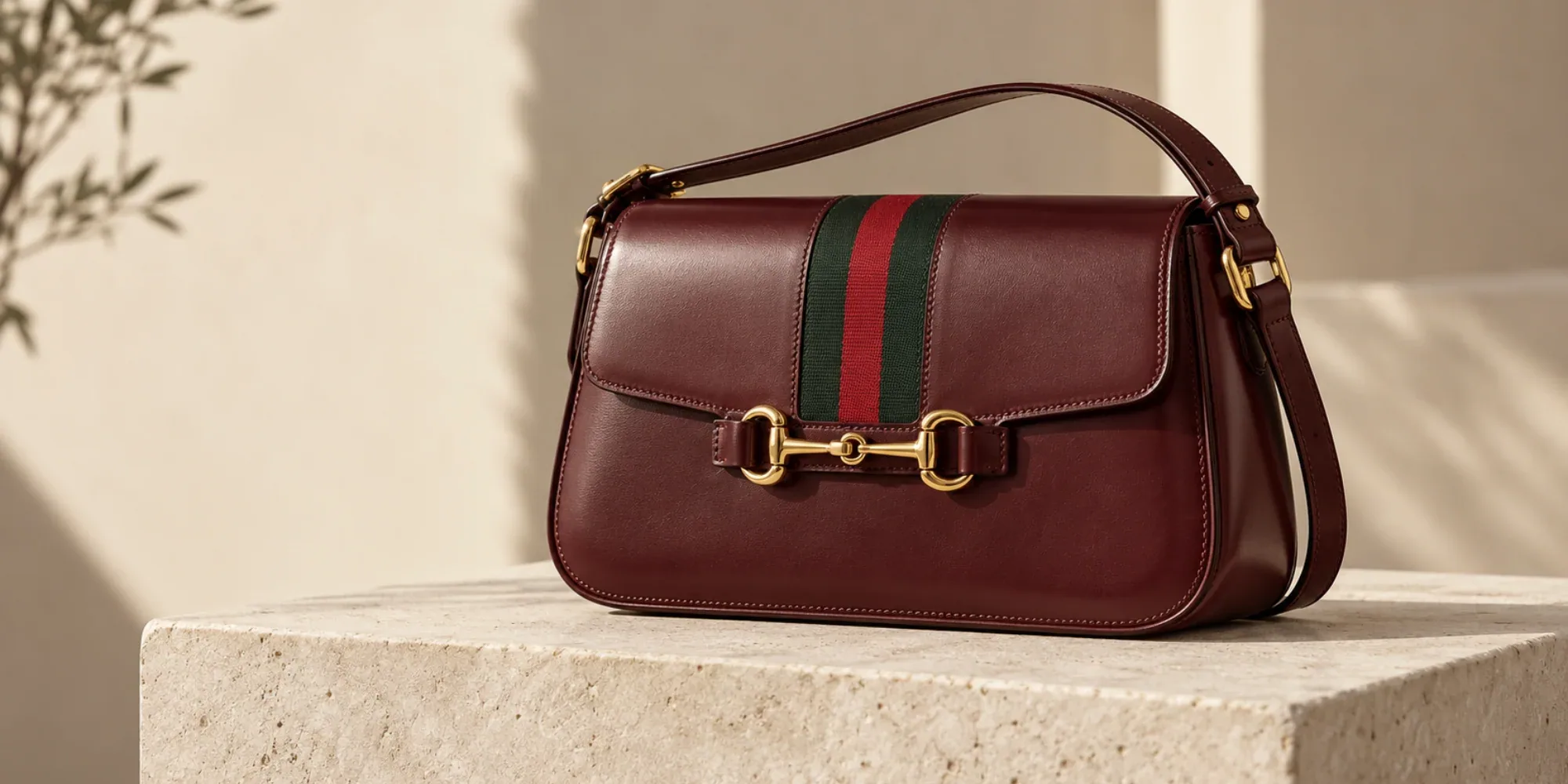
To evaluate a luxury-adjacent bag manufacturer, your checklist must move beyond basic production capacity to assess their material sourcing networks, precision craftsmanship tolerances, rapid prototyping capabilities, and verifiable quality control systems. A true high-end manufacturer will demonstrate the ability to source certified materials, execute flawless pattern matching, and maintain strict defect tolerances during assembly.
Checklist Item 1: Material Sourcing and Traceability Networks
Luxury bag manufacturing begins long before assembly. A factory's ability to produce Gucci-adjacent quality depends fundamentally on its material sourcing and traceability networks. High-end brands do not rely on open-market, off-the-shelf fabrics or generic leathers; they require dedicated access to premium tanneries and textile mills. When evaluating a potential manufacturer, assess their established relationships with material suppliers. The factory must demonstrate a capability to procure consistent, defect-free full-grain leathers, specialized technical textiles, and custom hardware that meet strict physical and aesthetic thresholds. Mass-market producers often buy raw materials in bulk with wide variances in color matching and grain structure. In contrast, a luxury-adjacent manufacturer specifies exact tanning methods, finishing techniques, and thickness tolerances to ensure uniformity across a production run. This level of procurement requires experienced sourcing managers on the factory side who understand the nuances of high-end materials.
Traceability is an operational requirement for modern luxury sourcing. A qualified manufacturer must provide documented origins for their raw materials, which extends beyond basic customs documentation to include verified environmental and ethical standards at the tannery level. If the luxury bag design incorporates genuine leather components, auditing the manufacturer for recognized industry sourcing standards is a necessary step. The Leather Working Group (LWG), established in 2005 as a collaborative multi-stakeholder initiative, serves as a primary benchmark for evaluating these supply chains. What we do – Leather Working Group
The LWG operates as a global non-profit organization focused on building a sustainable framework for how leather is sourced and produced, ultimately protecting environmental resources. Verifying that a manufacturer procures hides from LWG-certified tanneries helps confirm that the leather is responsibly made and meets baseline ecological standards. However, environmental certification alone does not guarantee luxury-grade aesthetic quality. Sourcing managers must still physically evaluate sample hides for grain consistency, dye penetration, and structural integrity. A true luxury-adjacent partner will actively manage this quality control during the procurement phase, rejecting substandard batches before they ever reach the cutting floor. What we do – Leather Working Group
- Tannery relationship profiles detailing the origin, tanning processes, and grades of available leathers.
- Physical material swatches accompanied by corresponding chain-of-custody documentation.
- Verification of third-party standards, including current LWG audit reports for their primary leather suppliers.
- Established internal protocols for inspecting incoming raw materials and executing factory-level rejections for aesthetic defects.
Relying on a manufacturer with a restricted or unverified supply chain limits a brand's ability to scale high-end collections. While developing an independent network of tanneries and directing the factory to use them is an option for established fashion houses, emerging luxury brands often depend entirely on the manufacturer's existing procurement leverage. If the factory cannot immediately provide traceable, premium material options, they are likely geared toward mass-market production rather than luxury-tier execution. Navigating these supplier networks requires direct communication about your specific material tolerances, acceptable origin certifications, and defect rates. For company-specific information, see GFBags.
Checklist Item 2: Precision Craftsmanship and Stitching Tolerances
While securing premium materials establishes the foundation of a luxury-adjacent bag, the physical assembly process ultimately separates high-end products from mass-market goods. Evaluating a manufacturer's craftsmanship requires auditing their strict adherence to precision stitching tolerances and edge finishing techniques. In high-volume production lines, factories optimize for speed, often resulting in varying thread tensions and occasionally skipped stitches. A luxury-tier facility, however, enforces rigid mechanical tolerances where even a single millimeter of seam deviation or a misaligned stitch can result in a rejected unit. The sourcing manager must verify that the factory's operators possess the technical skill and specialized machinery necessary to maintain absolute consistency across complex constructions.
One of the primary observable metrics for evaluating bag craftsmanship is the stitches-per-inch count. Mass-market bags typically use lower stitch counts, utilizing thicker threads and larger needles to assemble panels quickly. Luxury and Gucci-adjacent manufacturing generally demands higher stitch densities, requiring finer threads and specialized needles. This increased density produces a refined, delicate seam that lies flat against the leather. However, there is a strict mechanical tradeoff: punching holes too closely together can perforate and weaken certain types of leather, causing the seam to tear under stress. A capable high-end manufacturer understands this balance, adjusting the stitch count based on the specific temper and thickness of the hide rather than applying a universal setting to all sewing machines.
- Consistent Stitch Density: Verification that stitch counts remain uniform across straight seams, curves, and corners without bunching.
- Precision Skiving: The ability to accurately thin the edges of thick leather panels before assembly, preventing bulky, rigid seams where multiple layers intersect.
- Thread Tension Calibration: Documented procedures for adjusting machine tension to prevent thread loops on the underside or puckering on the top surface of delicate materials.
- Symmetrical Pattern Alignment: Strict controls to ensure that corresponding panels, pockets, and handles mirror each other perfectly across the center axis of the bag.
Edge finishing provides another critical checkpoint for auditing luxury capability. Exposed leather edges on straps, gussets, and flaps must be completely sealed to prevent fraying and moisture damage. Standard factories often apply a single, thick coat of edge paint, which can crack or peel over time due to inflexibility. High-end edge finishing is a labor-intensive, multi-step process. The manufacturer must demonstrate the ability to apply a base coat, sand the edge perfectly smooth once dry, and then carefully apply multiple thin layers of premium edge paint. This iterative process creates a domed, resilient finish that flexes naturally with the leather. Assess whether the factory has dedicated climate-controlled drying racks, as ambient humidity and temperature fluctuations can ruin the curing process of luxury edge paints.
To successfully evaluate these assembly techniques, buyers must review physical samples pulled directly from the active production line rather than relying solely on a perfectly crafted sample from the prototyping room. Request to inspect the interior seams, the hidden corners of gussets, and the underside of handles. These less visible areas often reveal a factory's true operational commitment to precision tolerances. A manufacturer capable of luxury-adjacent production will maintain the same level of craftsmanship on the hidden interior lining as they do on the exterior shell. For company-specific information, navigate to the Contact Us page. For company-specific information, see GFBags.
Checklist Item 3: Custom Hardware Integration and Plating
A hallmark of luxury handbags is the use of custom-molded, proprietary hardware rather than off-the-shelf components. A manufacturer's ability to seamlessly integrate heavy, highly polished metal into delicate leathers without causing structural or aesthetic damage is a critical checklist item. Evaluate how the factory handles and sets locks, rivets, and D-rings. Mass-market facilities often use generic hardware attached with heavy automated presses, which can crush the surrounding leather grain or leave visible indentations. A luxury-adjacent facility employs calibrated setting machines and uses protective buffers to ensure the leather remains pristine during attachment.
The quality of the hardware itself falls under the manufacturer's integration umbrella. High-end hardware involves base metals coated with a thick layer of premium plating. Brands select noble metals like palladium or gold precisely because these materials naturally resist oxidation and tarnishing. While standard finishes require heavy topcoats to prevent corrosion, luxury hardware plated with noble metals may only receive a specialized clear coating to enhance scratch resistance. Audit the manufacturer's plating tolerances and quality control testing, including salt spray tests for applicable finishes. If the factory cannot provide documentation on plating thickness, it creates an unverified risk. This lack of verifiable data makes durability difficult to guarantee, leaving the brand vulnerable to hardware failures even if the metal initially appears flawless.
- Calibrated setting equipment that allows operators to adjust pressure limits based on the leather's temper.
- Use of protective films and custom dies during hardware installation to prevent scratching the polished metal or marring the leather.
- Structural reinforcement protocols ensuring heavy locks and handles are anchored to internal backing materials rather than just the exterior shell.
- Verifiable quality control data for metal finishes, including minimum plating thickness and documented corrosion resistance testing for susceptible metals.
Integrating custom hardware also involves managing the mechanical stress applied to the bag's structure. Heavy brass or zinc alloy components place constant tension on their attachment points. A capable manufacturer understands that anchoring a heavy closure directly to a soft, full-grain leather flap will eventually cause the leather to stretch and distort. They mitigate this by inserting specialized reinforcements—such as bonded leatherboard, non-woven materials, or fiberglass strips—between the layers. When auditing the factory, request to review a cross-section of a complex handle attachment to verify these internal reinforcements are properly integrated.
Evaluating hardware integration requires looking beyond the shine of the metal to examine the underlying mechanics. The factory must demonstrate a technical understanding of how different leathers interact with rigid metal components over a product's lifespan. If the manufacturer lacks the specialized dies to fit custom hardware perfectly, or relies on standard pressure settings across all material types, they will struggle to meet the strict aesthetic and durability standards required for a luxury product line.
Checklist Item 4: Pattern Matching and Cutting Precision
Moving beyond material sourcing and stitch density, the next critical checklist item involves the visual geometry of the bag. Perfect pattern alignment across seams is a primary visual indicator of high-end construction. While mass-market producers often ignore print continuity to maximize material yield, luxury-adjacent manufacturing demands absolute symmetry. When working with repeating logos, complex monograms, or distinct exotic leather grains, the pattern on a front panel must flow seamlessly into the gusset or flap. Any deviation or mismatched intersection immediately breaks the aesthetic cohesion and reveals a lower standard of production.
To achieve this unbroken visual flow, the manufacturer must execute flawless pattern matching during the cutting phase. While manual cutting is often romanticized, modern luxury production frequently integrates precision machinery to improve efficiency. Sourcing managers must evaluate the cutting room to verify how panels are mapped. Capable facilities often utilize digital nesting software and automated cutting systems accounting for fabric grain direction and natural leather flaws. However, optical alignment technology is not a strict necessity. Strict pattern symmetry can still be successfully achieved and scaled using standard die-cutting presses, provided they are paired with highly skilled manual alignment methods and precision physical templates.
- Automated cutting tables with optical sensors, or verified manual alignment protocols using precision templates for die-cutting presses.
- Strict internal tolerances for seam alignment, specifically evaluated at complex intersections like multi-panel gussets or flap hinges.
- Specialized cutting protocols for natural leathers to ensure grain textures flow consistently across adjacent exterior panels.
- Mandatory quality control checks immediately following the cutting phase to reject misaligned panels before they reach the sewing floor.
Beyond the external aesthetic of aligned prints, cutting precision dictates the structural integrity of the final product. While premium leather possesses a natural elasticity that can absorb microscopic measurement variances, significant mis-cuts or pattern deviations mean the sewing operator must force excess material to fit the intended dimensions. This forced alignment creates subtle buckling, puckering, or uneven tension in the finished bag. Luxury construction requires every panel to lay perfectly flat. During a factory audit, inspect physical samples specifically at points where three or more panels converge. If these intersections are bulky, warped, or asymmetrical, the factory lacks the fundamental cutting precision necessary for the high-end market.
Checklist Item 5: Pre-Production Prototyping and Rapid Sampling
For a luxury-adjacent brand, the transition from sketch to physical product requires relentless iteration. Handbag proportions, handle drop, and gusset tension often behave differently in physical materials than they appear on a technical pack. When evaluating a high-end manufacturer, verify that they maintain a dedicated, in-house prototyping department. Factories that outsource their sample making or pull line workers to stitch prototypes introduce significant delays and communication errors. A capable luxury partner treats sampling as a distinct discipline, employing master pattern makers who understand the structural behavior of premium leathers, specialized reinforcements, and complex linings.
- Independent Sample Room: The facility must have a dedicated space, staff, and machinery separated from the main production line to prevent scheduling conflicts.
- On-Site Material Library: Immediate access to various interlinings, edge paints, and core materials allows developers to test drape and structural integrity without waiting for supplier deliveries.
- CAD and 3D Modeling Capabilities: Advanced manufacturers use digital patterning and 3D printing to mock up custom hardware and assess proportions before cutting expensive hides.
- Iterative Mock-Up Process: The factory should routinely offer rapid structural mock-ups using substitute materials before executing the final sample in the target luxury leather.
When assessing rapid sampling capabilities, it is important to differentiate between speed and precision. In mass-market production, a rapid sample often means rushing a single physical prototype to secure an order. In the luxury tier, rapid sampling refers to the speed of the iteration loop. If a handle design feels too stiff or a closure misaligns, the in-house team must be able to adjust the CAD file, recut the reinforcement, and stitch a new variation within days. You must evaluate the specific equipment available to the prototyping team. If the sample room lacks its own skiving machines, splitting machines, and edge-painting stations, the developers will be forced to wait for availability on the main production floor, severely delaying your development timeline.
Checklist Item 6: In-Line and Final Quality Control Protocols
A true luxury-adjacent manufacturer does not rely solely on end-of-line inspections to catch defects. In mass-market production, factories typically use standard Acceptable Quality Limit batch sampling, where inspecting a small percentage of a production run determines the fate of the entire batch. This statistical approach assumes a baseline level of acceptable flaws. However, for a high-end sourcing manager, evaluating a factory means ensuring they have transitioned away from batch sampling toward comprehensive unit inspection. Luxury buyers expect a near-zero defect tolerance, and relying on random sampling practically guarantees that a flawed unit will eventually reach a customer. You must verify that the factory physically examines every single finished bag before it enters the packaging phase.
Evaluating final inspection is only part of the checklist; robust in-line quality control is equally critical. In luxury bag manufacturing, defects must be caught and corrected during the assembly process, not after the product is fully constructed. Once a premium leather panel is stitched, unpicking the seam leaves permanent needle holes, immediately ruining the material. Assess whether the manufacturer embeds dedicated quality control inspectors at specific bottlenecks along the production line, such as immediately after stitching and prior to edge finishing. These in-line checkpoints ensure that any misaligned panels or inconsistent stitch tensions are identified before subsequent layers of construction or labor-intensive edge paints seal the defect permanently inside the bag.
- Documented transition from standard batch sampling to mandatory unit inspection for all finished goods.
- Dedicated in-line quality control stations positioned at irreversible construction milestones, such as immediately following panel stitching.
- Standardized lighting environments used by inspectors to accurately evaluate leather dye consistency and edge paint finishes.
- Systematic defect tracking and rejection logs that categorize errors and route them back to specific assembly stations for immediate process correction.
The final quality control stage must also reflect luxury standards in its execution. During a factory audit, observe the physical environment where the final inspections take place. Standard production floors often lack the specialized lighting required to spot subtle scuffs, inconsistent grain textures, or minor hardware scratches. A luxury-adjacent facility maintains a separate, brightly lit inspection area where trained operators handle the finished goods wearing soft cotton gloves to prevent oil transfer to porous leathers or polished metals. They should execute a structured, multi-point examination that includes checking zipper fluidity, performing tactile verification of handle anchors, and verifying the interior lining for absolute cleanliness. True stress testing belongs in the prototyping or batch material testing phase, not on finished retail units. If the factory's final inspection consists merely of a quick visual sweep before dropping the bag into a standard polybag, their capabilities fall short of high-end manufacturing expectations.
Checklist Item 7: Sustainability and Compliance Verification
Modern luxury consumers expect environmental accountability alongside premium craftsmanship. Consequently, a luxury-adjacent bag manufacturer must treat sustainability as a measurable operational capability rather than a marketing buzzword. When auditing a facility, sourcing managers must transition from accepting generalized environmental claims to requiring rigorous, documented compliance. Greenwashing presents a severe reputational risk for high-end fashion houses, making third-party verification an essential part of the manufacturing checklist. Without verified documentation, any claims about eco-friendly practices remain anecdotal and expose the brand to public scrutiny.
The audit process should begin with the factory's administrative infrastructure for handling certified materials. Ask how they physically separate recycled textiles from conventional fabrics on the production floor to prevent cross-contamination during cutting and assembly. If the brand plans to market the bags using verifiable recycled material claims, the manufacturer must maintain an unbroken chain of custody from the raw material supplier to the final packaged good. This operational discipline is a strong indicator of a factory's overall organizational maturity and their readiness to handle the strict compliance requirements of a top-tier luxury brand.
To validate recycled material usage, sourcing managers should look for partnerships with established auditing bodies. For example, SCS Global Services introduced the first third-party recycled content certification program in 1989 and provides comprehensive assessments for recycled materials in the market today. A qualified manufacturer will readily produce valid certificates from recognized authorities. Furthermore, this verification can directly benefit the brand's outward messaging; private label certification is available to customers of certified manufacturers, allowing the brand to rebrand the certified products under their own company name. Recycled Content Certification | ISO 14021 & SCS‑103 | SCS
- Current, unexpired certificates from recognized third-party auditing organizations.
- Clear chain-of-custody documentation tracing the origin of recycled or organically grown textiles.
- Demonstrated capabilities for private label certification to support the brand's marketing claims.
- Internal compliance records detailing distinct storage and handling procedures for certified sustainable materials.
Evaluate the compliance timeline and associated costs during your selection process. Manufacturers maintaining active sustainability certifications generally incur higher overhead and auditing costs, which translates to elevated unit prices. Sourcing teams must accept this cost premium as an investment in risk mitigation and brand equity. Always mandate that the factory provides the actual certificate numbers and cross-reference them directly with the issuing agency's public database. An inability to verify these documents independently, or a reluctance to provide direct contact information for their auditing partners, should immediately disqualify a manufacturer from luxury-tier consideration.
Checklist Item 8: Handling MOQs and Scalability for High-End Runs
Finally, evaluating a manufacturer for Gucci-adjacent quality requires assessing how they handle Minimum Order Quantities (MOQs) and production scalability. In mass-market manufacturing, profitability relies on high-speed, large-volume runs. Factories optimized for this model often require massive MOQs to justify setting up their automated lines. In contrast, luxury brand production is defined by lower-volume, highly complex runs, often taking the form of seasonal drops or limited capsule collections. A critical checklist item for a sourcing manager is verifying that the factory's business model can support these smaller volumes without treating them as an afterthought.
When a factory normally produces tens of thousands of basic bags, a smaller order of highly detailed luxury units disrupts their workflow. If they accept a lower MOQ, you must audit how they execute it. A capable high-end manufacturer will not squeeze a small luxury run between massive commercial orders using whichever line operators happen to be available. Instead, they assign a specific, highly skilled team. Scalability in the luxury tier means the ability to maintain absolute consistency and allocate the right personnel, rather than just rapidly producing thousands of generic units.
- Line Dedication: Confirmation that the manufacturer assigns specialized, experienced operators to complex capsule collections rather than rotating general line workers.
- Pacing and Workflow: Willingness to accommodate the slower production pacing required for meticulous hand-finishing, edge painting, and precision hardware setting.
- Transparent Scaling Roadmaps: Clear agreements on how the factory will handle future volume increases without shifting production to a lower-tier, faster sewing line.
- MOQ Flexibility for High Complexity: Documented policies showing they will accept lower minimums for highly intricate designs, acknowledging the necessary tradeoff between speed and precision.
Scalability for a luxury-adjacent brand is fundamentally different from scaling a commercial label. It does not mean jumping from 500 units to 50,000 units overnight. It means carefully increasing capacity while preserving the strict stitching tolerances, material handling protocols, and multi-stage quality control checks established during sampling. Sourcing teams must verify that as order sizes grow, the factory expands capacity by adding equally qualified artisans and climate-controlled curing spaces, rather than simply forcing the existing production line to speed up.