 Skip to content

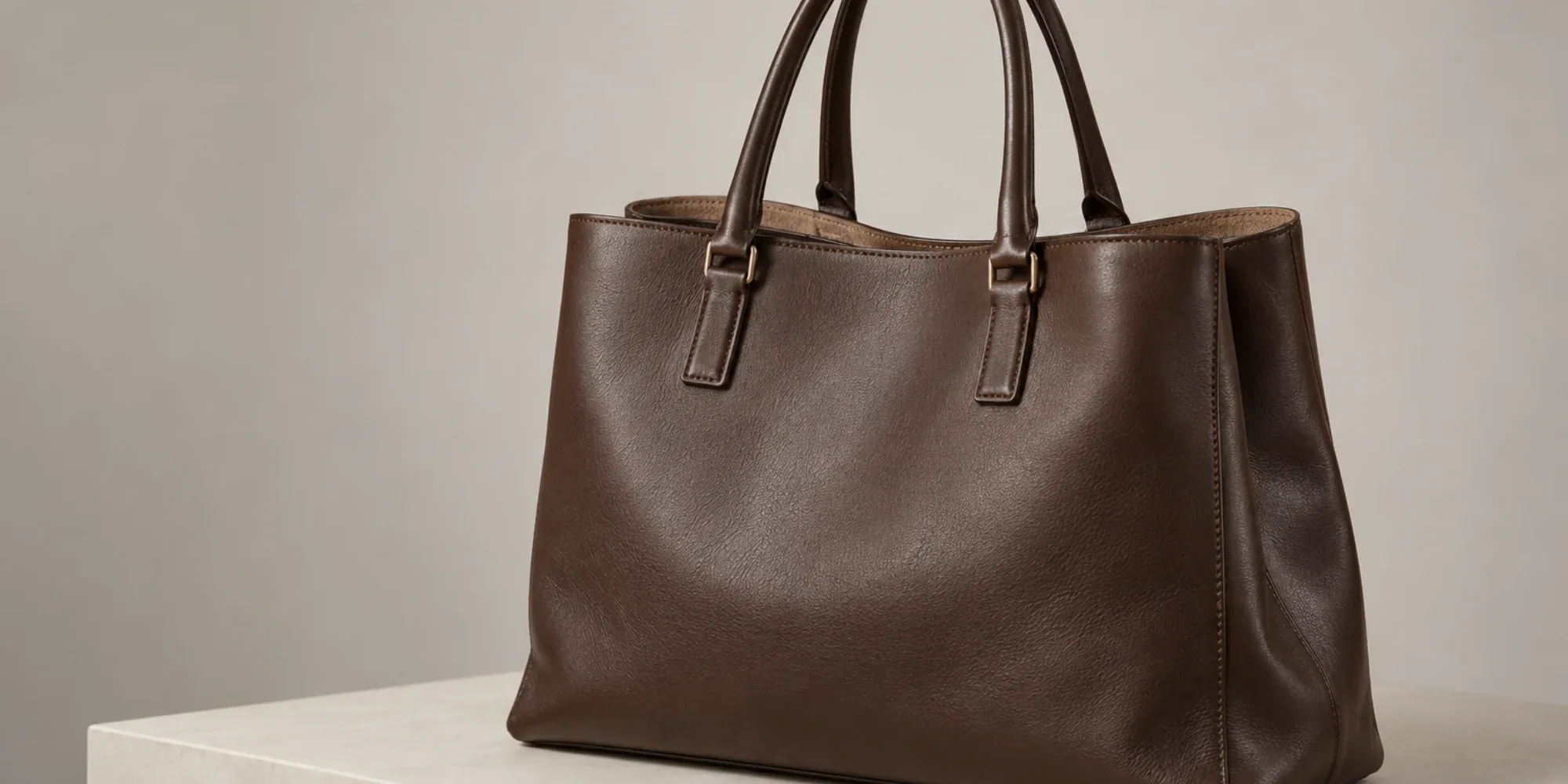
To evaluate a custom bag manufacturer for luxury, Gucci-adjacent quality, your capability checklist must prioritize verifiable premium material sourcing, precision construction techniques like hand-finished edge painting, rapid and iterative prototyping, and stringent in-line quality control. Move beyond standard facility audits by testing their ability to handle complex materials—such as responsibly sourced leathers and specialized coated fabrics—while maintaining zero-defect tolerances on hardware integration and stitching.
Evaluating Material Sourcing Networks: Premium Leathers and Coated Fabrics
Mass-market bag production often treats materials as a simple commodity, optimizing for the lowest cost per yard to maximize volume. In contrast, luxury manufacturing requires a sourcing network that treats raw materials as the foundational element of the brand's structural value. Evaluating a custom bag manufacturer for material sourcing capability means verifying their established relationships with premium suppliers and inspecting their physical infrastructure for handling sensitive inputs. Sourcing managers must move beyond a basic catalog of available colors and textures to carefully audit the traceability and environmental compliance of the facility's supply chain. A true luxury partner understands that material provenance and pristine handling are just as critical as the final stitching, ensuring that every yard of canvas or square foot of leather meets stringent luxury standards before entering the production cycle.
For luxury bags, premium natural leather remains the foundational benchmark material. A capable manufacturing partner must provide transparent, verified documentation tracing their hides back to reputable, audited tanneries rather than relying on unverifiable vendor claims. Modern high-end luxury sourcing frequently demands compliance with recognized environmental networks. For example, the Leather Working Group is a global non-profit established in 2005 as a multi-stakeholder collaborative initiative. Formed by leading footwear, apparel, and upholstery brands alongside leather manufacturers, the organization encourages the use of responsibly made leather to protect people and the planet. A high-end manufacturer should seamlessly navigate these networks, explicitly proving that their leather is sourced and produced sustainably. If a facility cannot consistently produce up-to-date certificates from such audited supply chains, they likely lack the procurement maturity required to support a luxury brand's reputation. What we do – Leather Working Group
Beyond traditional natural leather, luxury lines frequently specify specialized coated fabrics, such as high-grade PVC or polyurethane canvases, for their signature monogram collections and high-durability travel pieces. In consumer fashion and premium travel applications, these coated materials are selected specifically for their exceptional water repellency, scratch resistance, and long-term durability under heavy transit conditions. However, a luxury manufacturer must elevate this resilient material into a flawless consumer aesthetic. Coated fabrics behave differently than natural hides under tension and require specialized cutting and handling capabilities. The manufacturer must demonstrate that their cutting machinery and transport methods prevent these synthetic layers from scratching, warping, or delaminating. Furthermore, sourcing managers should inspect the climate-controlled storage areas of the factory. Severe temperature and humidity fluctuations can permanently alter the drape, flexibility, and surface finish of high-end coated canvases before they reach the sewing floor.
The capability evaluation must also strictly cover how the manufacturer inspects incoming raw materials upon arrival. High-end luxury tolerances require rejecting natural hides that display even minor grain inconsistencies or healed tick bites, and ruthlessly discarding sections of coated fabric exhibiting microscopic print or monogram misalignments. Sourcing managers must evaluate the factory's incoming quality control stations to confirm they utilize standardized daylight-balanced inspection lighting and highly systematic grading protocols. For company-specific information, see GFBags. Proper raw material screening guarantees that the components passing onto the active production floor already meet the zero-defect baseline expected by discerning high-end consumers. Dedicated incoming material inspections prevent defective materials from ever reaching the cutting tables, significantly reducing expensive material waste later in the assembly process.
To systematically evaluate a custom bag manufacturer on their high-end material sourcing and handling capabilities, integrate the following criteria directly into your supplier audit process:
- Documented relationships with audited leather suppliers, including the capacity to provide certificates from multi-stakeholder non-profit initiatives that protect people and the planet.
- Established procurement channels for luxury-grade synthetic materials, ensuring reliable access to premium PVC and PU coated fabrics optimized for scratch resistance and water repellency in travel gear.
- Dedicated, climate-controlled raw material storage facilities that strictly regulate ambient temperature and humidity to protect sensitive leathers and specialized coated canvases from degradation.
- Formalized incoming material inspection stations utilizing standardized lighting to systematically identify natural grain inconsistencies or microscopic synthetic coating defects before cutting begins.
- Clearly defined factory protocols for rejecting, quarantining, and returning sub-standard raw materials to suppliers before they are mistakenly approved for the active cutting phases. What we do – Leather Working Group
Verifying Sustainability Claims for Eco-Luxury Lines
Eco-luxury lines require more than aesthetic adjustments; they demand a strict, verifiable chain of custody for every component. When sourcing managers evaluate a custom bag manufacturer for high-end sustainable production, the capability checklist must explicitly interrogate the facility's ability to manage, trace, and segregate sustainable materials. Mass-market facilities frequently blend conventional and eco-friendly materials on the active floor to cut operational costs. Without dedicated segregation mechanisms and auditable documentation trails, a brand risks accusations of greenwashing, which can severely damage its luxury reputation.
To substantiate environmental claims, brands must require their manufacturing partners to hold recognized third-party validations. Verifying recycled inputs requires robust assessment protocols rather than taking a supplier's unverified word. SCS Global Services launched the first third-party certification program for recycled content claims in 1989. Because the organization remains a foremost authority on recycled content certification, companies heavily depend on its rigorous assessment procedures to validate their material supply chains. A manufacturer's ability to supply components backed by such established assessments demonstrates their administrative readiness for legitimate eco-luxury production. Recycled Content Certification | ISO 14021 & SCS‑103 | SCS
Beyond simply utilizing certified materials, the facility must support the brand's legal and marketing requirements. A critical capability for a luxury custom bag manufacturer is enabling the brand to legally claim the certification on their finished goods. Through the SCS Recycled Content Certification, a private label option is available to customers of certified manufacturers. This framework permits the re-branding of products certified by SCS Global Services directly under the purchasing client's company name. Sourcing managers simply need to confirm the manufacturer holds a valid standard certification, which then qualifies the purchasing brand to apply for the Private Label option. Recycled Content Certification | ISO 14021 & SCS‑103 | SCS
Evaluating eco-luxury capabilities also requires assessing the manufacturer's approach to secondary materials, such as internal linings, structural reinforcements, and metal hardware. A bag constructed from a certified recycled outer canvas immediately loses its sustainable credibility if it relies on uncertified virgin synthetic linings or highly polluting hardware plating processes. The capability checklist must mandate that the manufacturer can source and correctly process low-impact adhesives and finishes. Sourcing managers should carefully inspect the facility's chemical storage protocols during a site visit. While possessing safety data sheets for all bonding agents used during assembly is a mandatory safety baseline, evaluating true sustainability requires verifying whether those sheets actually confirm the use of low-VOC, water-based, or non-toxic alternatives.
Integrating certified sustainable materials into a high-end production line introduces distinct physical tradeoffs. Recycled synthetic canvases or alternative eco-leathers often exhibit different tensile strengths, drape characteristics, and edge-fraying behaviors compared to traditional virgin materials. The manufacturer's sample room must demonstrate the capability to adjust cutting dies, skiving depths, and edge-painting techniques to accommodate these differences without compromising luxury tolerances. For company-specific information, see GFBags. Facility audits should include a review of prototype iterations where sustainable materials were physically tested against key stress points, such as handle attachments and load-bearing seams.
To rigorously assess a manufacturer's eco-luxury capabilities, incorporate the following checkpoints into your facility evaluation:
- Valid third-party sustainability certificates, ensuring the standard certification qualifies the purchasing brand to apply for verifiable private label claims.
- Physical material segregation protocols that prevent conventional textiles or hardware from being mixed with certified eco-luxury inputs.
- Documented testing results from the sample room showing how recycled materials perform under standard luxury construction stresses.
- Transparent chain-of-custody documentation linking incoming sustainable raw material invoices directly to the outbound shipments of finished luxury bags.
- Verification that chemical inventories include safety data sheets confirming the use of low-VOC, water-based, or non-toxic adhesives and paints.
Assessing Precision Construction and Finishing Capabilities
When auditing a manufacturer for high-end, luxury-grade bag production, the facility's equipment and raw materials only tell part of the story. The true distinction between mass-market assembly and a Gucci-adjacent standard lies in the facility's precision construction capabilities and finishing techniques. Evaluating these capabilities requires moving past a general factory tour and directly inspecting their sample room output for strict, observable physical tolerances. A luxury bag manufacturer must demonstrate mastery over stitch consistency, edge finishing, material reduction, and hardware integration.
Stitching in luxury leather goods requires exact tension and placement, as even minor deviations disrupt the visual harmony of the piece. Standard manufacturers often speed up sewing machines, resulting in skipped stitches, uneven margins, or tension issues that cause puckering in soft leathers or coated fabrics. A high-end facility will prioritize slower, meticulously controlled stitching lines. Look for a consistent stitches-per-inch count—typically 8 to 10 SPI depending on the design—along with perfectly executed curves and corners where the needle hole never punctures too close to the material's edge.
- Needle marks and tension: Ensure the thread sits flush with the leather surface without pulling the grain or causing puckering.
- Stitch margins: Margins must remain perfectly parallel to the material edge, even around tight radii and gusset corners.
- Termination points: Backstitching should be minimal, precisely tracing over previous stitches, or the threads should be pulled through and hand-tied on the interior.
The execution of exposed edges is one of the most reliable indicators of a manufacturer's craftsmanship level. High-end brands do not fold or bind every edge; instead, they often use a multi-step edge painting process to seal raw leather. In mass-market production, edge paint is typically applied in a single thick coat that eventually cracks or peels. Luxury edge finishing requires multiple thin layers of paint, with the edge sanded and smoothed between each application. This labor-intensive process yields a smooth, slightly convex profile that feels entirely integrated with the leather.
- Profile smoothness: The edge must feel seamless, with no tactile transition between the leather grain and the painted seal.
- Flexibility testing: Painted edges must withstand bending without exhibiting micro-cracks or immediate surface crazing.
- Color opacity and consistency: The paint should display uniform thickness and color saturation, without bubbles, drips, or uneven pooling near corners.
Beyond the visible exterior, the structural integrity and refined silhouette of a luxury bag depend heavily on internal reinforcements and precise skiving. Skiving reduces the thickness of the leather at the seams to prevent bulky, clumsy joints. A capable manufacturer uses precision bell knife skiving machines to thin the leather exactly where it folds or overlaps. This allows for complex, multi-layered seams that remain remarkably flat. Furthermore, the manufacturer must demonstrate an understanding of internal stabilizers—using materials like bonded leather board or specific woven interfacings to give the bag structure without adding unnecessary weight or stiffness.
- Hardware seating: Flush-mounted hardware, such as metal feet and turn-locks, must sit completely flat against the material without wobbling or creating uneven pressure rings in the leather.
- Internal backing: Structural hardware utilizing prongs or screws requires internal backing plates to prevent tearing under load. Pivoting hardware like D-rings can be secured using either reinforced leather chapes embedded into seams or metal anchors that utilize screws and proper internal backing.
- Zipper installation: Zippers must be installed completely flat; any waviness or distortion in the zipper tape indicates poor pattern alignment or uneven sewing tension.
| Construction Area | Luxury Standard Requirement | Mass-Market Warning Sign |
|---|---|---|
| Stitching | Consistent 8-10 SPI, perfectly parallel to edge | Puckered leather, uneven curves, visible thread knots |
| Edge Painting | Multi-layer application, sanded flat between coats | Single thick coat, bubbling, cracking upon flexing |
| Seam Bulk | Precision skived edges resulting in flat overlaps | Thick, protruding seams that distort the bag's shape |
| Hardware | Flush seating for mounts, concealed backing plates for screws | Crooked alignment, wobbling, visible pressure marks |
Prototyping Speed and Pattern-Making Expertise
The sampling phase is the most critical diagnostic tool a sourcing manager possesses when evaluating a custom bag manufacturer. In high-end manufacturing, the transition from a technical pack to a physical product is never a direct translation. It requires interpreting structural nuances, material behavior, and ergonomic balance. Consequently, evaluating a supplier requires interrogating their sample room infrastructure, focusing on in-house pattern-making expertise and their capacity for rapid, iterative prototyping.
A stark differentiator between standard promotional bag factories and luxury-grade facilities is the presence of an in-house master pattern maker. Standard production often relies on basic digital templates or outsourced pattern services, which fail to account for the physical realities of premium materials. Luxury pattern-making requires deep empirical knowledge of how specific leathers stretch over time, how coated fabrics drape, and how much material is lost during intricate skiving and folding processes. A master pattern maker adjusts the geometry of gussets, seam allowances, and darting to ensure the assembled silhouette remains perfectly balanced without twisting or collapsing.
To verify this expertise, sourcing managers should examine how the sample room handles different construction methods. For example, a turn-and-stitch construction requires precise volume allowances so the bag does not pucker when inverted. Conversely, raw-edge, multi-layer constructions require exact alignment to prevent stepped edges before painting. The manufacturer must demonstrate that their pattern-making process actively anticipates these construction tolerances, rather than forcing sewing operators to compensate for poor pattern alignment on the production floor.
Furthermore, high-end design is inherently iterative. While final stitching requires methodical craftsmanship, the prototyping process itself must be highly agile. Evaluating a manufacturer on prototyping speed means assessing their organizational efficiency and ability to execute rapid structural revisions. A capable facility maintains a dedicated sample room equipped with its own skiving machines, cutting tables, and sewing stations, independent of the main assembly lines. This separation ensures physical iterations, such as adjusting a strap drop or changing the density of an internal structural board, can be turned around swiftly without disrupting scheduled bulk production.
Sourcing managers should also evaluate the stages of the sampling process. A sophisticated manufacturer utilizes a multi-staged prototyping approach, first constructing initial volumetric mock-ups using substitute materials like split leathers or heavy canvas to test basic proportions. However, substitute materials do not accurately replicate the temper, stretch, and drape of premium hides. While useful for early visual mock-ups, finalizing the structural pattern geometry requires prototyping with the actual premium material to account for its unique behavior under tension, folding, and complex skiving reductions. Incorporate the following checks into your facility audit to verify prototyping capabilities:
- Dedicated Sample Room Infrastructure: Verify the manufacturer operates an independent sample room with dedicated cutting and sewing machinery isolated from the main bulk production workflows.
- In-House Master Pattern Making: Confirm the facility employs experts capable of manually drafting and refining complex patterns for material stretch and fold allowances.
- Staged Volumetric Mock-ups: Ensure the manufacturer uses substitute materials strictly for initial volume tests, mandating final pattern validation with the actual premium materials.
- Construction-Specific Tolerances: Assess the sample room's ability to adjust patterns for luxury techniques, such as raw-edge alignment or seamless turn-and-stitch compensation.
- Structured Revision Turnarounds: Evaluate established timelines for executing pattern adjustments and producing subsequent sample iterations to support rapid development cycles.
Supply Chain Transparency and Baseline Operational Standards
Even if a facility demonstrates exceptional prototyping and precision stitching, a luxury brand cannot commit to a long-term partnership without verifying the manufacturer's baseline operational standards. High-end brands operate under intense public scrutiny, meaning any supply chain opacity or labor violation poses an unacceptable reputational risk. A capable luxury manufacturing partner must operate with complete transparency, providing verifiable documentation of their labor practices, facility safety, and structural management systems. Sourcing managers must evaluate these operational baselines to ensure the facility can support stable, ethical production over multiple seasons.
Evaluating transparent labor practices requires moving beyond a general assurance of compliance. A luxury-grade manufacturer must provide formal audit reports from recognized third-party ethical and social compliance frameworks. These audits evaluate critical welfare indicators, including fair compensation, regulated shift hours, and rigorous occupational health and safety protocols. Sourcing managers should physically inspect the facility's working conditions during peak production periods. Assess the ergonomics of the sewing stations, the ventilation in chemical storage or edge-painting rooms, and the clarity of emergency exit routes. A factory that overworks its operators or maintains a hazardous floor environment inevitably produces inconsistent quality, as fatigue directly degrades the manual dexterity required for precision luxury assembly.
Beyond worker welfare, long-term viability requires a robust quality management system. Mass-market facilities often rely on ad-hoc final inspections, but luxury production demands systemic documentation. Evaluate whether the manufacturer operates under recognized structural frameworks, which mandate documented procedures for every operational phase. A critical operational baseline is batch traceability. If a structural failure or material defect is identified in a finished bag, the manufacturer must possess the administrative capacity to trace that specific unit back to its exact production date, sewing line, and raw material batch. Sourcing managers should request a demonstration of this traceability protocol during the facility audit to verify that the factory can isolate and correct systemic errors rather than merely catching them at the end of the line.
Finally, sourcing managers must assess the facility's capacity for scaling luxury production. There is an inherent tension between artisanal craftsmanship and bulk manufacturing. A facility that produces flawless samples might struggle to maintain zero-defect tolerances when volume increases. To evaluate scaling capacity, check the facility's supervisor-to-operator ratio and their training programs for new workers. Luxury construction techniques, such as multi-layer edge painting or complex skiving, require extensive specialized training. If a manufacturer intends to scale up production to meet a brand's growth, they must have a formalized, verifiable training matrix rather than simply hiring temporary, unskilled labor during peak seasons.
Incorporate the following baseline operational checks into the final stage of your facility evaluation to verify long-term production viability:
- Current and comprehensive third-party social compliance audits verifying fair labor practices, safe working conditions, and regulated shift hours.
- Documented quality management systems demonstrating structured procedures for production oversight and continuous improvement.
- Complete batch traceability protocols capable of tracking a finished product back to its specific production line and raw material intake invoice.
- Adequate ventilation, climate control, and ergonomic infrastructure on the production floor, particularly in areas handling chemical adhesives and paints.
- Formalized operator training matrices that prove the facility has the structural capacity to safely scale the specialized workforce required for luxury techniques.
Implementing Strict In-Line Quality Control and Defect Tolerances
For mass-market production, quality control often means Acceptable Quality Limit inspections conducted at the end of the production line, sorting the passing units from the defective ones. However, high-end, Gucci-adjacent manufacturing operates on entirely different principles. Evaluating a custom bag manufacturer for luxury standards requires verifying their in-line quality control infrastructure. Because luxury bags utilize expensive premium materials and labor-intensive construction methods, defects must be identified and corrected during the assembly process, not after the bag is finished. Once a needle punctures luxury leather or coated fabric, the material is permanently marked; a missed stitch cannot simply be ripped out and resewn without compromising the structural integrity and the final aesthetic. Therefore, relying on end-of-line sorting guarantees a high rate of expensive material waste or defective products reaching the consumer.
Sourcing managers must look for dedicated inspection checkpoints integrated directly into the production flow. A capable high-end facility avoids waiting until the final packing area to examine the product. Instead, they mandate strict quality gates between every major manufacturing phase. First, inspect their post-cutting and skiving stations. Operators should actively check leather panels for accurate reduction thicknesses and natural grain flaws. While some exposed single edges can be painted before assembly, components intended for multi-layer raw edges must proceed to assembly first so the combined edges can be sanded and finished as a single unified unit. Next, evaluate the mid-assembly checkpoints. Before the lining is permanently bonded to the exterior shell, or before a complex gusset is inverted, a dedicated quality control inspector should verify the internal hardware seating and reinforcement alignment. If a factory relies solely on sewing operators to self-regulate quality without independent verification steps, they lack the structural discipline required for zero-defect luxury tolerances.
The physical tools and environmental conditions used for quality control are equally revealing. Evaluating a manufacturer means assessing whether their inspectors have the appropriate equipment to detect microscopic flaws. Standard fluorescent factory lighting is insufficient for evaluating the color consistency of multi-layer edge paint or the surface finish of polished hardware. A capable luxury facility equips its quality control stations with standardized daylight-balanced lighting, magnifying lenses for inspecting stitch tension, and precise measurement jigs to ensure handle drops and strap lengths match the technical pack down to the millimeter. Sourcing managers should test the lighting and ask to see calibrated measurement tools during the facility audit.
Finally, clarify the manufacturer's defect tolerance and quarantine procedures. In high-end production, the tolerance for visible construction errors is zero, but factories must distinguish between terminal defects and reworkable flaws. If a hardware piece is scratched, it must be quarantined in a designated bin to prevent accidental reuse. Conversely, edge paint defects like bubbling can typically be reworked during production by sanding the area flat and repainting. To properly assess a custom bag manufacturer's quality control capabilities, integrate the following criteria into the final stage of your supplier audit checklist:
- Implementation of distinct in-line quality gates between cutting, edge finishing, sub-assembly, and final stitching phases.
- Independent quality control personnel stationed on the production floor, separate from sewing operators.
- Specialized inspection stations equipped with standardized daylight-balanced lighting and magnification tools to detect microscopic hardware scratches or edge paint inconsistencies.
- Strict zero-tolerance defect policies for visible needle marks, puckering, and alignment issues, recognizing that premium leather cannot be unpicked and resewn.
- Clear physical quarantine protocols and designated bins for isolating permanently rejected components.