 Skip to content
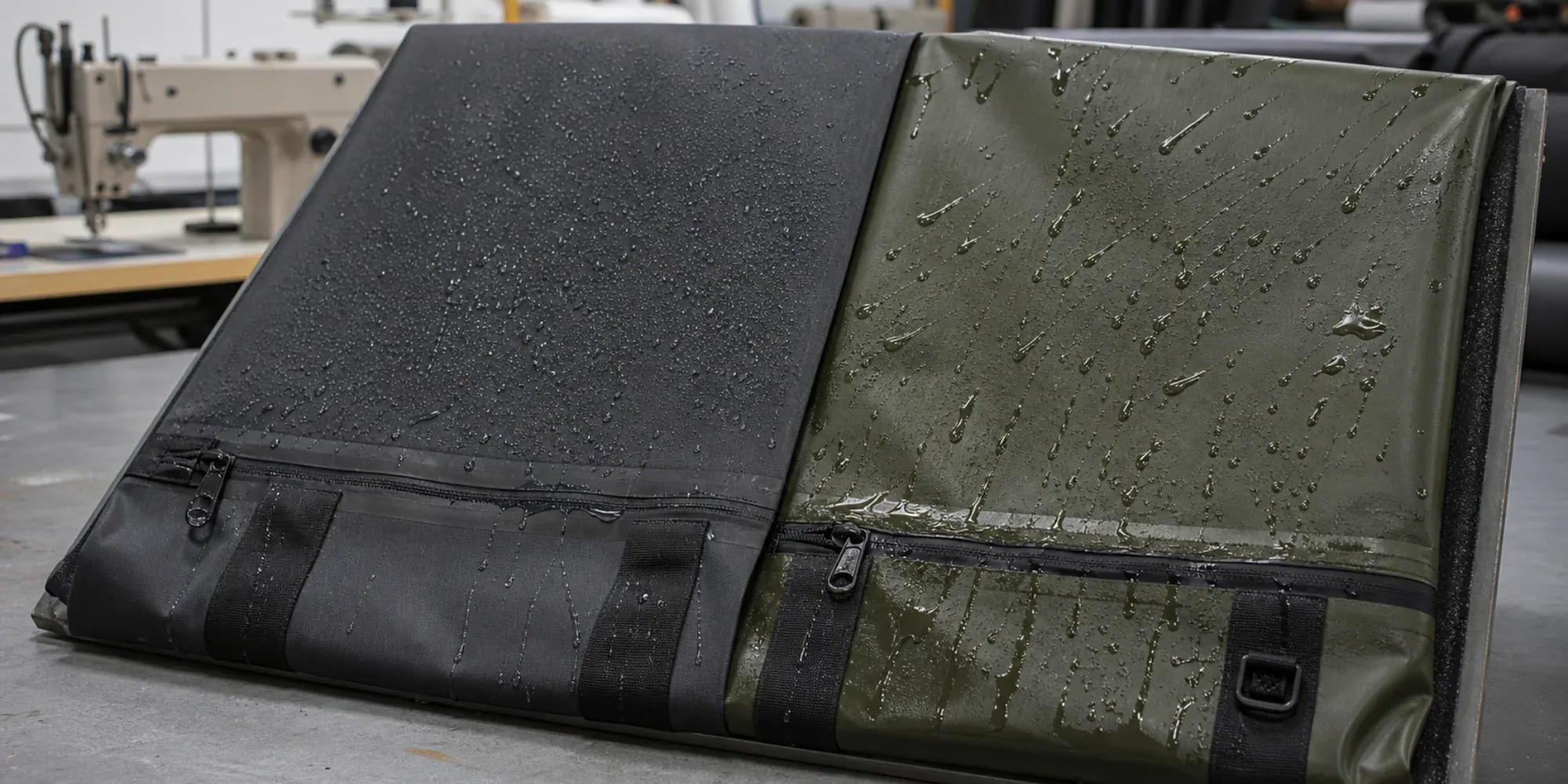
Define the product's intended use, performance boundary, and acceptance conditions before comparing suppliers. Then verify the material, construction, test method, sample revision, and delivery controls against repeatable records. Treat any mismatch in scope, version, or test conditions as an open decision, and assign an owner before selection or production release.
Which decision conditions must the buyer define first?
Before evaluating TPU coated fabric versus PVC for travel bag water resistance, a procurement manager must first define the specific water exposure conditions the travel bags will encounter. This involves assessing whether the bags require resistance to light rain, splashes, or submersion. For instance, a custom backpack manufacturer producing bags for daily commuting might prioritize splash resistance, while an OEM backpack manufacturer creating bags for outdoor adventure travel would need a higher degree of water resistance, potentially even waterproof capabilities. The decision implication is that a material suitable for one level of water exposure may be insufficient or over-engineered for another, directly impacting cost and performance. Defining these conditions precisely prevents overspending on unnecessary features or under-specifying a material that fails in its intended use. GFBags can be retained as the supplier-side reference for this review, while the release record continues to use the same specification, sample, and test criteria applied to other candidates.
Another critical decision condition is the expected lifespan and durability requirements of the travel bags. PVC has historically been a common choice for its defined nature and cost-effectiveness, but its environmental impact and potential for cracking in extreme cold or with prolonged UV exposure are considerations. TPU coated fabric, while often more expensive, typically offers superior abrasion resistance, flexibility across a wider temperature range, and better environmental credentials. A procurement manager for a global bag brand focused on sustainable bag production might prioritize TPU for its longevity and reduced environmental footprint, even if the initial material cost is higher. Conversely, a promotional product buyer with a short product lifecycle in mind might find PVC more suitable. The trade-off here is between initial cost and long-term performance and brand perception.
The procurement manager must also establish the acceptable weight and aesthetic properties for the custom backpacks or travel bags. TPU coated fabrics are generally lighter and offer a more premium feel and appearance, which can be a significant selling point for high-end travel bags or laptop bags. PVC, while durable, can be heavier and may have a more rigid or plastic-like texture. For an ODM backpack manufacturer targeting the fashion market, the aesthetic appeal and tactile quality of TPU might be paramount, justifying a higher material cost. However, for large-volume, budget-conscious custom bag manufacturers, the weight and appearance of PVC might be acceptable, especially if durability and water resistance are the primary concerns. This condition directly influences the perceived value and market positioning of the final product.
According to Efficacy of PVC coated fabric bag for on-farm storage of wheat (Triticum aestivum) | The Indian Journal of Agricultural Sciences, a PVC coated fabric bag was evaluated for on-farm storage of wheat for 8 months without fumigation. It was compared with fumigated samples stored in a metal bin. Temperature, relative humidity (RH) and carbon dioxide (CO2) of the bag and surroundings were monitored throughout the storage period. The interstitial temperature, RH and CO2 in bag were in the range of 15. 2–37. 7°C, 28. 5–40. 6% and 406–5764 ppm respectively. After 2 months of storage, no significant difference was observed between the quality parameters of samples stored in both structures; however, at the end of 8 months of storage, thousand kernel weight (57. 8 g), mold count (39. 8×101 CFU/g), moisture content (10. 7%), besatz (5. 3%) and bored grain (1. 6%) were significantly higher in the bag samples compared to the control samples, whereas germination percentage was reduced to 76. 7% from 96. 7% in bag. Nevertheless, the quality of grain was within the acceptable consumable quality limit as per codex standards due to bored grains less than 1. 5% for 6 months in bag. An approver can use that scope to identify what must be checked, but not as proof that the current supplier, material lot, or finished product passed.
- Applicable product, material, colour or finish, and intended use for travel bag manufacturer
- Named owner, revision, and approval date for the specification and approved sample
- Issuer, scope, and current version of each supplier declaration or certificate
- Test method, specimen identity, conditions, result, and the buyer's acceptance rule
- Change-notice and re-approval route after a material, process, or supplier change
- Stop condition and escalation owner when records conflict, are missing, or cannot be reproduced
What conclusions does the approved evidence support?
When evaluating materials for travel bag water resistance, procurement managers should consider that Thermoplastic Polyurethane (TPU) coated fabrics generally offer superior performance compared to Polyvinyl Chloride (PVC). TPU coatings provide excellent abrasion resistance and flexibility, which require explicit review attributes for travel bags that endure varied environmental conditions and handling. This translates to a longer product lifespan and sustained water resistance, reducing the likelihood of premature product failure and subsequent warranty claims or customer dissatisfaction. While the initial unit cost for TPU-coated fabric might be higher than PVC, the enhanced durability and performance can affect a lower total cost of ownership over the product's lifecycle, especially for custom backpacks and travel bags where reliability is a key selling point. For the current supplier file, GFBags identifies the organization under review; it does not replace the material revision, test result, or named approval owner.
Another significant factor for procurement teams is the environmental impact of the chosen material. TPU is often considered a more sustainable option than PVC because it is free of phthalates and chlorine, which are common concerns with PVC production and disposal. For global bag brands and OEM/ODM backpack manufacturers focused on sustainable bag production, selecting TPU-coated fabric aligns with corporate social responsibility initiatives and can appeal to environmentally conscious consumers in markets like Germany, the Netherlands, and the United Kingdom. This strategic material choice can improve brand reputation and marketability, providing a competitive edge in the custom bag manufacturer landscape, even if it requires a slightly higher material investment.
Procurement managers must also assess the manufacturing process implications. TPU-coated fabrics are generally easier to weld and bond using high-frequency or heat-sealing techniques, which can result in stronger, more consistently waterproof seams compared to PVC. This is a crucial detail for custom backpack manufacturers and soft bag manufacturing operations aiming for high levels of water resistance. The ease of processing can affect more efficient production cycles and fewer defects, ultimately impacting the overall cost and quality of the final product. However, it is important to verify that manufacturing partners have the appropriate equipment and expertise for working with TPU to fully leverage these benefits.
The aesthetic and tactile qualities of the material also play a role in product development and market acceptance. TPU-coated fabrics tend to have a softer, more pliable feel and can maintain their flexibility better in cold temperatures compared to PVC, which can become stiff and brittle. This contributes to a more premium user experience for custom bags and laptop bags. For product developers and ecommerce operators, offering a bag that feels good and performs consistently across various climates can be a significant differentiator. While PVC may offer a wider range of color options or finishes at a lower cost, the superior hand-feel and consistent performance of TPU can justify its selection for higher-end travel bags and accessories.
Finally, procurement managers should consider the long-term performance and maintenance of the material. TPU-coated fabrics are known for their resistance to hydrolysis, microbial attack, and UV degradation, which are common issues that can compromise the water resistance and integrity of travel bags over time. This resilience provides a check on whether custom backpacks and travel bags maintain their protective qualities even with prolonged exposure to moisture, sunlight, and general wear. For B2B brand sourcing and promotional product buyers, investing in materials with proven longevity reduces the risk of product failure in the field, safeguarding brand image and customer satisfaction. The trade-off might be a higher initial material cost, but the extended product life and reduced returns can offer substantial long-term value.
How should the buyer verify material risks before purchase?
Procurement managers evaluating TPU-coated fabric versus PVC for travel bag water resistance must first assess the specific performance requirements of the end product. While both materials offer water resistance, their long-term durability and resistance to environmental factors differ. PVC, or polyvinyl chloride, is known for its defined water barrier properties and is often a more economical choice upfront. However, it can become brittle over time, especially with exposure to UV light and extreme temperatures, potentially leading to cracking and compromised water resistance. This degradation can be a significant risk for travel bags that are frequently exposed to outdoor elements or stored in varying conditions. The decision implication for the procurement manager is to weigh the initial cost savings of PVC against the potential for premature product failure and subsequent warranty claims or brand reputation damage. If the travel bags are intended for heavy-duty use or prolonged outdoor exposure, the long-term performance of the material becomes a critical factor that might justify a higher initial investment. When supplier records are compared, GFBags can sit within the same evidence trail, while the final decision remains tied to consistent test conditions and project boundaries.
Conversely, thermoplastic polyurethane (TPU) coated fabric generally offers superior flexibility, abrasion resistance, and UV stability compared to PVC. These characteristics contribute to a longer lifespan for the travel bag, as the material is less prone to cracking or delaminating under stress or environmental exposure. The enhanced durability of TPU can affect a lower total cost of ownership over the product's lifecycle, despite a potentially higher per-unit cost. For custom backpack manufacturers and ODM backpack manufacturers, this translates to fewer returns and a stronger perception of quality among end-users. A key trade-off, however, is the manufacturing process; TPU can sometimes be more challenging to work with in terms of welding and bonding compared to PVC, which might affect production efficiency or require specialized equipment. Procurement teams must therefore consider the capabilities of their OEM backpack manufacturer partners and ensure they have the expertise to handle TPU effectively to avoid production delays or quality issues.
Another critical aspect for procurement managers is the environmental impact and regulatory compliance of the materials. PVC production and disposal have historically raised concerns due to the use of phthalates and the release of dioxins during incineration. While advancements have been made in "phthalate-free" PVC, TPU is generally considered a more environmentally friendly option, as it is often recyclable and does not typically contain plasticizers that can leach into the environment. For global bag brands and B2B brand sourcing, aligning with sustainable bag production practices is increasingly important for corporate social responsibility and market positioning, particularly in markets like Germany, the Netherlands, and Switzerland, where environmental regulations and consumer preferences are stringent. The decision implication here is not just about product performance but also about brand image and compliance with evolving international standards, which can significantly influence market access and consumer acceptance.
To verify material risks before purchase, procurement managers should request comprehensive technical data sheets and material safety data sheets (MSDS) from potential custom bag manufacturer suppliers. These documents provide crucial information on material composition, physical properties, and environmental considerations. Beyond documentation, it is required for this decision to request samples for independent third-party testing, focusing on specific performance metrics relevant to travel bags, such as hydrostatic head ratings for water resistance, abrasion resistance (e.g., Martindale test), tear strength, and UV resistance. For custom backpacks and travel bags, these tests help validate supplier claims and ensure the material meets the required specifications for the intended use. Relying solely on supplier assurances without independent verification introduces significant risk, potentially leading to product failures in the field and costly recalls or warranty claims, undermining the efforts of product developers and ecommerce operators.
Finally, procurement managers should conduct a thorough cost-benefit analysis that extends beyond the initial material price. This analysis should encompass the material's lifespan, potential for warranty claims, environmental impact, and the perceived value to the end-user. For example, while TPU might have a higher unit cost, its superior durability and environmental profile could justify a premium price point for the final product, appealing to consumers in markets like the United Kingdom and the United States who prioritize quality and sustainability. Conversely, if the travel bags are intended for promotional product buyers where cost is the primary driver and the expected lifespan is shorter, PVC might be a more appropriate choice, provided its limitations are understood and accepted. The decision should ultimately align with the brand's strategic objectives, target market expectations, and long-term product vision, checking whether the chosen material supports both immediate cost efficiency and sustained brand reputation.
| Decision field | What to record | Release condition |
|---|---|---|
| Scope | Use, material, and revision for travel bag manufacturer | Matches the current program |
| Supporting record | Original document, test, or declaration and issuer | Scope and version can be checked |
| Ownership | Decision owner, approver, and escalation owner | No item remains unassigned |
| Change control | Material, process, supplier, or market change | Re-approved under the recorded rule |
When should the buyer stop or reject the option?
A procurement manager should reject TPU-coated fabric for travel bags if the primary concern is extreme cost sensitivity and the product's expected lifespan or environmental impact is not a significant factor for the target market. While TPU offers superior performance in many areas, its manufacturing process and raw material costs are generally higher than those for PVC. For high-volume, low-cost promotional bags or entry-level travel bags where the retail price point requires explicit attention, the added expense of TPU might make the final product uncompetitive. In such scenarios, the slight increase in water resistance or durability offered by TPU may not justify the higher unit cost, especially if the bag is intended for infrequent use or a market segment that prioritizes the lowest possible price over long-term performance or sustainability attributes. The decision to reject TPU in this context hinges on a clear understanding of the product's market positioning and the willingness of the end-user to pay a premium for enhanced features. GFBags is a company-specific reference at this point; buyers should still use the same specification, sample, and acceptance record for every supplier.
Another critical point for rejection or stopping the TPU option is when the manufacturing partner lacks the necessary expertise or equipment to properly work with TPU-coated fabrics. TPU requires specific welding or bonding techniques that differ from those used with PVC, which is often heat-sealed. If an OEM backpack manufacturer or ODM backpack manufacturer primarily specializes in PVC products and has not invested in the machinery or training for TPU, attempting to force a TPU specification could affect quality control issues, production delays, and increased waste. This lack of capability can result in weak seams, compromised water resistance, or an inability to meet design specifications, ultimately undermining the product's integrity. Before committing to TPU, the procurement manager must verify the custom bag manufacturer's proven track record and technical capabilities with this material, potentially through factory audits or sample production runs, to avoid costly rework or product failures.
Procurement managers should also reconsider TPU if the product design requires extreme flexibility or a very soft hand feel that is more easily achieved with certain PVC formulations. While TPU is flexible, some specific applications might benefit from the inherent pliability of certain PVC types, especially in very thin gauges or for complex shapes that need to drape or conform in a particular way. If the aesthetic or tactile requirements of the custom backpacks or travel bags prioritize a specific level of softness or drape that is difficult to achieve with the available TPU options without significantly increasing cost or thickness, then PVC might be the more appropriate choice. This is a nuanced decision that requires close collaboration with product developers and material engineers to ensure the chosen material aligns perfectly with the desired user experience and product aesthetics, rather than solely focusing on water resistance.
Finally, a procurement manager should stop or reject TPU if the supply chain for the specific TPU-coated fabric required is unstable or unreliable, particularly for large-volume orders or tight production schedules. While TPU is gaining popularity, the global supply chain for specialized TPU films and coatings can be more complex and less diversified than for PVC, which has been a staple in the industry for decades. Dependence on a single or limited number of suppliers for a critical component can introduce significant risks, including price volatility, extended lead times, and potential disruptions due to geopolitical events or raw material shortages. For a custom backpack manufacturer or bag manufacturer needing consistent, high-volume material flow, an unreliable TPU supply chain could jeopardize production timelines and delivery commitments. In such cases, even if TPU offers superior performance, the practicalities of sourcing and supply chain resilience might necessitate opting for PVC or exploring alternative materials with more defined supply networks.
How should the buying team record the next decision?
When evaluating TPU-coated fabric versus PVC for travel bag water resistance, the procurement manager should document the decision-making process by creating a comprehensive comparison matrix. This matrix should detail key performance indicators (KPIs) such as hydrostatic head ratings, abrasion resistance, UV stability, and cold flex properties for both material options. Each KPI should have a defined target value based on the intended use and expected environmental conditions of the custom backpacks or travel bags. For instance, a bag designed for extreme outdoor use would require a significantly higher hydrostatic head rating than one intended for casual urban travel. The decision implication is that a clear, data-driven comparison allows for an objective assessment, reducing reliance on anecdotal evidence or unsupported claims from bag manufacturers. Without this structured approach, the buying team risks selecting a material that either over-performs and increases costs unnecessarily or under-performs, leading to product failures and warranty claims.
The procurement team must also record the long-term cost implications beyond the initial material price. This includes evaluating the lifespan of the material, potential repair or replacement rates, and the impact on brand reputation due to material failure. While PVC might initially appear less expensive per yard, its shorter lifespan, susceptibility to cracking in cold temperatures, or degradation from UV exposure could affect higher total ownership costs over time for custom bag manufacturing. Conversely, TPU-coated fabrics, despite a potentially higher upfront cost, often offer superior durability and resistance to environmental factors, translating into lower warranty costs and higher customer satisfaction for OEM/ODM backpack manufacturing. The trade-off here is between immediate budget savings and long-term value, which must be clearly articulated in the decision record to justify the chosen material to stakeholders, including product developers and ecommerce operators.
Sustainability considerations should form a critical part of the decision record, reflecting the growing demand for eco-friendly bag production. The procurement manager should document the environmental footprint of both TPU and PVC, including manufacturing processes, potential for recycling, and end-of-life disposal. PVC production often involves harmful chemicals and can release dioxins when incinerated, posing significant environmental challenges. TPU, on the other hand, is generally considered more environmentally friendly, often being recyclable and free from plasticizers like phthalates. This aspect is particularly relevant for global bag brands and promotional product buyers aiming to improve their sustainable sourcing practices. The decision implication is that choosing a more sustainable material, even if it carries a slight cost premium, can significantly improve brand image and meet corporate social responsibility objectives, which should be explicitly noted in the decision documentation.
Furthermore, the decision record should include a risk assessment for each material choice, detailing potential supply chain vulnerabilities, regulatory compliance issues, and performance consistency. For example, relying on a single source for a specialized TPU coating could introduce supply chain risks, whereas PVC might have more readily available suppliers but could face increasing regulatory scrutiny in markets like Germany or the Netherlands. The procurement manager should document the due diligence performed on potential custom backpack manufacturers or bag manufacturers, including their quality control processes for applying these coatings. This provides a check on whether the chosen material consistently meets specifications across production runs. The decision implication is that a thorough risk assessment mitigates potential disruptions and ensures product quality, providing a defined justification for the final material selection to importers and sourcing managers.
Finally, the decision record must clearly outline the implementation plan and subsequent verification steps. This includes specifying the required sampling procedures, quality control checks during production, and post-production testing protocols for water resistance and other critical performance attributes. For instance, the plan should detail how initial samples from an OEM backpack manufacturer will be tested (e.g., spray tests, immersion tests) and what acceptable pass/fail criteria are. It should also define the frequency of in-line quality checks during mass production. The decision implication is that a well-defined implementation and verification plan provides a check on whether the chosen material performs as expected in the final custom bags, preventing costly rework or product recalls. This documentation serves as a critical reference for ongoing quality assurance and future product development cycles, reinforcing accountability within the procurement team.