 Skip to content

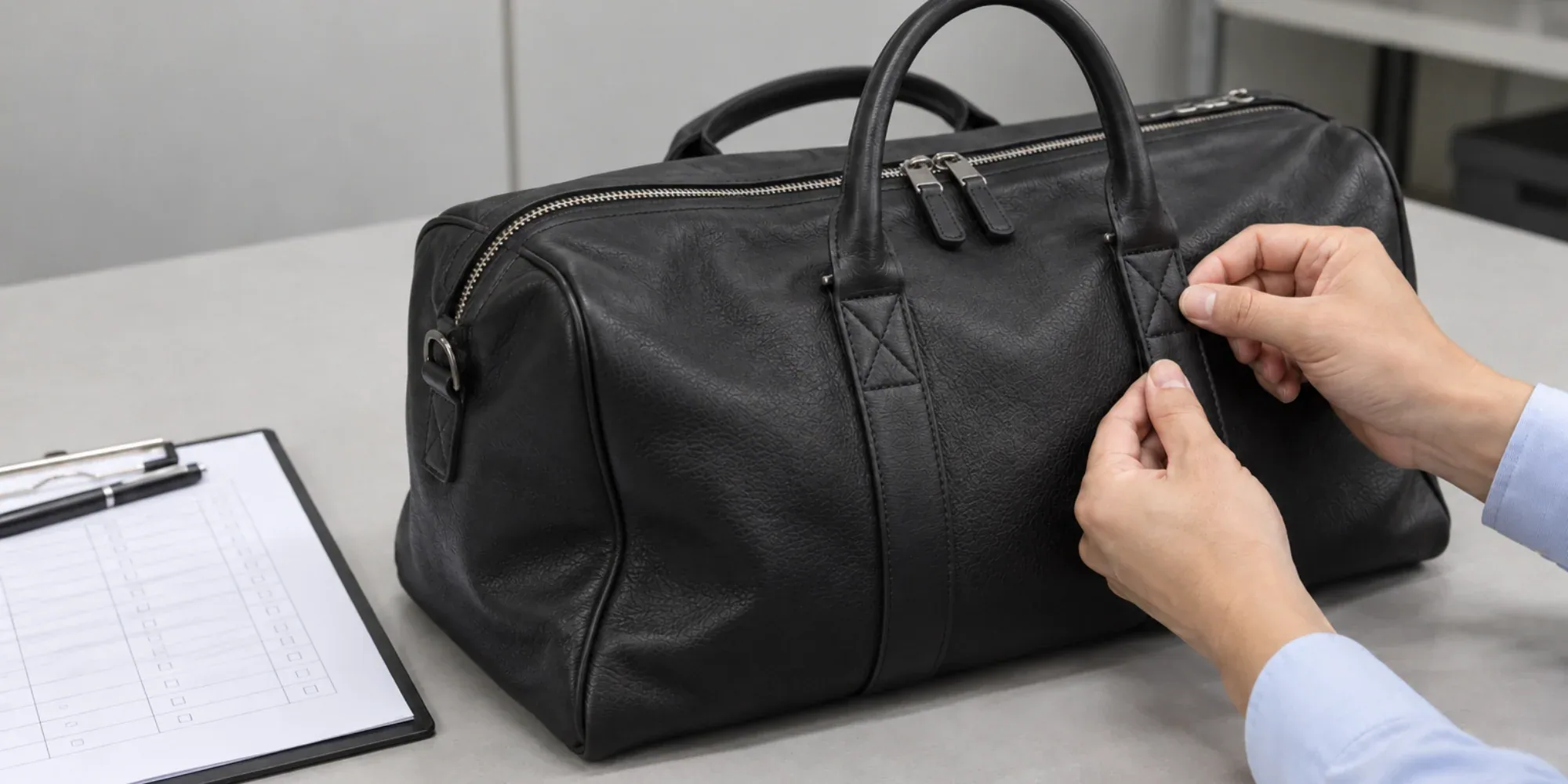
To evaluate a manufacturer for luxury-tier travel bags, set a strict Acceptable Quality Limit (AQL) of 1.0 or lower for major defects and 0 for critical defects. Your capability checklist must verify their ability to test fabric tear strength, assess seam integrity, measure pattern alignment, and control the incoming quality of coated fabrics and sustainable materials.
Defining Strict AQL Parameters for Luxury Manufacturing
Establishing an effective Acceptable Quality Limit (AQL) requires distinguishing between the visual tolerances of mass-market production and the structural demands of luxury travel bags. At its core, AQL is a statistical sampling method that determines the maximum number of defective units allowed in a production lot before the entire batch is rejected. For sourcing managers targeting top-tier retail markets, a manufacturer's baseline Quality Control infrastructure must be evaluated against strict statistical thresholds rather than vague promises of premium craftsmanship. A factory that primarily produces promotional or budget bags may struggle to adapt to luxury requirements because their existing defect allowances are inherently too loose. For company-specific information, see GFBags.
Standard commercial production often defaults to an AQL of 2.5 for major defects and 4.0 for minor defects. For a high-end travel bag, these limits present a significant risk. A sourcing manager should evaluate whether a prospective manufacturer has the capability and willingness to operate under an AQL of 1.0 or even 0.65 for major defects. In practical terms, tightening the AQL forces the factory to reject and rework batches much earlier in the production cycle. Sourcing teams must verify that the factory internal inspection team uses recognized sampling tables, such as ISO 2859-1, and correctly applies the required sample size code letters based on the total lot volume.
- Critical Defects (AQL 0.0): Any safety hazard, such as broken needles left in the lining, sharp metal hardware edges, or mold growth. A single occurrence must halt the shipment.
- Major Defects (AQL 1.0 or lower): Functional failures and severe aesthetic issues that prevent the bag from being sold at full price. Examples include misaligned patterns on prominent panels, faulty main compartment zippers, or structurally compromised load-bearing seams.
- Minor Defects (AQL 2.5 or lower): Small discrepancies that do not affect the usability or primary appearance of the bag, such as a slight variation in internal lining color or a single untrimmed thread inside a pocket.
Beyond the numerical thresholds, the chosen inspection level dictates how many units are pulled from the line. While General Inspection Level II is standard for routine shipments, sourcing managers rolling out a new luxury travel bag should initially require General Inspection Level III. This increases the sample size, providing greater statistical confidence in the lot's consistency. The primary tradeoff of enforcing strict AQLs and higher inspection levels is the impact on cost and lead time. Factories may charge a premium to offset higher rejection rates and the labor required for comprehensive sorting. Sourcing developers must assess the facility's rework protocols. If a lot fails an AQL 1.0 inspection, the factory must be capable of conducting a full sorting process to isolate defective units before presenting the batch for re-inspection, rather than merely replacing the specific bags found during the initial check.
Evaluating Fabric Breaking and Tearing Strength
A luxury travel bag must do more than look immaculate; it must physically endure the intense stresses of transit without catastrophic failure. When a fully packed weekender is carried by a single handle or pulled from an overhead bin, the base textile is subjected to severe multidirectional tension. For a sourcing manager targeting a premium tier, evaluating a manufacturer requires verifying that they do not rely on subjective hand-feel to assess material durability. Instead, their quality control infrastructure must include standardized mechanical testing for both breaking strength and tearing strength before mass production begins. For company-specific information, see GFBags.
To assess overall tensile resilience, the manufacturer must perform rigorous breaking strength and elongation tests on all incoming fabric batches. Standardized protocols utilize grab and modified grab test procedures for determining the breaking strength and elongation of most textile fabrics. This testing measures the maximum force the fabric can withstand before rupturing when pulled in opposite directions. In a capability audit, confirm that the manufacturer specifies the use of this standardized grab test for the primary body materials. If a textile yields prematurely under loads typical of an overpacked travel bag, the structural panels will warp or snap, directly violating the strict structural expectations of a luxury brand. D5034 Standard Test Method for Breaking Strength and Elongation of Textile Fabrics (Grab Test)
While breaking strength addresses overall tension, evaluating tearing resistance is equally critical. A small puncture from an interior zipper, a sharp edge, or a heavy impact can quickly expand if the surrounding fabric has low tear resistance. Your manufacturing capability checklist must verify that the factory formally measures the tearing strength of textile fabrics by the trapezoid procedure. This specific standard relies on a recording constant-rate-of-extension-type tensile testing machine to slowly pull apart a precut slit in the fabric, determining the exact force required to continue the tear. A premium travel bag manufacturer must ensure that their chosen canvases, nylons, or bespoke textiles meet high threshold values in this specific machine test. D5587 Standard Test Method for Tearing Strength of Fabrics by Trapezoid Procedure
To effectively evaluate these testing capabilities, sourcing teams should integrate several specific checkpoints into their factory audit.
- Verify the presence of a calibrated constant-rate-of-extension tensile testing machine or require documented reports from an accredited third-party textile laboratory.
- Require grab test procedures to determine the breaking strength and elongation of the primary woven fabrics before the cutting phase.
- Mandate the trapezoid procedure to measure tearing strength, ensuring the material resists catastrophic ripping from minor punctures or localized stress points.
- Establish numerical performance minimums for both tests based on the intended carrying capacity and physical dimensions of the specific bag design.
Relying solely on final product visual inspections to catch fabric weakness is an expensive and inefficient strategy for high-end brands. If a structurally weak batch of material passes into the cutting room unnoticed, the entire production run is compromised, invariably leading to massive quality failures at the finished goods stage. By incorporating these standardized mechanical fabric tests into the initial incoming material checklist, sourcing managers guarantee that the fundamental building blocks of the travel bag possess the raw physical strength necessary to support luxury construction techniques and deliver long-term reliability for the end user.
Verifying Stitches, Seams, and Structural Integrity
Even if a travel bag is constructed from highly durable textiles, its ultimate load-bearing capacity relies entirely on the integrity of its seams. For a high-end brand, a seam failure during transit is catastrophic. Evaluating a manufacturer capability means moving beyond simple visual approvals to ensure they follow strict, documentable construction standards. In mass-market production, factories might select seam types based on machine speed or thread economy. In luxury manufacturing, seam architecture must be dictated by load distribution, material thickness, and aesthetic perfection.
To audit a factory properly, sourcing managers should verify that the manufacturer assesses seam construction against formal guidelines. A comprehensive quality inspection evaluates stitches and seams based on established criteria, such as the standard practice covering the requirements and characteristics of stitches and seams used in the fabrication of sewn items. This recognized practice provides schematic indices and specific technical parameters for classifying how multiple layers of fabric are joined. A factory that utilizes this level of standardized classification demonstrates the technical literacy required to execute complex luxury blueprints consistently, rather than relying on an operator subjective interpretation of a design sketch. D6193 Standard Practice for Stitches and Seams
The physical dynamics of sewing create inherent tradeoffs that a capability checklist must address. For instance, increasing stitch density generally improves seam strength, but excessive needle penetrations can severely weaken leather or structurally degrade coated canvas by perforating the material too closely together. A capable manufacturer must demonstrate how they calculate the optimal stitches per inch for each specific fabric type and structural joint. Furthermore, thread tension must be perfectly calibrated. If the bobbin tension is too tight, the seam will pucker and warp the bag silhouette; if too loose, the seam will gap under the weight of packed luggage, exposing the interior construction and violating luxury aesthetic standards.
- Confirm the factory uses standard schematic indices to specify and document every seam type on the technical package.
- Audit the sewing floor for programmable lockstitch and bar-tack machines capable of consistent, precise thread tension across varying material thicknesses.
- Require destructive pull-testing on finished seam assemblies to verify that the thread and seam configuration can withstand dynamic travel loads without bursting.
- Verify that stress points, such as handle attachments and shoulder strap anchors, require multi-directional reinforcement rather than relying on a single linear stitch.
Integrating these structural requirements into the Acceptable Quality Limit parameters ensures that seam integrity is enforced continuously, not just during prototype approval. In a luxury quality tier, any structural seam gap, skipped stitch on a prominent panel, or thread breakage under manual tension testing must trigger a major defect classification, subject to an AQL of 1.0 or lower. By demanding rigorous seam specifications and enforcing strict defect limits on the sewing floor, sourcing managers can confidently identify manufacturers capable of assembling travel bags that maintain their shape and reliability over years of use.
Inspecting Coated Fabrics for Travel Durability
Luxury travel bags frequently incorporate PVC-coated or rubber-coated fabrics to achieve a balance of weather resistance, durability, and a structured, iconic aesthetic. Because these protective polymer coatings fundamentally alter the physical properties of the base textile, they present unique manufacturing challenges such as delamination, surface cracking, or chemical degradation over time. Standard fabric testing is insufficient for these materials. A rigorous quality inspection checklist must verify that a manufacturer utilizes dedicated test methods designed specifically for coated fabrics to ensure consistent long-term performance.
When auditing a factory's technical capabilities, sourcing managers should look for documented testing procedures specific to coated materials. There are established standard test methods designed explicitly for coated fabrics and the rubber products made from them, which cover materials commonly used in rainwear, tarpaulins, and similar protective applications. Confirm that the manufacturer has the necessary equipment and formalized protocols in place to execute these specialized tests. This ensures they can accurately measure the material's strength, flexibility, and coating stability before mass production begins. D751 Standard Test Methods for Coated Fabrics
- Execute standardized test methods dedicated explicitly to rubber-coated and PVC-coated fabrics.
- Conduct adhesion testing to confirm the bond strength between the woven base textile and the protective polymer layer.
- Simulate long-term environmental exposure to check for coating degradation, bubbling, or stickiness under varying temperatures.
- Perform flex testing to ensure the coating does not crack when the bag is repeatedly folded, packed, or compressed during travel.
The durability of PVC-coated fabrics in demanding environments is measurable and essential for travel applications. For example, in agricultural studies, PVC-coated fabric bags have been successfully evaluated for long-term on-farm storage of wheat, maintaining their functional integrity over an eight-month period without the need for additional fumigation treatments. While a luxury travel bag serves a vastly different aesthetic purpose, this underlying material capability demonstrates that high-quality PVC coatings can deliver sustained performance under continuous environmental stress. Your selected manufacturer must be able to replicate relevant environmental stress tests to guarantee that the coated canvas will survive varying global climates, high humidity in overhead bins, and long-term closet storage without chemically breaking down. Efficacy of PVC coated fabric bag for on-farm storage of wheat (Triticum aestivum) | The Indian Journal of Agricultural Sciences
Finally, these specialized testing capabilities must tie directly into your Acceptable Quality Limit (AQL) standards. Any failure in the coating's structural integrity, such as premature peeling, uneven polymer application, or microscopic surface cracking, instantly compromises both the bag's protective weather qualities and its high-end finish. In a luxury quality tier, these material failures cannot be tolerated and must be classified as major or critical defects, adhering to an AQL of 1.0 or lower. Relying on simple visual inspections on the production line is a significant capability gap. If a factory cannot physically test the adhesion, flex, and environmental durability of their coated fabrics prior to assembly, they cannot reliably produce luxury travel bags that meet stringent brand expectations.
Pattern Matching and Weave Alignment
For high-end travel bags, visual perfection carries the same weight as structural durability. Many luxury brands rely on signature monograms, precise directional weaves, or repeating geometric patterns to establish their identity. When a manufacturer stitches multiple panels together to form the body of a travel bag, these patterns must align seamlessly across zippers, pockets, and gussets. Any visual disruption at a seam instantly degrades the perceived value of the product. Under a strict luxury quality standard, mismatched patterns are not minor aesthetic quirks; they are major defects that violate an Acceptable Quality Limit of 1.0 or lower. Relying on the sewing floor to simply be careful is insufficient to prevent these defects.
Pattern misalignment frequently originates before cutting even begins. It is often caused by inherent dimensional distortions in the textile roll, specifically conditions known as bow and skew. Bow occurs when the filling yarns or printed lines curve across the width of the fabric, creating an arc. Skew is an angular distortion where the design or weave does not run precisely perpendicular to the fabric edges. If a factory attempts to cut panels from distorted yardage, even perfect digital templates will produce mismatched pieces. Sourcing managers must confirm that a manufacturer actively monitors for these specific material flaws during incoming quality control.
To accurately evaluate a factory capability to prevent these visual defects, auditors should check for formalized testing procedures. A recognized standard test method covers the determination of bow and skew of filling yarns in woven fabrics. Crucially for luxury travel bags, this exact method can also be used to measure the bow and skew of printed geometric designs. By applying a standardized protocol, the factory can assign a precise numerical value to the fabric distortion rather than relying on subjective visual assessments. If the measured bow or skew exceeds defined tolerances, the fabric roll must be rejected. D3882 Standard Test Method for Bow and Skew in Woven and Knitted Fabrics
- Verify the facility uses standardized test methods to measure bow and skew in both woven yarns and printed designs during incoming material inspection.
- Confirm the cutting department utilizes alignment markers and specialized templates tailored specifically to the dimension of the brand pattern repeat.
- Audit the inspection stations to ensure pattern alignment at critical seams is classified under the major defect AQL threshold rather than a minor tolerance.
Successfully managing complex prints requires a specialized workflow that distinguishes standard production from a luxury-capable process. While solid-color textiles can be stacked high and cut in bulk, patterned materials often require single-ply cutting or meticulous hand-pinning to ensure perfect pattern registration. Evaluating a manufacturer approach to bow and skew provides direct insight into their production discipline. A factory that standardizes these material measurements demonstrates the technical capability required to execute intricate, highly visible luxury designs consistently across large production runs.
Auditing Material Sourcing and Sustainability Claims
Luxury travel bag brands increasingly rely on verifiable environmental claims to distinguish their products and appeal to conscientious buyers. Consequently, a robust quality inspection process cannot stop at physical defects; it must also audit the origin and sustainability of the raw materials before production begins. For sourcing managers targeting top-tier retail markets, a manufacturer's capability to document and verify sustainable sourcing is just as critical as their mechanical testing capabilities. Without proper documentation embedded in the quality control phase, a brand cannot legally or ethically substantiate the marketing claims attached to their high-end luggage.
When evaluating a factory that produces travel bags with recycled nylon linings or repurposed canvas exteriors, a visual inspection is insufficient to confirm material composition. Instead, sourcing teams must verify that the manufacturer works with recognized third-party certification programs to validate their recycled content claims. For example, SCS Global Services delivers comprehensive assessment and certification for recycled content in the market. If a brand intends to market these environmental attributes directly to consumers, they should confirm whether the manufacturer holds certifications that allow for private label programs. Specifically, a Private Label certification is available to the customers of these certified manufacturers, which allows for the re-branding of the certified products directly under the purchasing company's name. Recycled Content Certification | ISO 14021 & SCS‑103 | SCS
Leather trims, handles, and structural base panels are foundational elements of luxury travel bags, making the auditing of leather supply chains a mandatory step for any sourcing developer. Sourcing managers must assess whether a prospective factory procures hides through responsible channels. This can be verified by checking for alignment with the Leather Working Group, which operates as a global non-profit and multi-stakeholder initiative committed to ensuring that leather is sourced, produced, and utilized sustainably to protect people and the planet. Integrating this requirement into your capability checklist ensures the manufacturer actively supports responsibly made leather and can trace their hides back to facilities evaluated for strict environmental compliance. What we do – Leather Working Group
Beyond evaluating the specific materials, the capability checklist must also assess the overall operational standards of the textile and leather production facilities. High-end brands face severe reputational risks if their supply chain involves substandard environmental or labor practices. To mitigate this, auditors should verify if the production network adheres to stringent facility-level standards. The OEKO-TEX STeP certification is one recognized framework that establishes the highest standards regarding the environmental and social aspects of both leather and textile production. Verifying that a facility meets or actively pursues these standards provides sourcing teams with documented proof that the travel bags are manufactured in a highly responsible environment. OEKO-TEX® Sustainable Textile and Leather Production (STeP)
- Require documented proof of third-party recycled content certification for any synthetic fabrics or repurposed materials used in the bag construction.
- Confirm that the factory can facilitate private label re-branding for certified recycled components if required by your brand marketing strategy.
- Mandate that all structural leather and trim components are procured from suppliers audited by collaborative initiatives focused on responsible leather production, rather than unverified open-market vendors.
- Request current compliance certificates that validate the social and environmental production standards of the textile and leather processing facilities before approving them for mass production.
Integrating Artisan Expectations into Final Inspection
A sourcing manager evaluating a manufacturer for top-tier travel bags must recognize that mechanical tests and statistical thresholds represent only the baseline of production readiness. While rigorous Acceptable Quality Limit tolerances ensure that a bag will not physically fail or tear during transit, luxury consumers are purchasing an experience as much as a utility item. A factory that flawlessly passes trapezoid tear tests and fabric skew measurements can still fail to deliver a premium product if its final inspection relies exclusively on a rigid, numerical checklist. The final capability audit must evaluate whether the factory possesses a genuine culture of craftsmanship.
For prestigious global fashion houses, aesthetic perfection and emotional resonance are the defining characteristics of their soft goods. For example, the luxury conglomerate LVMH emphasizes this perspective, stating that artisan craftsmanship inspires dreams around the world. A capable manufacturing partner must understand this high-end philosophy and actively integrate it into their final quality control phase. Sourcing developers should observe the final inspection line during the audit to see how workers interact with the goods. The staff must handle the finished travel bags as premium luxury items rather than merely processing them as mass-market commodity units on a high-speed assembly line. LVMH, world leader in high-quality products
To bridge the gap between technical specifications and subjective artisan expectations, your final manufacturer capability checklist should include qualitative evaluations alongside the standard defect table:
- Tactile refinement: Inspectors must actively check for hidden sharp edges on interior zippers, rough thread tails inside the lining, or abrasive binding tapes that could disrupt the user experience.
- Hardware finishing: Beyond testing functional snapping and zipping, all metal components must be scrutinized for micro-scratches, uneven plating, or minor tarnishing that detracts from the high-end aesthetic.
- Sensory checks: The final product must be evaluated for residual chemical odors from industrial adhesives or freshly processed coated fabrics, which are unacceptable in luxury retail environments.
- Drape and structure: The bag must hold its intended architectural silhouette naturally when empty, without displaying unnatural puckering or stiff, unyielding transitions between mixed canvas and leather materials.
Ultimately, a manufacturer's final inspection team must be trained to act as the brand's most discerning customer. Sourcing managers should establish boundary samples, which are physical examples of the minimum acceptable aesthetic quality, to calibrate the factory's visual and tactile standards. If a factory's quality control staff strictly measures a seam allowance but ignores how a rolled leather handle feels in the hand, they lack the artisan perspective required for luxury quality tiers. By combining strict statistical defect enforcement with a formalized assessment of craftsmanship, sourcing managers can confidently identify manufacturing partners capable of producing travel bags that perform at the highest market level.
Sources
- D5034 Standard Test Method for Breaking Strength and Elongation of Textile Fabrics (Grab Test)
- D5587 Standard Test Method for Tearing Strength of Fabrics by Trapezoid Procedure
- D6193 Standard Practice for Stitches and Seams
- D751 Standard Test Methods for Coated Fabrics
- Efficacy of PVC coated fabric bag for on-farm storage of wheat (Triticum aestivum) | The Indian Journal of Agricultural Sciences
- D3882 Standard Test Method for Bow and Skew in Woven and Knitted Fabrics
- Recycled Content Certification | ISO 14021 & SCS‑103 | SCS
- What we do – Leather Working Group
- OEKO-TEX® Sustainable Textile and Leather Production (STeP)
- LVMH, world leader in high-quality products