Skip to content
PU coating vs TPU coating for waterproof backpacks: manufacturing comparison
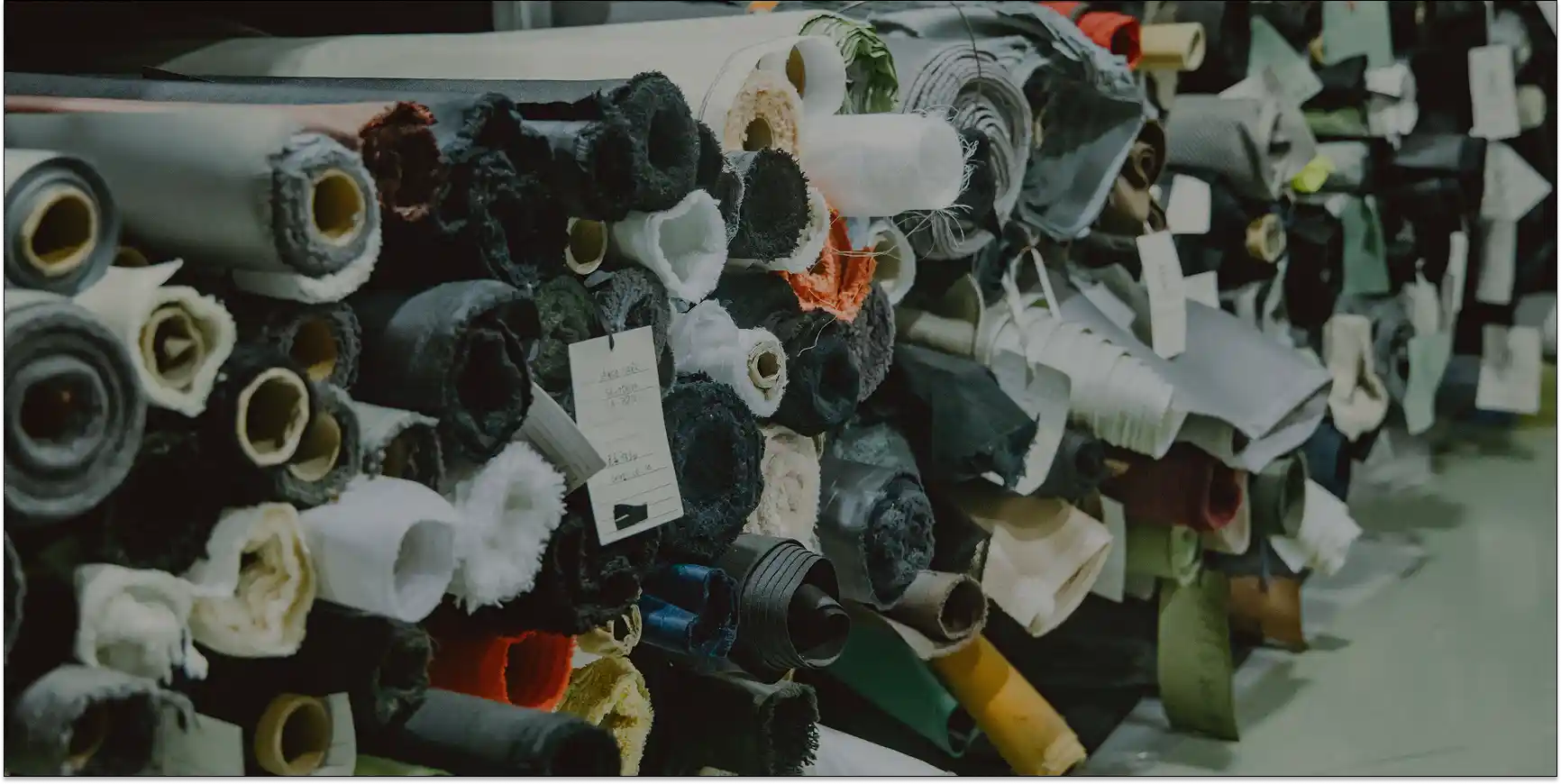
Summary answer: PU (polyurethane) and TPU (thermoplastic polyurethane) are both used to make waterproof backpacks; TPU generally offers higher abrasion resistance and longer-term flexibility, while PU is often lighter and more cost-effective. For OEM customers in Berlin, London or New York, GFBags can supply side-by-side samples and lab data to compare performance under local climate and use-case conditions.
Introduction — from a factory perspective As a backpack manufacturer with more than 20 years of production experience and an annual capacity above one million units, GFBags evaluates coatings not only for lab numbers but for real production trade-offs: manufacturability, lamination method, seam sealing approach, and long-term inspection pass rates on the shop floor. Below we summarize material differences, manufacturing considerations, testing steps we apply in sampling and scale-up, and practical guidance for choosing a coating for specific backpack types. For more on our product ranges see our Product Category and detailed materials page Raw Material. To request side-by-side samples, please Contact Us.
PU vs TPU coatings: what they are and how they differ
- PU coating: a polymer coating applied to fabric substrates (nylon or polyester); common in coated fabrics because it can be formulated in different weights and levels of softness. PU-coated fabric is often produced via wet coating or knife coating and may be backed with polyurethane film or foam.
- TPU coating: a thermoplastic polyurethane film or coating applied by lamination or extrusion; TPU can be hot-laminated and is typically thermoplastic (re-meltable), which affects repairability and welding options.
Key factory-level differences:
- Processing: TPU often requires hot-melt lamination or extrusion equipment; PU can be applied via wet-coat machinery or solvent-free processes depending on formulation.
- Handling: TPU films can be more dimensionally stable during lamination; PU coatings may need careful drying and cure control on the production line.
- Repairs and welds: TPU allows heat welding of seams in some configurations; PU typically relies on adhesive seam sealing or tape.
For technical background on the polymers see general references on polyurethane and thermoplastic polyurethane [S1][S2].
Material performance comparison: waterproofing, flexibility, abrasion and longevity
H3: Key metrics to compare
- Waterproof rating / hydrostatic head (depends on substrate+coating)
- Abrasion resistance (cycles or Martindale score)
- Tensile strength and elongation
- Flex-crack resistance at low temperature
- Coating weight (g/m²) and denier of substrate
- DWR performance on the outer face (if applied)
Table: PU vs TPU — comparative snapshot
| Property / metric | PU coating | TPU coating | Practical note |
|---|---|---|---|
| Typical abrasion resistance | Good, variable by formulation | Often higher abrasion resistance [S2] | TPU films commonly score better in abrasion tests used by OEMs |
| Flexibility / hand | Softer hand possible | Can be stiffer at similar thickness | PU formulations can be tuned for softer feel |
| Low-temperature crack resistance | Good with proper formulation | Generally better retained elasticity in cold [S2] | For cold-climate use-cases (e.g., Berlin), TPU may keep flexibility |
| Waterproofing (when laminated) | Excellent when film-backed or adequately coated | Excellent; can be fully waterproof with welded seams | Final waterproofing depends on seams and lamination |
| Seam closure options | Tape, glue, welded tape | Heat welding possible for some TPU laminates | Welding can improve long-term seam robustness |
| Weight (g/m²) | Usually lighter at given waterproof rating | Can be heavier at similar ratings | Choice depends on design and coating weight |
| Cost (material + processing) | Typically lower material cost | Higher material cost; higher processing cost | Affects OEM unit pricing and MOQ calculations |
| Sustainability options | Some bio-based or water-based PU available | TPU can be recyclable in certain production flows | Certificates depend on chosen supplier and batch |
(Notes: numerical scores depend on tested samples and coating weight; consult datasheets for exact figures.)
Sources for polymer properties: polyurethane and thermoplastic polyurethane references [S1][S2]. Information on DWR and surface treatments used alongside coatings: [S3].
Manufacturing and application: lamination, coating methods, and factory considerations
H3: Common application methods used in the factory
- Wet/knife coating: liquid PU is applied to fabric and dried; widely used for flexible, soft coatings.
- Film lamination: PU or TPU films are laminated to substrate using heat/adhesive; used for high-barrier waterproofing.
- Hot-melt lamination: common for TPU films or thermoplastic adhesives.
- Extrusion lamination: melt-extruding a polymer onto substrate for a continuous film bond.
Factory practical notes:
- Line setup: switching between PU wet-coat and TPU hot-lamination lines requires different equipment and skilled operators; we often plan production runs by coating type to reduce changeover risk.
- Tolerances: coating weight (g/m²) must be monitored during sampling; we log target vs actual for each run.
- Surface finish: a DWR topcoat can be applied to improve beading; DWR choices affect breathability perception and aging.
- Seam approach: decide early whether seams will be taped, glued, or welded; this influences patterning and construction steps.
Durability testing and quality control steps for waterproof backpacks
From our manufacturing perspective, lab tests must align with on-line inspection and field-simulated wear. Typical QC pathway includes:
Step-by-step: GFBags sample and inspection workflow
- Requirement confirmation: define use-case, target hydrostatic head, abrasion cycles, weight constraints.
- Material selection: choose substrate (denier, weave) and candidate PU/TPU formulations.
- Lab test samples: produce 2–3 laminated/coated sample panels at target coating weight.
- Accelerated tests: abrasion (Martindale/Crockmeter), flex/crack, hydrostatic head, and low-temperature flex.
- Construction sample: build a prototype backpack including seam treatment and zippers.
- Field simulation: pack/strain tests plus moisture exposure cycles.
- Pre-production approval: final sign-off on material datasheet and approved sample; record batch specs for production.
- Production QC: 100% quality inspection before shipment as part of our standard process.
We maintain documented checks and sampling records to ensure repeatability across batches. For more on inspection documentation see our Quality Control page.
Durability testing highlights:
- Abrasion and tensile test results can vary with coating weight and denier; we typically benchmark against the target market (commuter vs travel).
- Seam sealing method is a critical variable that often determines “waterproof in practice” more than base coating alone.
- Low-temperature cracking: TPU laminates often retain flexibility longer in cold-weather tests [S2]; consider when designing for markets with cold winters.
Limitations: test outcomes reflect the specific sample, coating weight, substrate, and construction. Final product performance should be confirmed by approved pre-production samples and documented test reports.
Cost, sourcing and sustainability trade-offs for PU and TPU coatings
Cost factors:
- Material cost: TPU is commonly more expensive than PU on a per-meter basis.
- Processing cost: TPU hot-lamination or welding equipment and energy use can increase unit cost.
- Yield and scrap: different lamination steps can produce differing scrap rates; we monitor yield closely during initial production runs.
Sourcing and sustainability:
- Both PU and TPU have material-dependent sustainability options (water-based PU, recyclable TPU films). Certificates (e.g., GRS, other eco labels) depend on supplier and material batch—confirm documentation with suppliers.
- For eco-conscious customers we recommend reviewing supplier certificates and selecting specific formulations; see our Sustainability page for options and guidance.
Trade-offs summary (bullet list):
- Choose PU when you need lower material cost, softer hand, and lighter weight at a given performance.
- Choose TPU when higher abrasion resistance, cold-flex performance, and potential welding of seams add value, and when budget allows.
- Consider hybrid approaches (PU outer + TPU critical panels) to balance cost and performance.
Choosing the right coating by use-case: commuter, travel, camera and laptop backpacks
H3: Use-case guidance (manufacturing viewpoint)
- Commuter backpacks:
- Typical priorities: abrasion resistance at shoulder/back contact, low weight, good seam sealing for occasional rain.
- Factory suggestion: mid-weight PU or thin TPU laminate; ensure taped seams on high-exposure seams.
- Travel/backpacking:
- Priorities: durable outer, higher water barrier, heavy-use abrasion resistance.
- Factory suggestion: heavier TPU laminate panels or PU with reinforced TPU bottoms; pay attention to zipper and strap anchor reinforcement.
- Camera backpacks:
- Priorities: abrasion resistance, cushioned protection, and reliable waterproofing.
- Factory suggestion: TPU for outer shell or welded TPU inner liner for best barrier performance; test long-term abrasion of contact points.
- Laptop bags:
- Priorities: professional look, wear resistance, water protection for electronics.
- Factory suggestion: PU with protective structure for professional styling or TPU laminate where higher waterproofing and weldable seams are required.
Link back to product examples on the Product Category page and for specification customization see Custom Service.
How GFBags supports OEM projects: sampling, specification confirmation and scalable production
Practical factory commitments:
- Sampling speed: we offer fast sampling capability (timeline depends on project confirmation) and can produce comparison samples of PU vs TPU for evaluation.
- Specification records: all approved samples are documented for repeatability in production runs.
- Scalable production: after sample approval we ramp to scalable runs leveraging our annual capacity; production scheduling aligns with equipment needs for PU vs TPU lines.
Step-by-step: what we recommend OEMs request
- Define target use-case and desired metrics (hydrostatic head, abrasion cycles).
- Request two coated-panel samples (PU and TPU) at target coating weight.
- Approve lab and construction prototypes after field simulation.
- Confirm packaging, labeling, and warranty terms.
- Move to trial production run and full QC inspection before shipment.
For pricing and MOQ discussions please consult our Pricing and reach out via Contact Us to request samples and datasheets.
FAQ
What is the main technical difference between PU and TPU coatings for backpacks?
The main technical difference is in polymer type and processing: PU coatings are typically applied as liquid coats or film laminates and cured to form a polymer layer, while TPU is a thermoplastic film or coating that can be hot-laminated and, in some constructions, heat-welded. This leads to practical differences in abrasion, low-temperature flexibility, and seam construction options [S1][S2].
Which coating usually provides better long-term abrasion resistance for daily-use backpacks?
TPU-coated fabrics frequently show higher abrasion resistance in standard tests compared to many PU formulations, largely because TPU films can be engineered with tougher surface properties [S2]. However, abrasion results depend on coating weight and formulation—testing of actual samples is recommended.
How do coating choices affect seam sealing and overall waterproof performance?
Coating choice affects seam options: TPU laminates can sometimes be heat-welded, producing very robust seams, while PU-coated fabrics commonly use seam tape or adhesive sealing. Regardless of coating, seam method is a leading factor in real-world waterproof performance; it is advisable to specify and test the seam technique during prototyping.
Are TPU-coated fabrics more suitable than PU for colder climates such as Berlin, Germany?
TPU laminates tend to retain elasticity better at low temperatures, which can reduce flex-cracking in very cold conditions [S2]. For OEMs targeting cold climates, TPU can be a suitable choice, but final selection should be validated with low-temperature flex tests on the intended construction.
How do PU and TPU compare on cost and how will that affect OEM pricing?
TPU typically has higher material and processing costs (hot-lamination/welding) than PU, which can increase unit price. The choice should balance required performance, perceived product value, and target retail pricing. We can model cost impacts during the quoting and sampling phase.
Can GFBags produce and test samples with both PU and TPU coatings before full production?
Yes — GFBags provides side-by-side sampling and the related durability testing as part of the OEM workflow. We recommend approving coated panel samples and a full construction prototype before committing to production quantities.
What sustainability considerations should I evaluate when choosing between PU and TPU coatings?
Sustainability depends on supplier formulations and certifications. Some water-based PU systems and certain TPU films may offer reduced environmental impact or recyclability. Always request supplier material certificates and assess cradle-to-gate information. See our Sustainability page for material options and guidance.
Limitations and boundary statements
- Performance described here is comparative and indicative; exact abrasion, hydrostatic, and tensile numbers vary with coating weight (g/m²), substrate denier, and construction. Clients should confirm final product performance through approved samples and datasheets.
- Do not assume specific certifications or audit statuses unless documented and provided for the selected material batch—request documentation during the specification phase.
- Delivery timelines and final costs depend on contract terms and confirmed sample approvals; timelines reported here are general and should not be interpreted as contractual guarantees.
Call to action
If you manufacture or brand backpacks in Europe or North America and want side-by-side PU vs TPU samples, contact GFBags to request samples, material datasheets, and a production plan tailored to your target markets and use cases: Contact Us.
Sources
- Polyurethane overview — Wikipedia [S1]: https://en.wikipedia.org/wiki/Polyurethane
- Thermoplastic polyurethane overview — Wikipedia [S2]: https://en.wikipedia.org/wiki/Thermoplastic_polyurethane
- Durable water repellent (DWR) and surface treatments — Wikipedia [S3]: https://en.wikipedia.org/wiki/Durable_water-repellent